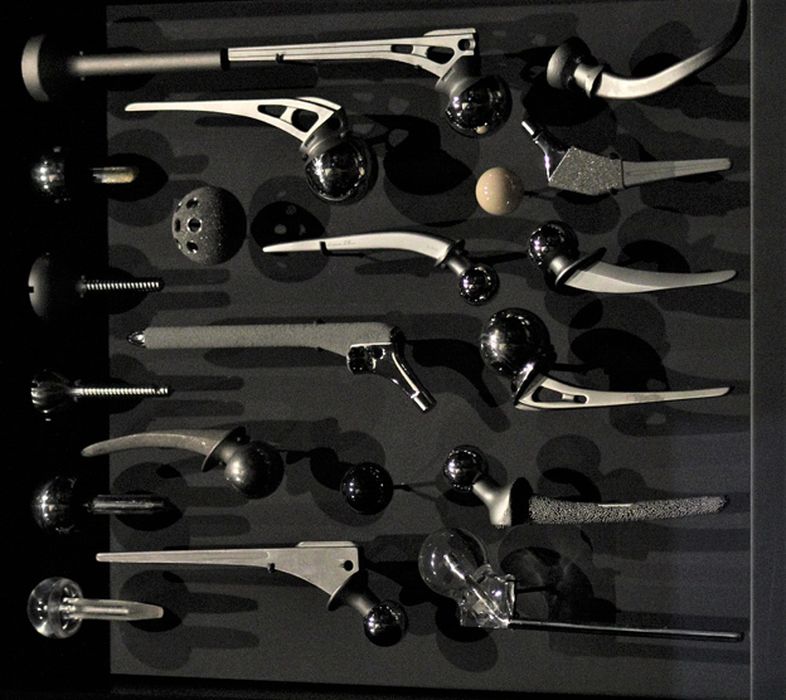
Anthony Palumbo and Charles R. Goulding examine how automated single-piece production offers a practical blueprint for moving 3D printed orthopedic implants toward responsive, just-in-time manufacturing.
Introduction
Orthopedic implant manufacturing has traditionally depended on large production batches. Manufacturers commonly produce numerous sizes and configurations of a knee, hip, spinal, or trauma implant and hold those products in inventory until surgeons require them. This system supports immediate product availability, but it also requires substantial spending on implants that may remain unused for long periods.
Recent Modern Machine Shop article describes how Mach Medical is challenging that model through an automated, single-piece manufacturing workflow. The company’s objective is to manufacture only the implants required, in the quantities required, with lead times short enough to respond to actual surgical demand.
Mach Medical’s current workflow is principally based on advanced machining and robotic automation rather than additive manufacturing. Nevertheless, its strategy has major implications for the 3D printing industry. Metal additive manufacturing already provides the design freedom and production flexibility needed for patient-matched and low-volume implants. The missing element is often an equally flexible system for inspection, finishing, cleaning, documentation, and product release.
Mach Medical demonstrates how those surrounding processes can be connected into a coherent quantity-one manufacturing platform.
The Orthopedic Inventory Problem
Orthopedic implant systems can include extensive families of components. A single product line may need multiple sizes, left- and right-side configurations, different offsets, and specialized options for complex anatomy. Hospitals and surgical centers may also require multiple implant sizes to be available during a procedure even though only one will ultimately be implanted.
This creates a substantial inventory burden for orthopedic original equipment manufacturers (OEMs). Manufacturers must not only maintain warehouse stock, but may also need to position complete instrument and implant sets near hospitals and ambulatory surgery centers.
Mach Medical was established to reduce this dependence on forecast-driven production. According to the company, its High Velocity Manufacturing system can economically manufacture lot sizes as small as one unit. Mach reports that its approach can provide three-week lead times and reduce an OEM’s overall inventory requirements by as much as 85 percent, depending on the implementation model.
In one model, the manufacturer replenishes warehouse inventory in smaller quantities. In the more ambitious model, a clinic completes preoperative case planning and orders only the implants expected to be needed for that procedure.
These figures are company-reported and will depend on the product family, clinical workflow, regulatory requirements, demand stability, and distribution model. Still, the underlying concept is significant. Instead of manufacturing implants primarily to stock shelves, the factory responds to a specific clinical requirement.
Automating Single-Piece Production
Manufacturing one implant at a time is not automatically economical. Conventional machining operations incur costs when equipment is reconfigured, tools are changed, fixtures are installed, programs are loaded, and inspections are performed. Large batches distribute these setup costs across many components.
Mach Medical addresses this problem by reducing setup requirements and automating the movement of individual parts through the production cell.
The company and Flexxbotics have implemented a multi-machine workcell that combines five-axis vertical milling, coordinate-measuring-machine inspection, and a custom wash and blow-off station. A single robot transfers components among the operations, while software coordinates the equipment and production data.
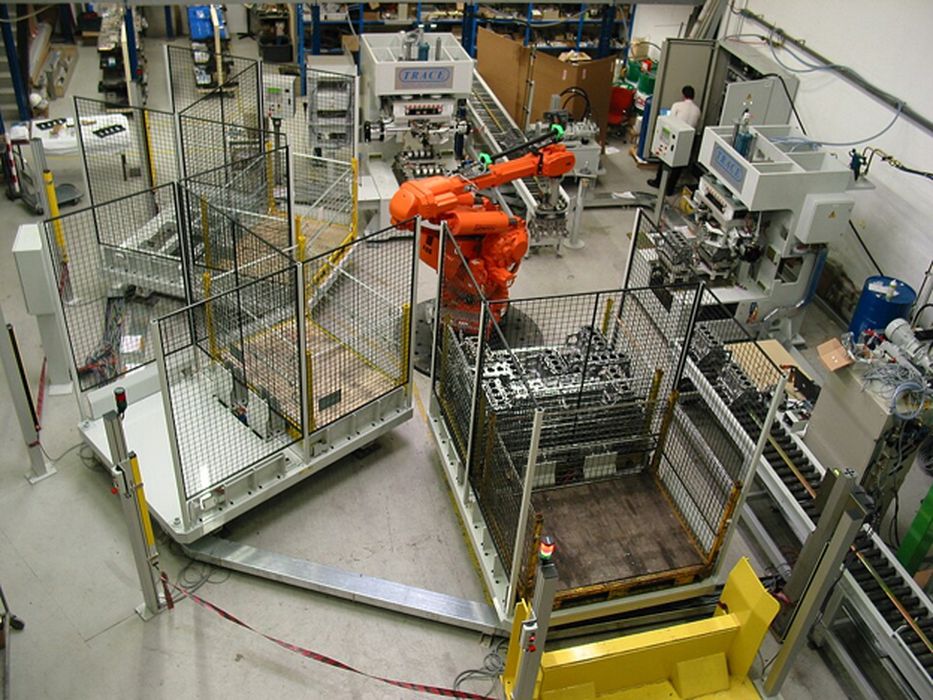
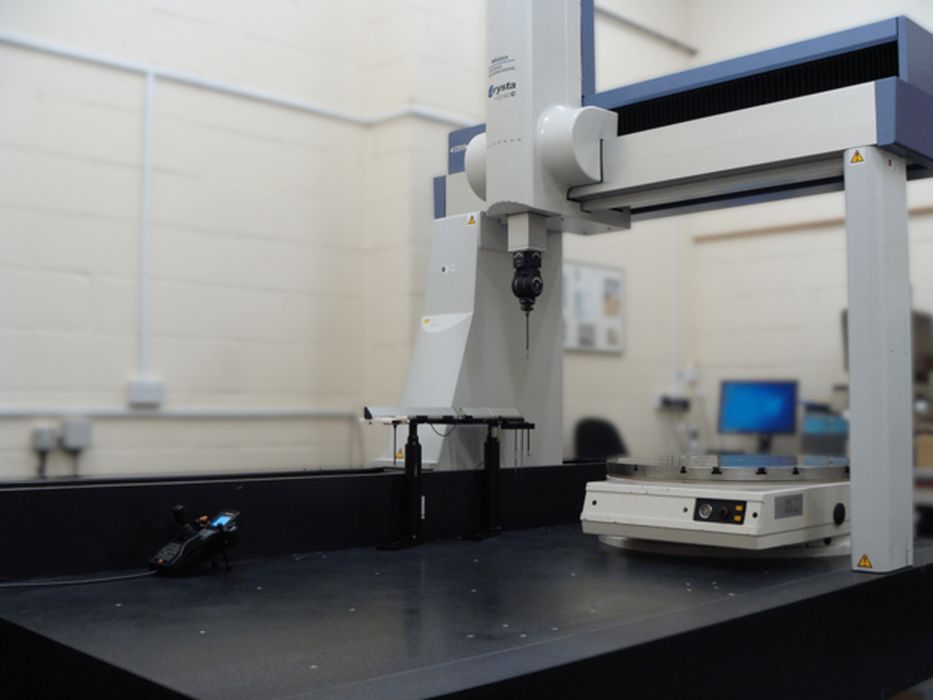
Inspection results can be routed back to the machine tools so process offsets can be adjusted in response to dimensional measurements. This closed-loop arrangement is especially important for orthopedic implants, where tight tolerances, surface requirements, and traceability must be maintained for each device.
The cell is designed for continuous, unattended operation. Flexxbotics reports that the implementation increased Mach Medical’s production capacity by 61 percent, improved throughput by 44 percent, and produced a 20-to-1 machine-to-labor ratio. The Modern Machine Shop report also states that Mach Medical maintains scrap rates below one percent. These are reported results from this implementation rather than universal performance benchmarks.
The more important lesson is that automation does not stop when the primary manufacturing operation is complete. Part handling, cleaning, inspection, process adjustment, and documentation are treated as connected elements of the same production system.
Why This Matters for 3D Printing
Additive manufacturing is frequently described as a natural technology for quantity-one production. A printer can produce a unique implant without requiring a dedicated mold, die, or conventional cutting fixture. Changing the geometry may require a new validated digital file rather than a complete change in hard tooling.
That flexibility has made 3D printing particularly valuable for spinal cages, acetabular components, cranial implants, bone-replacement structures, and other devices that benefit from complex geometry or porous surfaces. Metal powder bed fusion can create lattice structures and interconnected pores that would be difficult or impossible to produce through conventional machining alone.
However, the ability to print one component does not mean the entire manufacturing process can efficiently deliver one finished implant.
Metal implants may require powder removal, stress relief, heat treatment, separation from the build plate, support removal, machining, surface treatment, cleaning, inspection, marking, packaging, and sterilization. Each operation must remain connected to the implant’s manufacturing record. If these processes depend on manual scheduling, handling, and data entry, a flexible printer can still be surrounded by an inflexible factory.
There is also an important distinction between quantity-one geometry and quantity-one production economics. Powder bed fusion systems often achieve better machine utilization by nesting numerous implants within the same build. Running a nearly empty build chamber for one small implant may not be economical. A just-in-time additive workflow may therefore use intelligently scheduled mixed builds containing different implants rather than literally printing every device alone.
The objective is not necessarily a build containing one part. It is a production system capable of accepting an order for one part without imposing a large minimum order quantity.
Connecting the Digital and Physical Workflows
For a patient-matched implant, the workflow may begin with computed tomography data. The anatomy is segmented, reconstructed as a three-dimensional model, and used to develop an implant within an approved design framework. The surgeon reviews the proposed plan before the design is released for manufacturing.
3D Systems is one example of a company combining virtual surgical planning, patient-specific design, and additive manufacturing. Its current medical portfolio also includes an extrusion platform used in the workflow behind an FDA-cleared patient-specific PEEK cranial implant. The commercial significance is the integration of planning, manufacturing, and regulated device delivery, not printer speed in isolation.
Scaling this model requires reliable connections among medical imaging, design software, build preparation, printer scheduling, manufacturing execution, inspection, quality records, and delivery. A design revision must be associated with the correct patient or product order. The build parameters and material lot must be recorded. Post-processing and inspection results must remain linked to the device, and any nonconforming component must be removed from the workflow.
This is where the Mach Medical model becomes relevant to additive manufacturing. Its major contribution is not simply robotic machine tending. It is the orchestration of multiple manufacturing and quality operations around an individual implant.
An additive version of this production model could connect:
- Clinical imaging and surgical planning
- Implant selection, design, and approval
- Automated build preparation
- Printer and build scheduling
- Powder and material traceability
- Heat treatment and build-plate separation
- Robotic transfer into machining and finishing
- Automated dimensional and surface inspection
- Device-level production records
- Cleaning, packaging, sterilization and release

Figure 3. FDA’s high-level additive manufacturing workflow connects design, software preparation, material control, the build, post-processing, and final testing. (Source: U.S. Food and Drug Administration, Technical Considerations for Additive Manufactured Medical Devices, Figure 1, cropped to the figure only. Public domain.)
The printer would be one component of a larger digitally controlled manufacturing system.
Additive and Subtractive Manufacturing Will Remain Partners
The future of orthopedic manufacturing is unlikely to involve replacing every machining operation with 3D printing. Many implant geometries can still be manufactured more efficiently through forging, casting, machining, or combinations of these processes.
Additive manufacturing is most valuable when it provides a distinct design or supply-chain advantage. This may include porous bone-ingrowth surfaces, internal lattice structures, anatomy-matched geometries, rapid product variations, or the elimination of specialized tooling.
Machining will continue to be important for producing mating surfaces, threaded features, instrument interfaces, and dimensions requiring particularly tight tolerances or controlled surface finishes. Wire electrical discharge machining may be used to separate metal printed components from build plates, while milling, turning, grinding, or polishing can complete critical features.
Automated workholding can preserve a known reference as a component moves between additive and subtractive operations. System 3R, for example, has developed AM tooling intended to let build plates and individual parts retain consistent reference positions during printing, electrical discharge machining, and finish machining.
This type of standardized interface is essential for hybrid production. A robot cannot reliably move a wide variety of implant geometries through a factory unless the parts, carriers, and machines share repeatable locating and clamping systems.
The Regulatory and Quality Challenge
Orthopedic implants cannot be treated like ordinary on-demand consumer products. Manufacturing flexibility must operate within a validated quality system and the device’s authorized design and manufacturing specifications.
The U.S. Food and Drug Administration’s additive manufacturing guidance identifies technical considerations for additively manufactured medical devices. These include file conversion, build orientation, support structures, material controls, process validation, post-processing, dimensional measurement, mechanical properties, cleaning, and sterilization.
Patient-matched devices also present a particular validation challenge. Rather than validating only several discrete sizes, a manufacturer may need to establish and validate a permitted design envelope. Representative worst-case configurations may require testing to show that devices produced within that range meet the applicable requirements.
The FDA’s Quality Management System Regulation became effective on February 2, 2026. It amended 21 CFR Part 820 and incorporates by reference ISO 13485:2016 as the foundational quality-management-system framework for medical device manufacturers, while preserving applicable FDA requirements.
Consequently, automation must do more than increase production speed. It must enforce the approved workflow, prevent file and material mix-ups, record every relevant operation, and preserve traceability. Automated inspection and digital production records may ultimately be as important as printer speed.
A true just-in-time implant factory would therefore not be a printer producing an unrestricted custom design immediately before surgery. It would be a validated digital manufacturing system capable of safely selecting, designing, manufacturing, inspecting, and releasing an authorized implant with substantially less inventory and delay.
The Research and Development Tax Credit
Developing single-piece implant manufacturing systems can require experimentation in implant geometry, printing parameters, porous structures, support strategies, heat treatment, robotic handling, inspection, workholding, and closed-loop software controls.
When the statutory requirements are satisfied, qualifying wages and supplies, certain computer-use costs, and a portion of eligible contract research expenses may support the federal R&D tax credit under Internal Revenue Code Section 41. Separately, Section 174A generally allows a current deduction for domestic research or experimental expenditures paid or incurred in taxable years beginning after December 31, 2024, subject to applicable elections and transition rules. IRS Revenue Procedure 2025-28 explains procedures for elections, amended returns, and accounting-method changes. Eligibility and tax treatment are fact-specific, so manufacturers should maintain project and expense documentation and consult qualified tax advisers.
Conclusion
Mach Medical’s automated single-piece workflow is primarily a machining and robotics achievement, but its implications extend directly into additive manufacturing.
3D printing already provides the geometric flexibility needed to manufacture low-volume and patient-matched implants. The next major advance will come from automating everything around the printer. Build preparation, material control, post-processing, machining, inspection, documentation, and product release must operate with the same flexibility as the additive process itself.
When those elements are connected, orthopedic manufacturers can move beyond simply printing customized implants. They can begin building responsive production systems capable of delivering the correct implant, in the required quantity, when the surgical team needs it.