
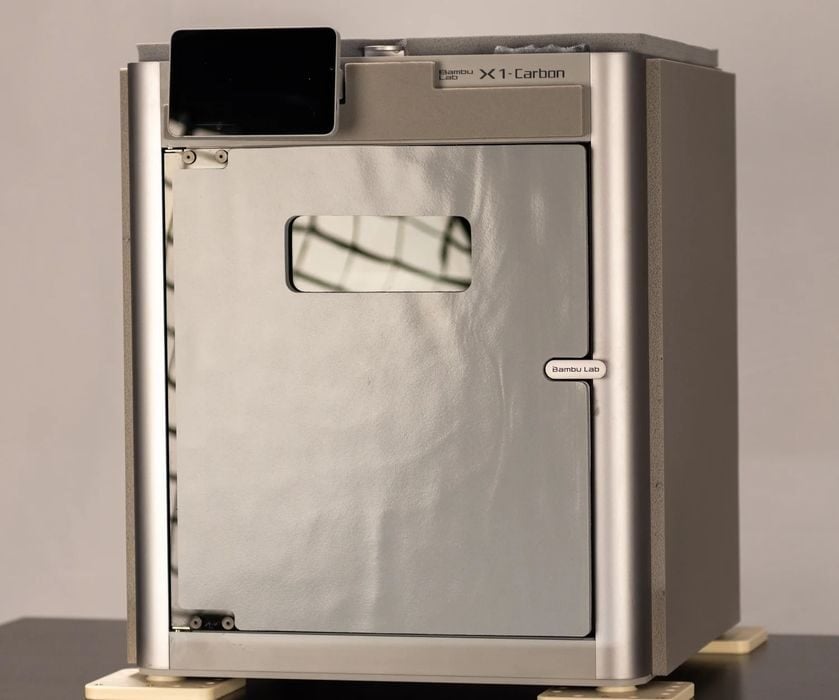
The latest desktop 3D printer form factor has introduced a new challenge: power consumption.
For many years the standard desktop 3D printer design was the open-gantry i3 platform. This was popularized by models such as the Prusa MK2 and the Ender-3, along with countless others.
But something happened about a year ago when many manufacturers came up with devices to match Bambu Lab’s X1C and P1S models. I’m talking about machines like the Prusa CORE One, the Elegoo Centauri Carbon, the Flashforge AD5X, Anycubic Kobra Kobra S1 and many others.
So many manufacturers have launched machines of this form that I believe it is now the de facto standard format for desktop 3D printers. Today if you see an open gantry i3, you will see it as an older style. Those machines still function, but it’s clear their glory days are past.
All of the new machines have quite a different form factor. The key differences are that they use a CoreXY motion system, which is necessary to achieve rapid print speeds reliably, and enclosed build chambers.
The enclosed build chambers are important because they capture the surrounding air and accumulate stray heat from the hot end and print plate. This collected heat decreases the thermal gradient between extrusion and ambient, making it less likely that prints will warp.
Some machines, like Bambu Lab’s H series and the CORE One, go even farther: they actively heat the build chamber. This allows the print to take place in optimal thermal conditions, leading to the highest quality prints. For printing ABS, for example, you might want to have the build chamber set to 65C. That should eliminate warping on most print jobs.
This is where the new challenge appears: you need a lot of energy to raise the temperature and maintain it during hours-long print jobs. That’s not something that was required when using older open-gantry machines that relied entirely on heated build plates. Today’s heated chambers are so effective that it’s even possible to print some materials without heating the plate at all.
3D printer operators would not be accustomed to using so much electricity, and some could be surprised by their usage. The machines are pretty inefficient in this regard: the walls are plastic and doors acrylic, which lets heat seep out easily.
What can we do about this? It turns out there is an answer: insulating panels.
Some third party companies are starting to market panel add-ons for popular machines. These are like a “coat” for your 3D printer, and can reduce heat loss significantly.
One company that does so is IBW Additive, founded by Peyton Oakes-Bryden. The company has been producing their “High Perfomance Panel System” (HPPS) for over a year, and apparently now has over 400 installations.
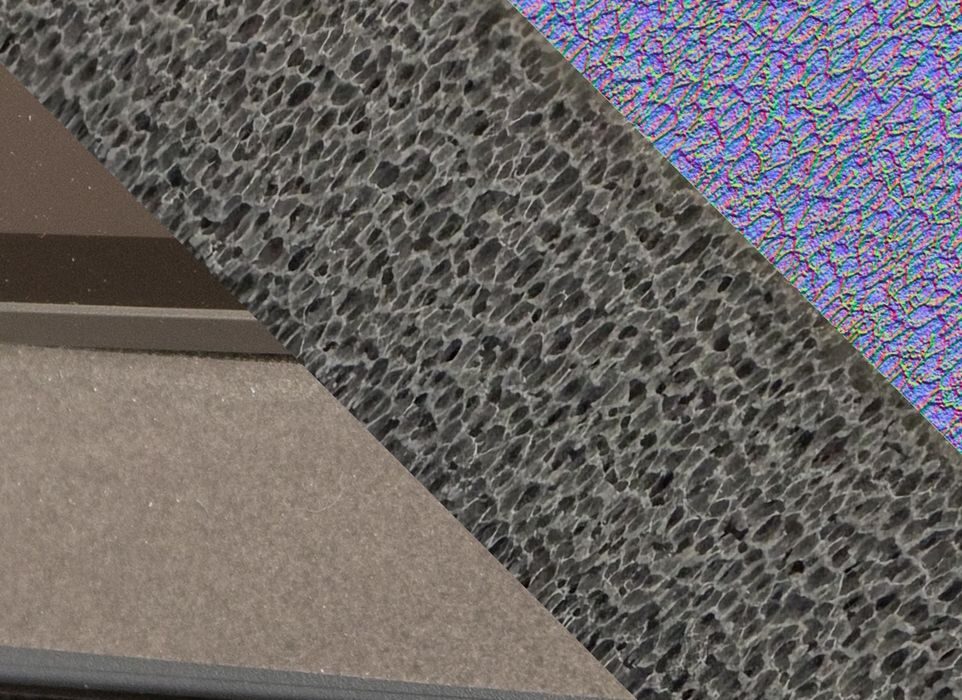
Oakes-Bryden informs us that they are now shifting to foamed silicone as a new approach, which seems to be quite effective. Oakes-Bryden explains:
“In our testing the HPPS systems reduces power consumption 24-40% (assuming 65C chamber temperature; depending on ambient temperature).”
That’s quite significant, and would certainly make a difference for print farms using larger numbers of devices. Electrical costs are only going to rise as AI datacenters slurp up available electrons, so an add-on like the HPPS might be quite useful.
That said, this is also something that 3D printer manufacturers might consider. It would be notable if a manufacturer designed an upgraded version of their CoreXY systems to have built-in insulation and were able to say that it reduces power costs by, say, a third.
Via IBW Additive
