Anthony Palumbo and Charles Goulding explore how Ford and Harley-Davidson are using faster, more flexible design systems as they reposition major vehicle programs, including Ford’s next-generation F-150 Lightning and Harley-Davidson’s planned return of an attainable, highly customizable Sportster.
Introduction
Automotive 3D printing is undergoing an important design shift. For decades, the technology was primarily associated with concept models and prototype parts. It still performs those functions, but its role has expanded into a larger industrial system that includes rapid design iteration, plant tooling, inspection fixtures, robotic grippers, motorsport components, thermal-management hardware, low-volume production, and specialized replacement parts.
This shift does not mean that additive manufacturing will replace stamping, casting, molding, or high-volume machining. Those processes remain more economical when manufacturers need hundreds of thousands or millions of identical components. Instead, 3D printing is becoming most valuable where manufacturers must reduce the cost and time associated with design changes.
That capability is especially relevant in today’s vehicle market. Global vehicle production increased from 92.7 million units in 2024 to 96.4 million in 2025, while sales rose from US$95.3 million to US$99.8 million. However, the International Organization of Motor Vehicle Manufacturers reported that growth was concentrated in Asia, while Europe stagnated and the Americas faced more complicated production and trade conditions.
Electrification is growing globally but developing unevenly among regions and vehicle categories. The International Energy Agency (IEA) reported that global electric-car sales grew 20 percent in 2025 to more than 20 million vehicles, representing approximately one-quarter of new cars sold worldwide. Chinese manufacturers supplied about 60 percent of the electric cars sold globally, compared with approximately 15 percent each for European and North American manufacturers.
China’s competitive advantage is increasingly based on price as well as production volume. The IEA found that 70 percent of battery-electric cars sold in China during 2025 were less expensive than the average conventional car. China also produced nearly three-quarters of the world’s electric cars, while its electric-car exports doubled to more than 2.5 million vehicles. Although most Chinese vehicles have not entered the US market, their lower production costs are influencing American product strategies. Reuters reported that Ford’s forthcoming family of lower-cost EVs, including a midsize pickup targeted to start at approximately US$30,000, is intended to approach the cost efficiency of Chinese competitors. Ford CEO Jim Farley has said these manufacturers are establishing a standard that Ford must be able to match.
The pressure is also visible at Volkswagen, which led the world in annual vehicle sales before Toyota regained first place in 2020. In December 2024, Volkswagen and its Works Council agreed to a socially responsible reduction of more than 35,000 positions at Volkswagen’s German locations by 2030. By July 2026, approximately 50,000 job reductions were planned across Volkswagen, Audi, and Porsche. Volkswagen CEO Oliver Blume subsequently warned employees that approximately 50,000 additional reductions might be required to close the group’s estimated 20 percent cost disadvantage relative to competitors. Those additional reductions remain under consideration and should not be defined as completed or formally approved layoffs.
These conditions are forcing established manufacturers to lower development and production costs while offering more value at attainable prices. They must also reconsider vehicle architectures, powertrains, manufacturing plans, and product-development practices. Ford’s changing electric-truck strategy and Harley-Davidson’s return to a more attainable, customizable motorcycle demonstrate two different responses. In both cases, the broader lesson for additive manufacturing is the same: when competition intensifies and the market becomes difficult to predict, the ability to design, test, and modify products quickly becomes increasingly valuable.
Ford Repositions the F-150 Lightning
Ford’s experience with the F-150 Lightning illustrates how rapidly a major vehicle program can change. The company introduced the battery-electric pickup with substantial production ambitions, but demand for large electric trucks proved more difficult to scale than initially expected.
Ford reduced Lightning production in 2024 as demand softened. By December 2025, the company had ended production of the current battery-electric model and announced a broader restructuring of its EV strategy. Ford said it expected to record approximately US$19.5 billion in EV-related special items, primarily associated with canceled programs, changes to its battery operations, and other program expenses.
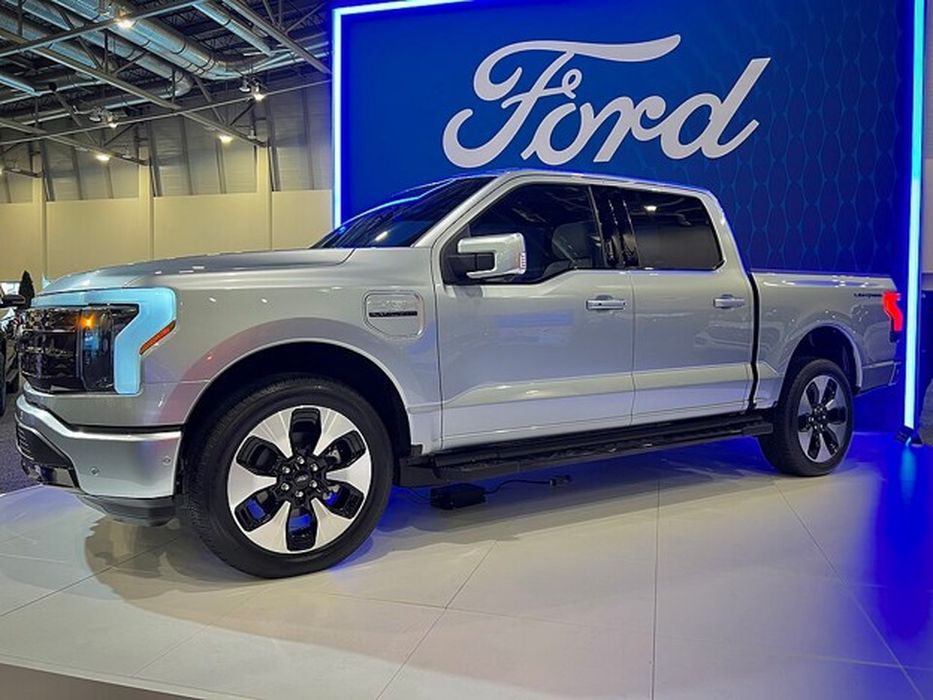
Rather than abandon the Lightning name, Ford is repositioning it. The company announced that the next-generation F-150 Lightning will use an Extended-Range Electric Vehicle, or EREV, architecture. Electric motors will propel the truck, while an onboard generator will produce electricity to extend its operating range. Ford is targeting more than 700 miles of generator-backed estimated range and intends to retain exportable power for homes, campsites, and work sites.
The next-generation Lightning will be assembled at the Rouge Electric Vehicle Center in Dearborn, Michigan. Ford has not yet announced its launch date, pricing, battery capacity, generator specifications, or detailed production configuration.
The EREV decision responds to practical problems encountered by large electric pickups. Truck buyers expect towing capacity, long-distance mobility, rapid refueling, and reliable operation in regions where charging infrastructure may be limited. A generator-supported electric architecture could retain electric propulsion while reducing dependence on frequent charging during towing and long-distance travel.
This is not merely a powertrain substitution. Packaging a battery, electric motors, power electronics, fuel system, generator, cooling hardware, exhaust system, and exportable power equipment into a pickup creates an extensive new set of design and validation requirements. That is the kind of engineering environment in which rapid prototyping and additive manufacturing can provide significant value.
However, an important distinction must be maintained: Ford has not publicly confirmed that the next F-150 Lightning EREV will incorporate production 3D printed components. The accurate connection is that Ford has developed extensive additive-manufacturing capabilities that can support rapid iteration across its vehicle programs while it restructures its product portfolio.
3D Printing Within Ford’s New Design System
Ford’s additive-manufacturing experience predates the current EV transition. The company says it acquired its first stereolithography system in 1986. Ford subsequently added fused deposition modeling, selective laser sintering, and 3D sand printing to its capabilities.
Over several decades, Ford reported producing more than 500,000 printed parts. It also stated that certain prototypes that once required four or five months and approximately US$500,000 could instead be produced in days or hours for a few thousand dollars. These figures describe particular prototype scenarios rather than universal savings, but they illustrate why additive manufacturing became embedded in Ford’s development system.
Ford’s Electric Vehicle Development Center in Long Beach, California, provides a more current example of the 3D printing design shift. The facility is focused on Ford’s Universal Electric Vehicle Platform, which is separate from the next-generation F-150 Lightning EREV. Its first announced product is an affordable midsize electric pickup.
The Long Beach campus combines designers, engineers, battery specialists, manufacturing personnel, supply-chain experts, fabrication resources, and testing laboratories. Its design studio includes milling equipment, 3D printers, a trim shop, and full-scale modeling capabilities. Ford says some full-size prototypes can be produced in as little as 30 minutes or within several days, allowing teams to complete more design iterations before a program deadline.
Ford reported that the Universal EV team’s work reduced the platform’s number of parts by 20 percent and cooling hoses and connections by 50 percent. The company expects the resulting midsize pickup to be assembled 15 percent faster than the Louisville Assembly Plant’s previous products.
Those reductions should not be attributed entirely to 3D printing. They result from a broader clean-sheet development system that also includes digital design, physical modeling, battery testing, thermal testing, machining, and manufacturing engineering. Nevertheless, 3D printing is an important part of the system because it allows digital concepts to become physical parts quickly enough to influence design decisions.
This is the larger connection to Ford’s F-150 strategy. The company is responding to a difficult market by changing powertrains and product plans. Even where the final components are conventionally manufactured, additive manufacturing can reduce the time required to evaluate packaging arrangements, ducts, brackets, housings, cooling concepts, assembly aids, and inspection fixtures.
Ford Racing Demonstrates the Production Standard
Ford’s Formula 1 work shows what happens when additive manufacturing progresses beyond basic prototyping. In preparation for its 2026 power-unit partnership with Red Bull, Ford reported producing approximately 1,000 additively manufactured parts, including battery cold plates and cooling components.
These were not simple visual models. Ford described complex metal and polymer parts that required evaluation for mechanical strength, hardness, and geometric conformance. Components were also subjected to X-ray and computed-tomography inspection before being sent to Ford’s metrology laboratory for further dimensional verification.
This is an important indication of additive manufacturing’s maturation. Printing is only one step in the process. Production-capable additive manufacturing can also require material traceability, controlled build parameters, thermal treatment, support removal, machining, surface finishing, nondestructive inspection, dimensional verification, and performance testing.
Ford has already demonstrated how some of these inspection capabilities can transfer into mainstream vehicle development. According to Ford, a nondestructive-evaluation team applied advanced scanning methods to an F-150 headlamp problem involving excess adhesive that caused condensation. The issue, which had resisted conventional inspection for months, was identified within a day.
The direct transfer in that example was an inspection method rather than a printed production component. Nevertheless, it shows how additive-manufacturing programs can strengthen the broader engineering and validation capabilities used on consumer vehicles.
Harley-Davidson Responds to a Challenging Motorcycle Market
Harley-Davidson is confronting a different market problem. Its worldwide retail motorcycle sales declined 12 percent in 2025, while North American retail sales fell 13 percent. Harley-Davidson Motor Company reported a US$29 million operating loss for the year. The company specifically identified declining customer traffic and affordability concerns as factors affecting its largest market.
Results improved during the first quarter of 2026, with North American retail sales increasing 14 percent and global retail sales rising 8 percent. However, Harley-Davidson Motor Company’s quarterly operating income fell from US$116 million to US$19 million as tariffs, incentives, product mix, and restructuring costs affected profitability.
In May 2026, new CEO Artie Starrs introduced the “Back to the Bricks” strategy, intended to restore sales volume, improve dealer profitability, reduce costs, and refocus the company on areas where the Harley-Davidson brand has established credibility.
One of the plan’s most significant product decisions is the return of the Sportster.
The Returning Sportster Is Not the Sportster S
The planned Sportster must be distinguished from the existing Sportster S. The 2026 Sportster S remains a liquid-cooled, performance-oriented motorcycle powered by the Revolution Max 1250T engine. It is currently listed at a starting price of US$15,999.
The returning Sportster described in Harley-Davidson’s 2026 strategy is a different future product. Harley-Davidson characterizes it as an air-cooled, middleweight motorcycle with an attainable price point of approximately US$10,000. The company calls it an “ultimate blank canvas” for rider customization.
Harley-Davidson’s strategy presentation indicates that the motorcycle is intended to create value through several channels:
- The original motorcycle sale.
- Parts and accessories.
- Apparel and licensing.
- Financing and insurance.
- Dealer service.
- Used-motorcycle transactions.
- Future trade-ups to more expensive Harley-Davidson models.
The approximately US$10,000 price should therefore be described as a planned or targeted price point rather than a confirmed final MSRP. Detailed specifications and final launch information have not yet been released. Harley-Davidson’s financial plan anticipates an initial contribution from the returning Sportster and the new smaller Sprint model during 2027.
This is a value-oriented strategy, but not simply a price reduction. Harley-Davidson is designing the motorcycle as a relatively attainable starting platform that can generate additional value through personalization and long-term dealer relationships. The company is also planning to introduce parts and accessories concurrently with the motorcycle and is targeting 20 to 30 percent growth in this portion of the business.
Where 3D Printing Fits Harley Davidson’s Customization Strategy
Harley-Davidson has not announced that the returning Sportster will use mass-produced 3D printed parts. Any such claim would be premature.
The stronger connection is between additive manufacturing and the motorcycle’s customization-centered design philosophy. A platform intended to support different handlebars, seats, exhaust arrangements, intake components, lighting systems, luggage, controls, trim pieces, and appearance packages requires extensive fit, packaging, ergonomic, and performance evaluation.
3D printing can help designers and accessory engineers:
- Evaluate multiple component geometries without separate tooling for every iteration.
- Produce fit-check models for motorcycle frames and mounting interfaces.
- Test rider-contact components and ergonomic arrangements.
- Develop assembly and inspection fixtures.
- Create prototypes of low-volume accessories.
- Evaluate customized ducts, brackets, guards, housings, and trim.
- Consolidate complicated components where conventional fabrication requires multiple pieces.
For a “blank canvas” motorcycle, the important additive-manufacturing opportunity may therefore be the development of the customization ecosystem rather than the mass production of the motorcycle itself.
Harley-Davidson Racing Provides the Strongest Evidence
Harley-Davidson Factory Racing’s collaboration with Protolabs offers the clearest documented example of the company’s use of functional additive manufacturing.
In the King of the Baggers racing series, engineers identified the right-side exhaust as a limitation on motorcycle lean angle. Protolabs reported that approximately half a degree of additional lean angle could reduce lap time by about one-tenth of a second per turn.
The racing team used direct metal laser sintering to produce a titanium exhaust with an organic geometry that tucked closer to the motorcycle. The design increased clearance and allowed riders to lean farther during right-hand turns. The geometry would have been difficult to reproduce through conventional tube bending and welding.
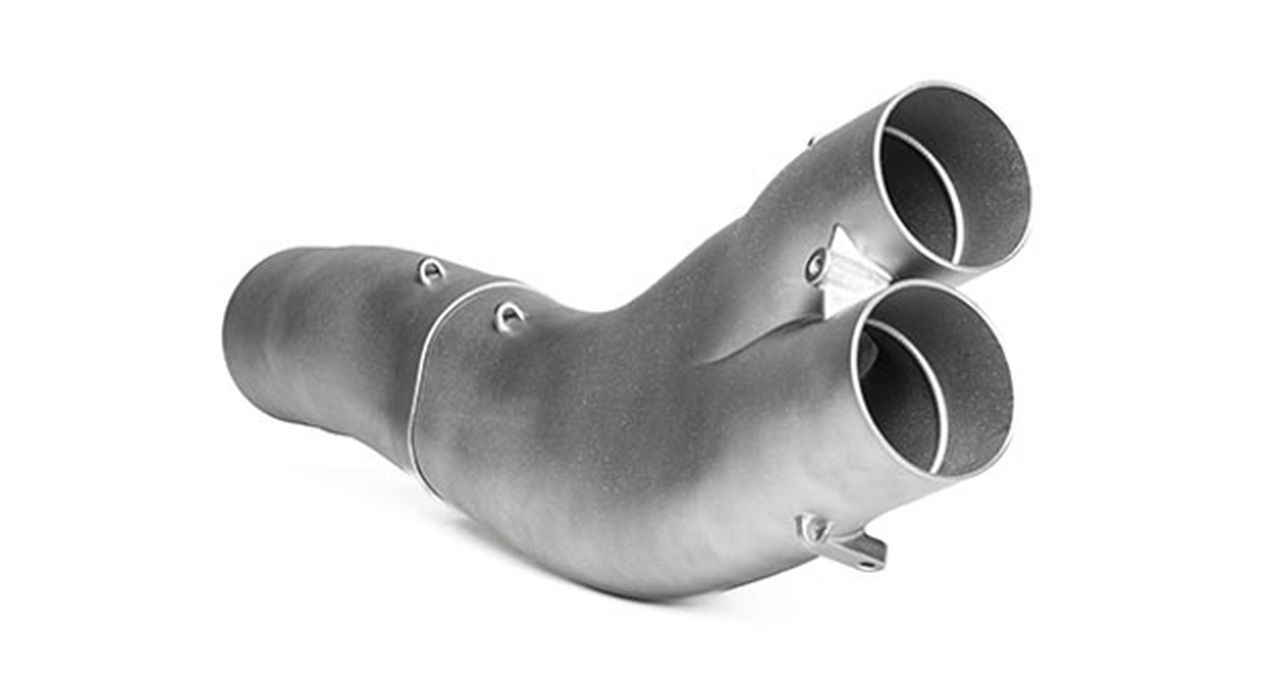
This example demonstrates why motorcycles are strong candidates for selected additive-manufacturing applications. Space is limited, thermal exposure is substantial, vibration is unavoidable, and nearly every component affects rider position, handling, weight distribution, or ground clearance. Additive manufacturing allows engineers to design around the available space rather than limiting every component to shapes easily produced by bending, cutting, welding, casting, or machining.
The racing exhaust does not establish that a production Sportster will receive a 3D printed exhaust. It does demonstrate that Harley-Davidson’s engineering ecosystem has already used metal additive manufacturing to solve a real packaging and performance problem.
From Printed Prototypes to Flexible Product Systems
Ford and Harley-Davidson are responding to different forms of market pressure. Ford is restructuring its electrification strategy after high costs and slower-than-anticipated demand for large battery-electric vehicles. Harley-Davidson is rebuilding motorcycle volume by emphasizing attainability, customization, dealer economics, and long-term rider value.
In both situations, the product-development system must become more adaptable.
Ford’s next-generation F-150 Lightning EREV will require a new combination of electric propulsion, onboard generation, thermal systems, fuel storage, power electronics, towing capability, and exportable electricity. Harley-Davidson’s returning Sportster must meet its approximately US$10,000 price objective while supporting the personalization opportunities on which the company expects dealers and its parts-and-accessories business to capitalize.
Neither program proves that the final vehicle will contain large numbers of 3D printed parts. That is not the most important measure of additive manufacturing’s influence.
The more meaningful change is that 3D printing allows engineers to evaluate more designs before tooling is finalized. It helps manufacturers create fixtures, gauges, robotic end-effectors, prototype housings, ducts, brackets, thermal components, and limited-volume parts without committing immediately to expensive production tooling.
Ford’s Long Beach development center demonstrates how 3D printing can become part of an integrated, rapid-iteration vehicle program. Ford’s Formula 1 work shows the inspection and qualification required for demanding functional components. Harley-Davidson’s racing exhaust demonstrates how metal additive manufacturing can overcome motorcycle packaging limitations. The returning Sportster, meanwhile, presents a potential future platform for extensive accessory development and customization.
The Research & Development Tax Credit
IRC § 41 qualified research generally requires research intended to discover technological information useful in developing a new or improved business component, with substantially all activities constituting a process of experimentation for function, performance, reliability, or quality. A process of experimentation includes identifying uncertainty, identifying alternatives, and evaluating them through modeling, simulation, or systematic trial and error.
Ford’s activities include rapid design iteration, prototyping, tooling and inspection fixtures, robotic grippers, motorsport components, thermal-management hardware, low-volume production, and specialized replacement parts. Additionally, Ford’s Formula 1 work included complex metal and polymer parts, including battery cold plates and cooling components, with testing for mechanical strength, hardness, and geometric conformance
Ford’s 3D printing examples support IRC § 41 eligibility because they show more than routine fabrication. The article describes additive manufacturing used to move digital concepts into physical parts quickly enough to influence engineering decisions, including rapid design iteration, packaging evaluations, ducts, brackets, housings, cooling concepts, assembly aids, and inspection fixtures. These activities help resolve uncertainty about appropriate design, materials, geometry, manufacturability, and performance. They also relate to new or improved business components, such as vehicle parts, thermal/cooling hardware, production tooling, and inspection fixtures.
The strongest examples are Ford’s functional motorsport parts and thermal-management components, including battery cold plates and cooling components, because those parts were not merely visual models; they were evaluated for strength, hardness, dimensional accuracy, and geometric conformance. Ford’s X-ray, computed-tomography inspection, metrology review, and validation workflow further show an engineering-based process for evaluating alternatives and confirming performance, reliability, and quality.
Conclusion
The automotive 3D printing design shift is not about printing entire cars or motorcycles. It is about changing how manufacturers respond to uncertain markets.
Ford is repositioning the F-150 Lightning as an extended-range electric truck after a difficult and expensive period for its large-EV strategy. Harley-Davidson is returning the traditional Sportster at a planned price of approximately US$10,000 and positioning it as an attainable platform for customization and long-term rider value.
Ford has not confirmed production of 3D printed components for the next Lightning, and Harley-Davidson has not announced them for the returning Sportster. What both companies demonstrate is the growing need for development systems capable of making physical designs, testing alternatives, and adjusting production plans more quickly.
Conventional manufacturing will continue to provide automotive scale. Additive manufacturing increasingly provides the design flexibility required when the market, the vehicle architecture, or the customer proposition must change.