
Researchers have developed an ingenious method of targeted drug delivery using 3D printing.
Today’s medicine involves thousands of different drugs, and most are simply administered to the entire body. Injected into the bloodstream or taken internally, the drugs then wash through the body, hopefully interacting with the area of interest.
While this works, it is somewhat inefficient. For some medical situations, the drugs are best targeted to specific areas. For example, a tumour or wound might require specific drugs, while neighbouring areas do not.
Targeting specific areas is challenging and sometimes involves surgery, where the drug delivery mechanism is physically inserted or applied.
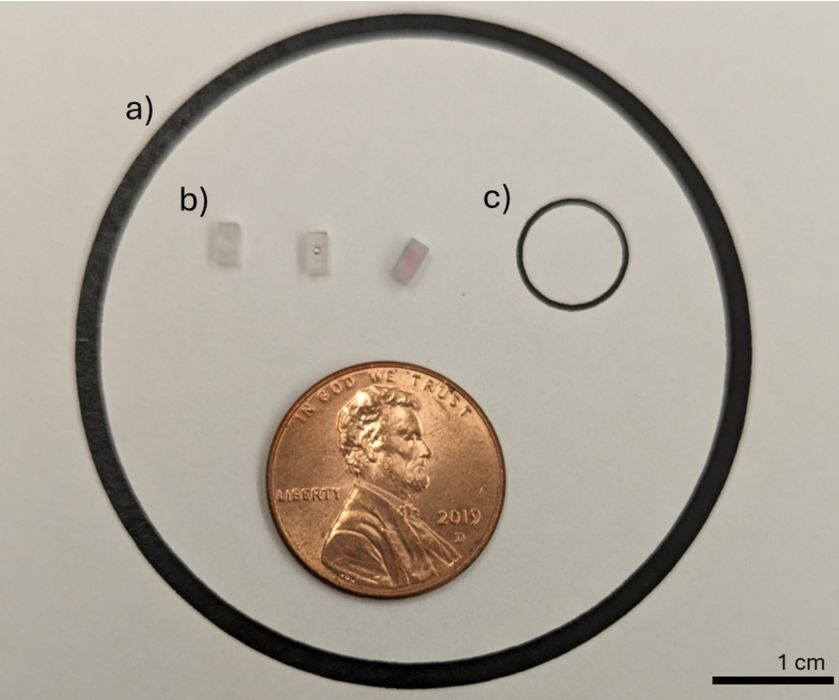
The researchers developed a unique solution to this issue by 3D printing “microbots” that can deliver drugs to very specific targets.
The microbots are quite small: 3 x 1.4 x 1.4 mm in volume. Each microbot has an internal cavity that can contain up to 3 microlitres of a fluid drug. This cavity is covered by a temporary wax seal, and that’s the key to this process.
The microbots were 3D printed using a Formlabs Form 3+, using their clear FLGPCL04 resin. The layer size of the print was 0.025mm, sufficient to create the desired geometry.
After printing, the microbots were press-fit with a very small magnet, which is a key part of their process.
Here’s how it is intended to work: the patient would swallow a number of microbots, as prepared above. The microbots would be loaded with the specific drug required by the patient.
A rotating external magnet is used to guide the microbots to the desired delivery site, which must be somewhere along the gastric system. Once there, an external ultrasound device is used to locally heat the microbots.
When the local temperature is raised to 39-42°C, the wax seal melts, releasing the drugs precisely where they are required.
They haven’t done this with humans quite yet, as this technology is still under development. In the study, they 3D printed a replica colon and were able to navigate the microbots to desired target areas.
This seems to be a promising area of research that could be used to quickly administer targeted drugs for patients. The cost of producing the microbots should be negligible, but there would likely be more cost in the labour and equipment required for the magnetic navigation procedure.
Via ArXiv
