
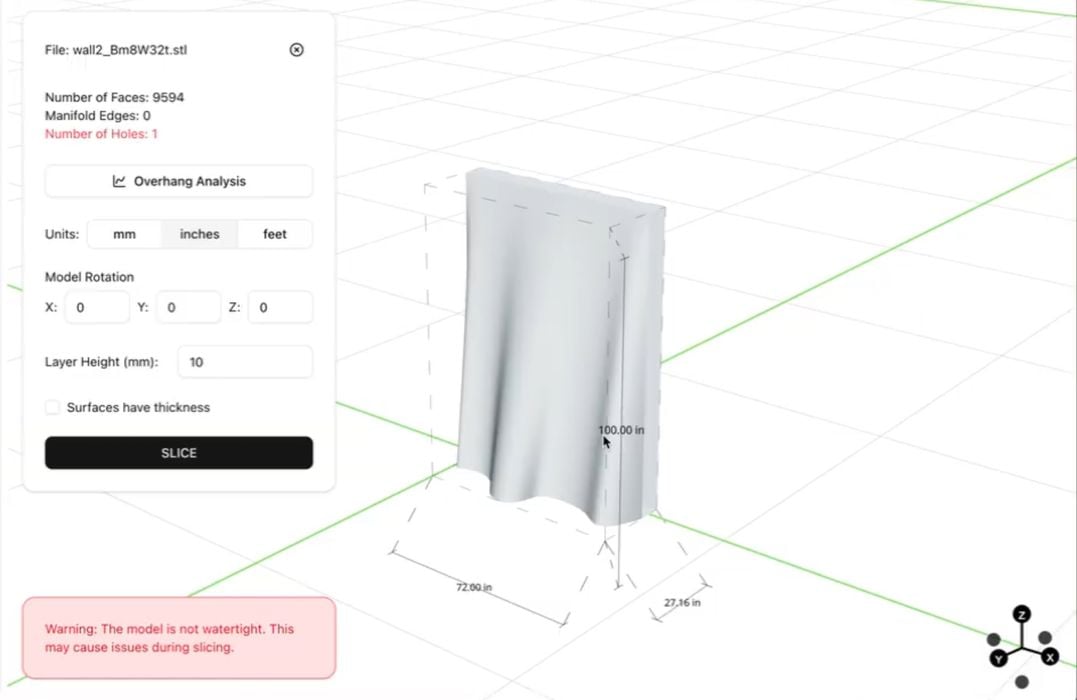
3DCP technology continues to improve, and it’s not only on the hardware side.
I’ve been following 3D print tech for almost two decades now, and I’ve seen how there’s a natural sequence of steps that happens while a technology matures. In the case of FFF 3D printing, we’ve seen it move from a single-supplier proprietary solution to today’s worldwide highly capable equipment that services everything from casual desktop use to massive life-size polymer prints.
Along that trajectory, quite a number of events happened, such as the expiry of patents, development of new materials that enabled printing of production parts, third-party software to improve operations, introduction of AI features, and much more. And it hasn’t stopped; there will be many more innovations to come.
But what about 3DCP? That’s the 3D print technology used to print large-scale structures in concrete.
We’ve seen a number of machine manufacturers emerge, including ICON, COBOD, Apis Cor, etc. We’ve seen many global and local construction firms adopt one or more of these lines of equipment to build customer projects. We’ve seen innovations in materials to enable lower costs and use of local materials.
Today I noticed another step forward, which, honestly, may have taken place a while ago and I didn’t notice: there is third-party software for preparing 3DCP print jobs. At least one company is now providing that option for equipment operators.
The company in question is CAMADA, a Portugal-based operation, which seems to have launched in 2022. They explain:
“From 3D model to GCODE, CAMADA is the only software you need for 3D concrete printing. Our powerful slicers optimize print paths for any robotic arm or gantry system printer, while our intuitive interface makes it easy to simulate your prints.”
3DCP is sufficiently different from other extrusion systems that you cannot use the slicing technology commonly used with FFF technologies. CAMADA performs a similar function, converting a 3D model to G-code, but for 3DCP applications and equipment.
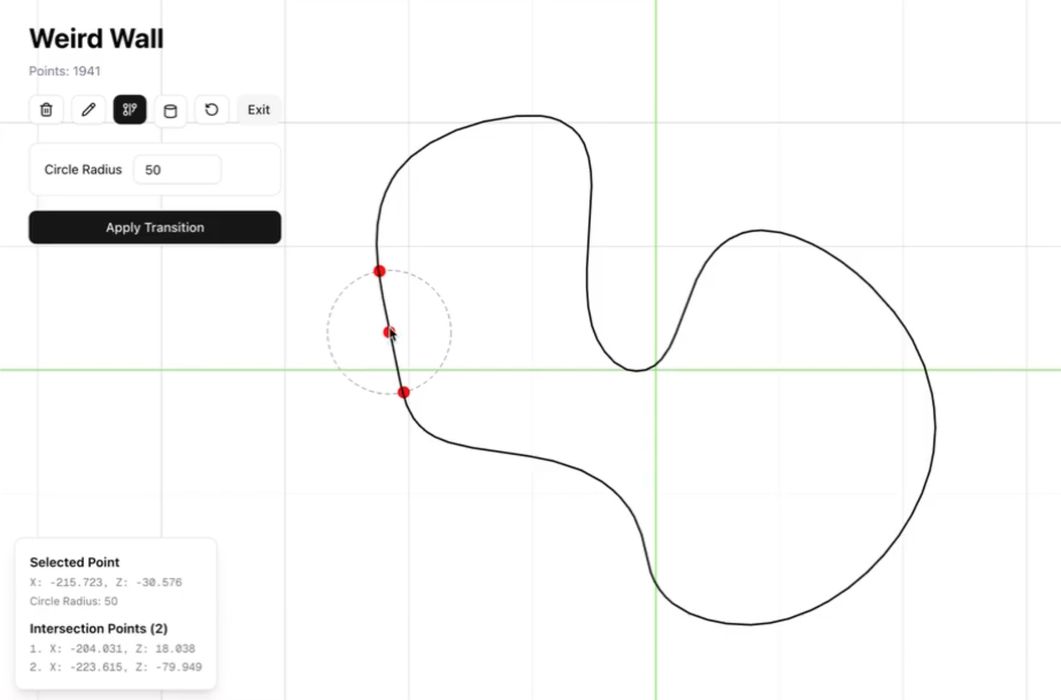
Not only does it slice an existing 3D model, it also seems to allow for the creation of simple 3D models directly in the tool. “Simple” is not a limitation here because 3DCP by definition cannot produce the intricate geometries typically made by FFF or resin 3D printers.
While I’m definitely not a 3DCP operator, the CAMADA software appears to be quite comprehensive, and 3DCP operators might want to check it out.
This is one more step in the maturation of 3DCP. While each equipment operator typically provides their own software, the presence of an independent third party that’s pushing the envelope of function might cause others to increase their functionality to keep up.
Via CAMADA
