
Charles R. Goulding and Jacob Nolan reveal how VUMC is navigating layoffs by investing in smart labs, personalized medicine, and AI-driven diagnostics.
Budget Cuts Trigger Layoffs, but Innovation Remains a Priority
Vanderbilt University Medical Center (VUMC), one of the top academic hospitals in the U.S., recently announced it will lay off up to 650 employees in response to a projected US$300 million budget shortfall. This decision, which affects less than 2 percent of its workforce, comes as the institution grapples with deep cuts in federal research funding and reduced Medicaid reimbursements. Although layoffs are concentrated in non-clinical research and administrative roles, the move marks a significant shift for a hospital system historically recognized for its pioneering work in biomedical research and patient care.
Despite the layoffs, VUMC remains committed to staying at the forefront of innovation in health care. The medical center has long invested in advanced technologies, particularly in the fields of 3D printing, lab automation, and AI-integrated research. These strategic bets may help streamline operations, reduce long-term costs, and maintain a competitive edge in both patient outcomes and scientific advancement.

3D Printing as a Tool for Personalized Medicine and Research
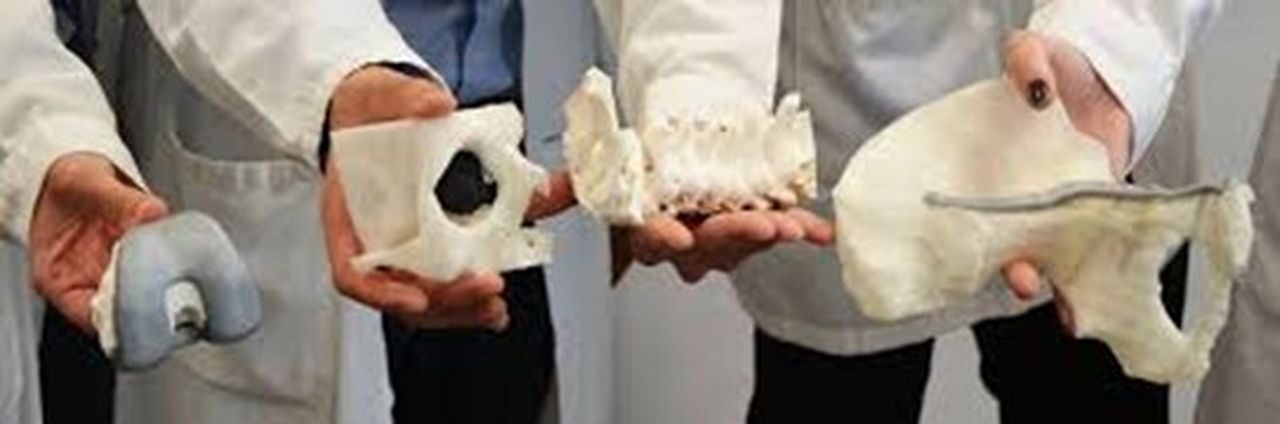
While much of the spotlight is on the layoffs, VUMC’s role in the advancement of 3D printing remains a key part of its research infrastructure. The hospital has applied 3D printing technology in a variety of ways, including anatomical modeling for complex surgeries and the creation of customized implants. These capabilities allow for more accurate preoperative planning and have led to better patient outcomes across a range of procedures.
VUMC researchers are also leveraging 3D molecular imaging and spatial biology to study tumor microenvironments. At recent national oncology conferences, teams from the center presented how 3D visualization combined with artificial intelligence could improve cancer diagnostics and treatment planning. This work could be a precursor to developing 3D-printed scaffolds for regenerative tissue applications, especially in immunotherapy and oncology research.
Lab Automation and AI: The Future of Scientific Discovery
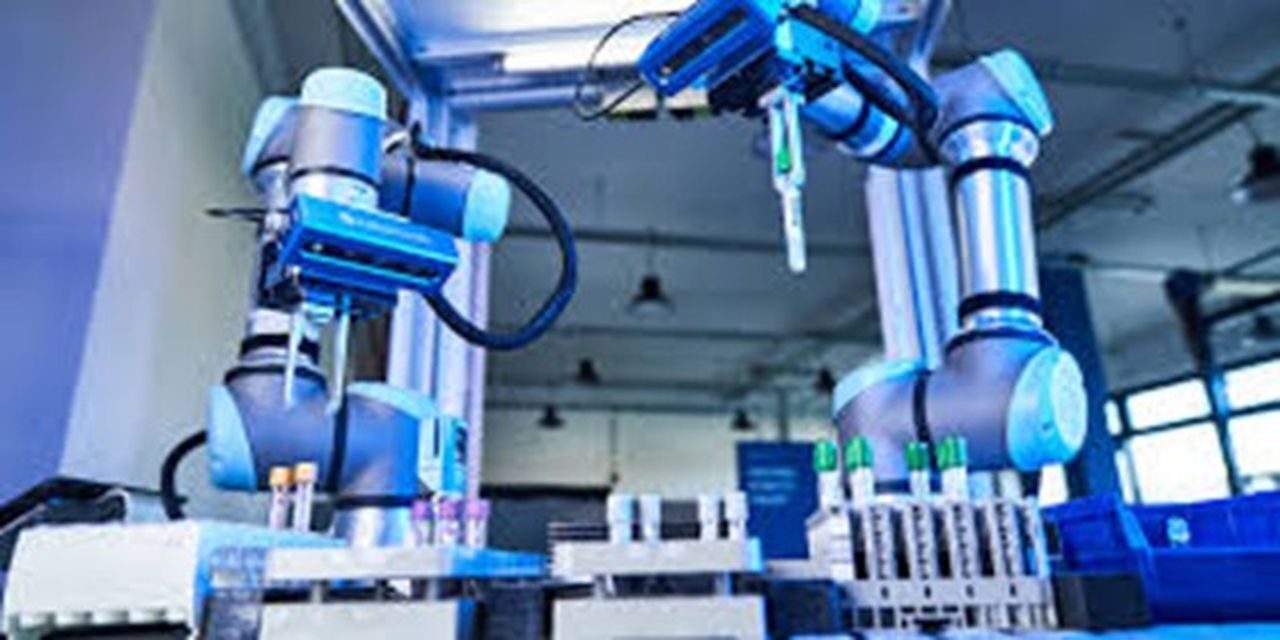
Parallel to its work in 3D printing, VUMC has been pushing forward with lab automation and artificial intelligence across multiple departments. Its Molecular AI Initiative focuses on enhancing molecular and cellular imaging through automated workflows, which can process vast amounts of biological data faster and more accurately than manual methods. By integrating AI and robotics, the center reduces the need for repetitive labor, which is especially relevant now in the wake of research staffing reductions.
These efforts mirror what’s happening at institutions like the University of Cambridge, where startups like Lila AI are building fully automated “science factories.” Lila AI’s system uses robotic arms, real-time sensors, and machine learning models to run and analyze thousands of experiments daily with minimal human input. Although VUMC’s lab automation isn’t yet at that scale, it is aligning with this global trend of letting machines handle repetition so humans can focus on discovery.
Restructuring Without Abandoning Innovation
What makes VUMC’s situation so complex is that its financial restructuring is happening at the same time as it seeks to expand clinical services. The layoffs do not include nursing or physician staff, and in fact, the center plans to increase clinical hires to support the opening of its new 180-bed Jim Ayers Tower later this year. This dual-track approach, cutting research roles while scaling up patient care, shows a clear shift toward operational sustainability, even if it risks slowing down some areas of discovery.
Still, by focusing resources on transformative technologies like AI and 3D printing, VUMC may be creating a more efficient, technology-driven research model. Instead of large research teams performing repetitive assays, the center can rely more on automated systems to generate and analyze data, ultimately preserving its leadership in precision medicine even with fewer personnel.

The Bigger Picture: Budget Cuts, Smart Labs, and Strategic Investment
The situation at Vanderbilt is not unique. Academic medical centers across the country are facing the pressure of reduced federal funding while still trying to deliver top-tier care and maintain robust research programs. What sets VUMC apart is its willingness to pivot toward technology-driven solutions in the face of adversity. By embedding lab automation and AI into its research environment and continuing to expand 3D printing applications, the institution is charting a course that could serve as a model for others.
As Lila AI and similar ventures show, the scientific world is shifting toward automated, intelligent labs. Institutions that embrace this change may be better equipped to handle economic volatility without sacrificing innovation. VUMC’s recent decisions suggest that it sees this writing on the wall and is adjusting its strategy accordingly.

Rice University Models Transparency and Efficiency in 3D Printing Research
Rice University recently unveiled an innovative approach to university research that may serve as a valuable model for institutions like Vanderbilt. In its Spring 2025 issue of Rice Magazine, the university detailed how clear accounting for both direct and indirect research costs, covering everything from materials and personnel to energy usage and administrative overhead, can greatly improve the efficiency of 3D printing labs. Rice’s use of AI-powered predictive modeling to optimize material use and minimize waste mirrors VUMC’s own efforts to integrate intelligent workflows into its lab infrastructure. Their labs also emphasize open-source hardware, modular design principles, and real-time data tracking to encourage collaboration and reproducibility across disciplines.
By reallocating savings from energy-efficient building retrofits and modular shared lab designs into prototyping resources and advanced equipment, Rice underscores the importance of cost-effective innovation, a lesson that resonates with VUMC’s commitment to strategic investment in 3D printing and automation amid budget pressure. This blueprint of high efficiency, transparent lab operation could provide a framework for how VUMC continues advancing research without escalating overhead costs. It also reflects a growing national trend of merging sustainability, automation, and precision technology to transform academic research environments.
The Research & Development Tax Credit
The now permanent Research & Development Tax Credit (R&D) Tax Credit is available for companies developing new or improved products, processes and/or software.
3D printing can help boost a company’s R&D Tax Credits. Wages for technical employees creating, testing and revising 3D printed prototypes can be included as a percentage of the eligible time spent on the R&D Tax Credit. Similarly, when used as a method of improving a process, time spent integrating 3D printing hardware and software counts as an eligible activity. Lastly, when used for modeling and preproduction, the costs of filaments consumed during the development process may also be recovered.
Whether it is used for creating and testing prototypes or for final production, 3D printing is a great indicator that R&D Credit-eligible activities are taking place. Companies implementing this technology at any point should consider taking advantage of R&D Tax Credits.
Conclusion
Vanderbilt University Medical Center is making hard decisions to address a significant financial shortfall, but it is not abandoning its core mission of advancing health care and science. Through its continued investment in 3D printing, lab automation, and AI-driven research, the medical center is preparing for a more efficient and technologically advanced future. While layoffs are never easy, the direction VUMC is taking may ultimately position it as a leaner, smarter, and more resilient institution in the evolving landscape of academic medicine.