Charles R. Goulding and Andressa Bonafe examine how Ottobock’s digital scan-to-print ecosystem is redefining prosthetic care from artisanal to algorithmic precision.
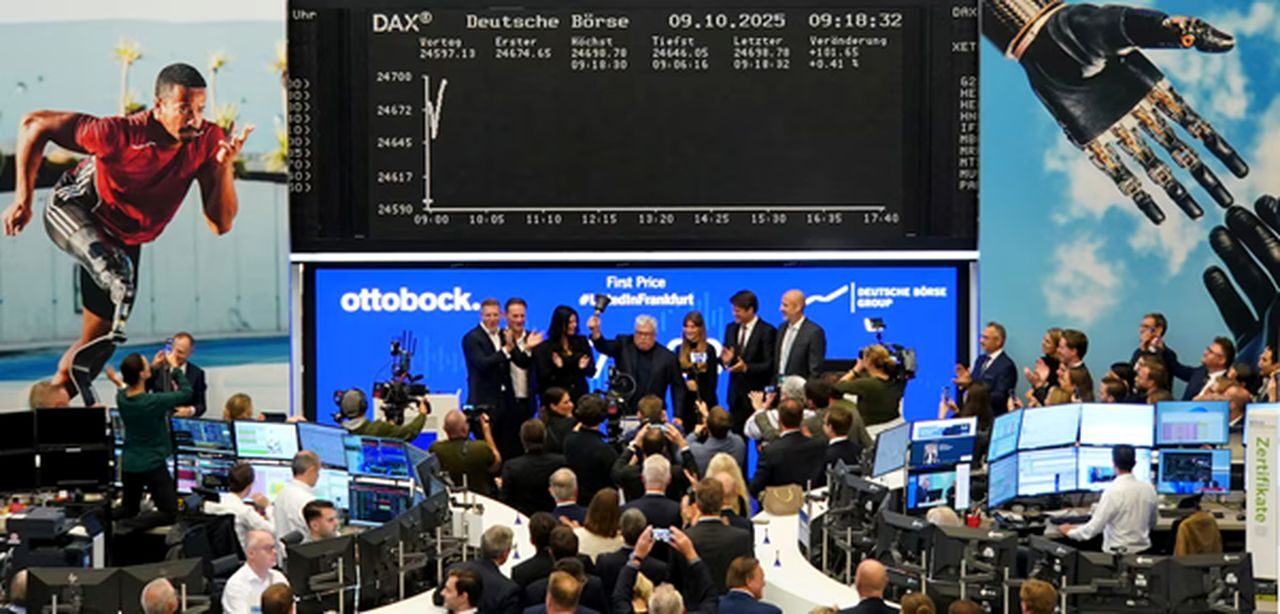
The world’s leading manufacturer of prosthetic limbs, Ottobock, debuted on the Frankfurt Stock Exchange on October 9, 2025, at a valuation of about €4.2 billion, the largest valuation for a German IPO in more than a year. The offering raised roughly €808 million, including €100 million in new capital for the German company. Founded and still led by the Näder family, Ottobock retains more than 80 percent ownership, preserving continuity while inviting public market scrutiny.
Founded in 1919 to meet the needs of war injured veterans, Ottobock built a reputation on precision engineering and patient trust. That legacy now anchors a portfolio that extends beyond prosthetic limbs into digital sockets, wearable robotics, and clinical services that link design to daily life. As a global leader in prosthetics, neuro-orthotics, exoskeletons, and digital solutions, Ottobock has nearly 9,500 employees in 45 countries.
For investors, the listing signals confidence in European medtech and in companies that can scale personalization. For the additive manufacturing community, it marks a deeper shift from craft to industrialized personalization, where selective laser sintering and software guided design turn scans into repeatable devices.
3D Printing in the Prosthetics and Orthotics Industry
Additive manufacturing has moved from prototype tool to production backbone in prosthetics and orthotics, closing the distance between digital design and the human body. Our recent pieces illustrate this trend: Invent Medical’s scan to print pipeline showed true mass personalization, Hanger’s work with Coapt illustrated neural control paired with printed components, and our coverage of veterinary applications showed the same toolset expanding to pets through custom implants, surgical guides, and mobility aids tailored for animal care.
The advantages are clear. Custom devices arrive without plaster molds, with lighter lattices, tuned stiffness, and better ventilation. Digital workflows shorten lead times for clinics, while reproducibility lets teams reorder the same fit as patients grow or parts wear.
Key milestones include the shift to industrial selective laser sintering and medical grade PA11, the rise of centralized print services that let clinicians upload scans, and the adoption of design tools that simulate stress and flex before fabrication. Current trends point to convergence with sensors and exoskeletons, the use of digital twins for lifetime fit management, and a steady move toward bio based materials. The result is a field that now designs proactively around the person, not just the device.
Ottobock as a Case Study in the Rise of 3D Printing
Among established medtech companies, Ottobock stands out as one of the clearest illustrations of how additive manufacturing has matured from experimentation to essential infrastructure. The company’s approach blends digital scanning, CAD modeling, and industrial selective laser sintering (SLS) to deliver patient-specific devices at scale. This strategy has positioned Ottobock not only as a prosthetics and orthotics leader but also as a benchmark for how legacy manufacturers can industrialize personalization without losing clinical precision.
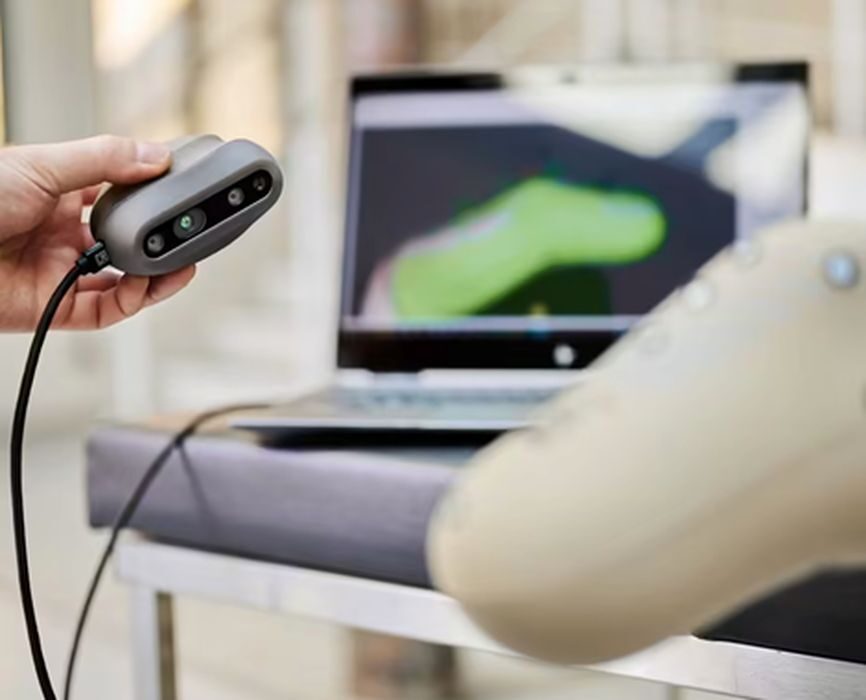
Over the past decade, Ottobock has built a comprehensive digital ecosystem around 3D printing. Ottobock’s iFab (“individual fabrication”) program turns fitting and fabrication into a digital flow: clinicians capture a three-dimensional scan, explore design options in software, and send the validated file straight to production, reducing manual steps and variability. The EasyScan tool sits at the front of that process, capturing surface geometry in real time, resuming cleanly if a scan is interrupted, operating offline when needed, and handing scans directly to the iFab Customer Center for modeling and ordering. On the manufacturing side, Ottobock’s collaboration with EOS uses the EOS P 396 system to build orthoses with features such as tuned wall thickness and breathable perforations, while maintaining repeatable quality so a device can be reproduced with the same structure and performance when required.
The following initiatives span multiple device categories and illustrate Ottobock’s integration of additive processes into mainstream patient care:
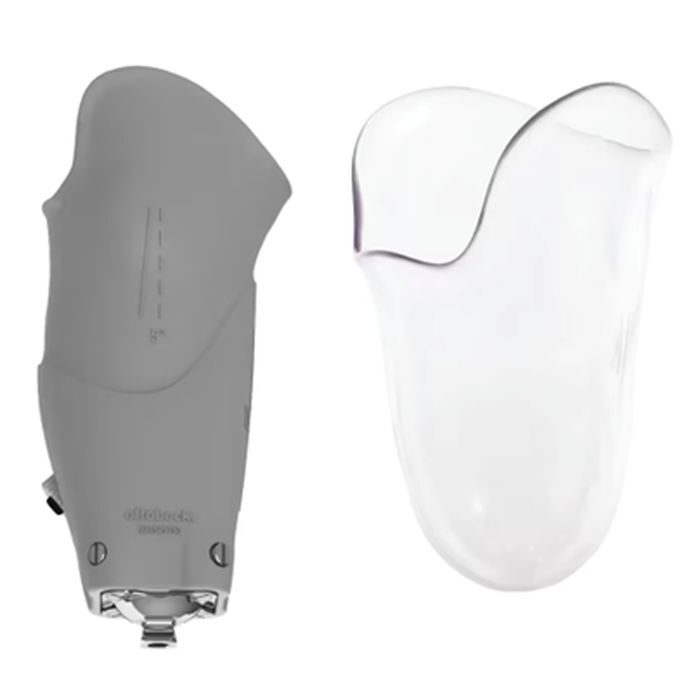
- MyFit TT – Ottobock’s 3D printed transtibial socket is made through a fully digital flow: clinicians scan the residual limb, model the fit in software, and order fabrication via Ottobock’s iFab hub, which produces the socket with a powder-based 3D printing process using nylon material designed for everyday use. The program replaces plaster casting with a scan-model-print sequence and emphasizes a quick, clean, reproducible fitting experience. Configurations include check or definitive sockets and different suspension systems. Within the design workflow, clinicians can set precise socket-to-adapter alignment, adjusting abduction or adduction, flexion or extension, and rotational shift to match the patient’s biomechanics.
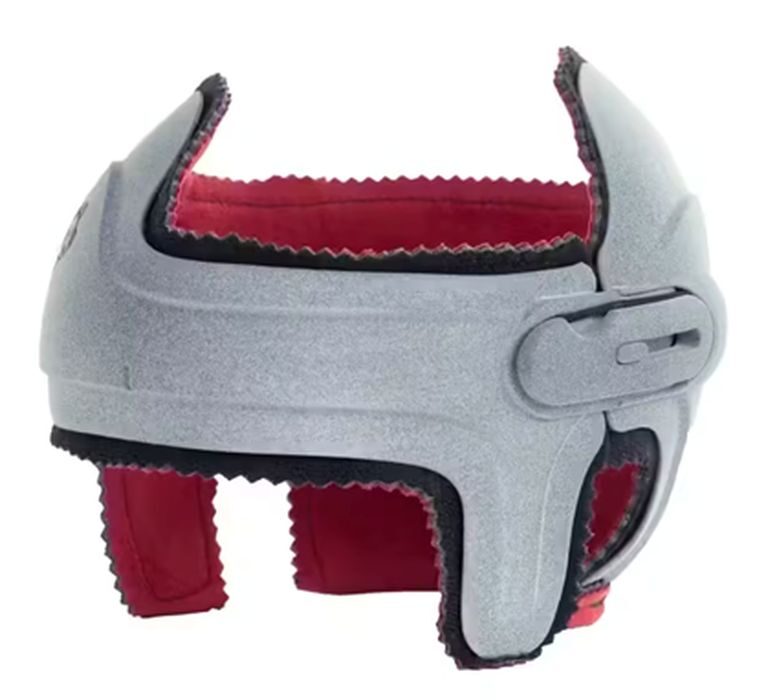
- MyCRO Band – Designed for infants with positional plagiocephaly, the MyCRO Band is a fully 3D-printed cranial remolding orthosis produced through a digital scan-to-print workflow. The precision-fit band has an open-lattice design that improves airflow and reduces weight to about 6 ounces. Its flexible closure system allows for seamless adjustments without tools, and the washable liner simplifies hygiene.
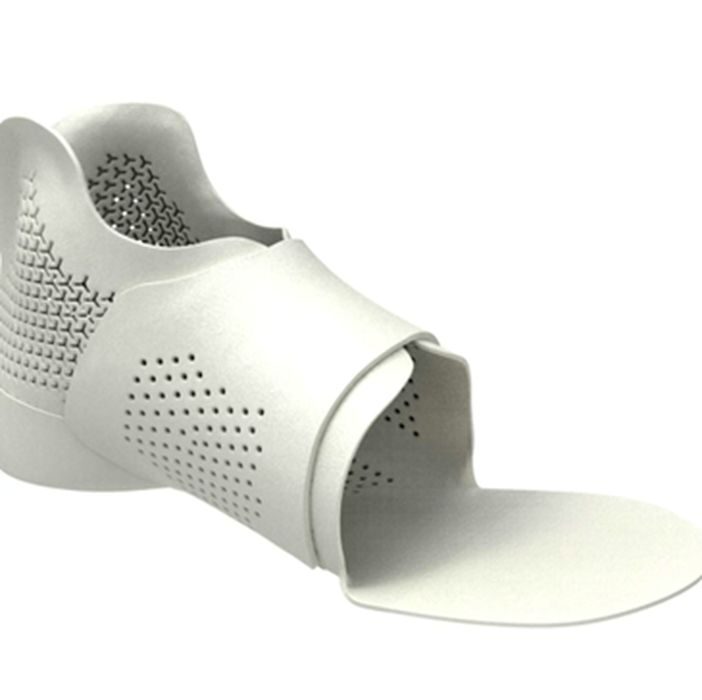
- MyNext Line (MAFO and PFO) – The “MyNext” orthosis family includes the Modular Ankle-Foot Orthosis (MAFO) and Plantar Foot Orthosis (PFO). These devices use digital scans of the patient’s lower limb or foot, processed with Ottobock’s CAD software to define flex zones, perforation patterns, and stiffness profiles. Production occurs on SLS systems using Heavy-duty polyamide, which provides elasticity and fatigue resistance suitable for long-term wear. The design can be reproduced at any time, offering a consistent clinical baseline for follow-up fittings.
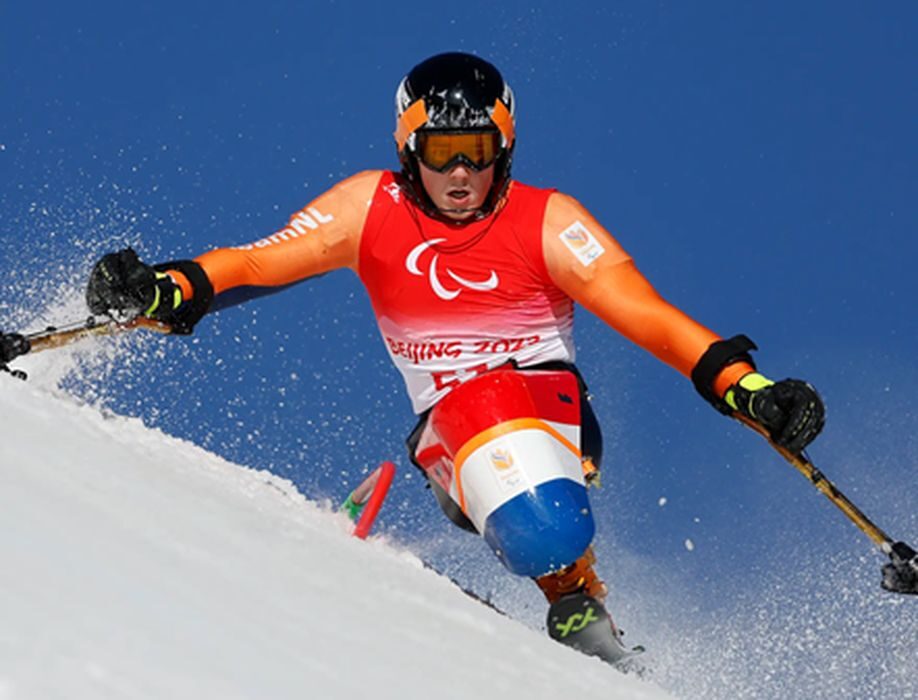
Beyond technology and markets, Ottobock maintains a strong social commitment. As the official technical service provider of the Paralympic Games, its teams repair and fine-tune prostheses, orthoses, and wheelchairs for athletes from around the world, often using 3D printing to produce replacement parts on site. Through the Ottobock Global Foundation, the company also supports children injured in conflict zones such as Gaza. In collaboration with its Turkish branch, Ottobock equipped mobile orthopedic workshops and provided prosthetic care for 21 children at its patient center in Ankara, helping restore mobility and independence after life-changing trauma.
Each of these initiatives illustrates a deliberate progression from traditional craftsmanship to data-driven production. The advantage lies not only in precision and speed but also in the creation of a continuously learning system, in which every scan, fitting, and print feeds back into Ottobock’s digital library. In that sense, the company’s embrace of additive manufacturing represents more than a shift in materials or machines; it is a structural redefinition of how prosthetic expertise is captured, scaled, and shared worldwide. Building on that worldwide revolution, US companies helping lead this shift can also use the federal R&D tax credit to support the design, testing, and software work that drives scan-to-print innovation.
The Research & Development Tax Credit
The now permanent Research and Development (R&D) Tax Credit is available for companies developing new or improved products, processes and/or software.
3D printing can help boost a company’s R&D Tax Credits. Wages for technical employees creating, testing and revising 3D printed prototypes can be included as a percentage of eligible time spent for the R&D Tax Credit. Similarly, when used as a method of improving a process, time spent integrating 3D printing hardware and software counts as an eligible activity. Lastly, when used for modeling and preproduction, the costs of filaments consumed during the development process may also be recovered.
Whether it is used for creating and testing prototypes or for final production, 3D printing is a great indicator that R&D Credit eligible activities are taking place. Companies implementing this technology at any point should consider taking advantage of R&D Tax Credits.
Conclusion
Ottobock’s IPO signals not only investor confidence but also the arrival of a manufacturing model centered on personalization, data, and care. By merging century-old craftsmanship with additive precision, Ottobock demonstrates that digital transformation in healthcare is not about replacing expertise but amplifying it, bringing faster innovation, greater accessibility, and social impact that reaches from elite athletes to children in recovery. As 3D printing continues to reshape how mobility is restored, Ottobock’s story demonstrates that the next frontier in medical manufacturing lies in scaling precision and reproducibility through digital production systems.