
Researchers have developed a method to print different materials using a single 3D printable resin.
Resin 3D printing has been a mono-material process for eternity: you print in a single material. The UV light exposed to resin causes polymerization, making the resin solid. The exposure parameters, typically just the duration, determine the strength of the bonding.
The TU Wien researchers had a different idea. They used a resin DLP 3D printing configuration to test their idea that they could vary the material type by playing with two parameters during printing: temperature and light intensity.
They were able to achieve two material types:
- Print at ~80C yielded opaque, semi-crystalline, stiff material
- Print at 100–110C yielded transparent, amorphous, soft/tough materials
They found that a switch between crystalline and amorphous occurred around 85-87C. Below that the material remained mostly clear, but above the material was opaque and softer.
This was achieved by pre-heating the resin tank and later introducing a delay between layers to adjust the resin temperature. They also varied the light intensity by pixel. In other words, they could choose which layers were crystalline and which were amorphous.
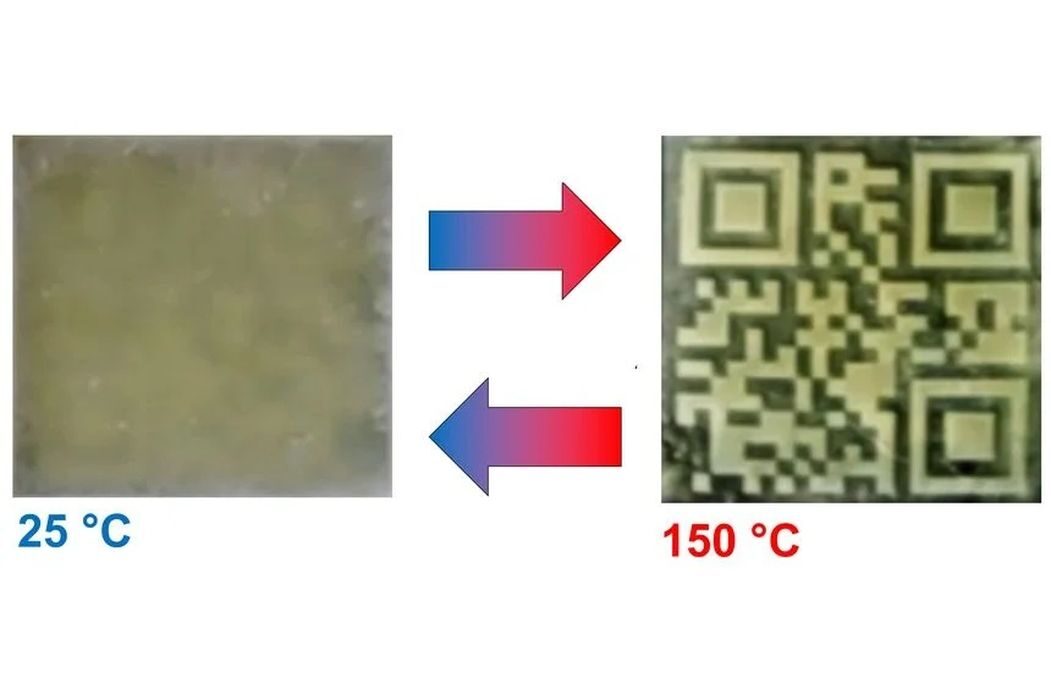
As a demonstration of how this technology could be used, they 3D printed a QR code into a part.
It turns out the material printed also reacts post-printing to thermal changes. They then 3D printed a layer of the QR code pattern in transparent material. Printed on top of this was a crystalline layer that was opaque.
Then, when heated to 150C, the top layer temporarily becomes transparent, revealing the QR code below. Ingenious!
This is an interesting approach, but I have concerns about the amount of time it would take to print an object if there are a significant number of heat changes required. Waiting for cooling or heating would definitely add significant time to a print job.
Another constraint seems to be that the thermal control is practically only done on a per-layer basis, unless you’re willing to introduce even more thermal delays.
