Charles R. Goulding and Preeti Sulibhavi showcase how patriotic investing fuels a transformation in the 3D printing industry—where companies aligned with national-interest sectors are not just beneficiaries of capital, but active adopters of additive manufacturing as foundational technology.
The term patriotic investing—capital directed toward sectors like defense, space, infrastructure, energy, and logistics that are closely tied to national interests is increasingly shaping the landscape of manufacturing and technology. Within that framework, the 3D printing (3D printing) industry has emerged as a key enabler and beneficiary.
The venture firm Andreessen Horowitz has formalized this trend through its “American Dynamism” practice, co-founded by partner Katherine Boyle. Boyle leads investments into companies whose mission aligns with American industrial competitiveness—covering aerospace, defense, supply-chain, manufacturing and critical infrastructure.
Below, we expand on how this investment theme intersects with 3D printing, and profiling key companies in Boyle’s portfolio where additive manufacturing isn’t just a nice-to-have—it’s central to strategy.
Patriotic Investing & Its 3D printing Relevance
At the heart of the American Dynamism thesis is the assertion that the United States must re-industrialize in sectors it once dominated. According to Andreessen Horowitz: “The American Dynamism practice invests in founders and companies that support the national interest: aerospace, defense, public safety, education, housing, supply chain, industrials, and manufacturing.” 3D printing fits naturally into that narrative. Whether you’re talking about defense components, satellite hardware, shipbuilding or logistics gear, additive manufacturing offers speed, design freedom, supply-chain resilience and lighter, more optimized structures. For investors focused on national-interest sectors, companies that master 3D printing can deliver a strategic advantage—and therefore, attractiveness.
In other words: if you’re scanning patriotic investment funds for 3D printing-relevant targets, ask: does this company optimize for additive manufacturing (rather than merely use it as a convenience)? Are they leveraging 3D printing for design, production or supply-chain resilience in sectors that matter to national competitiveness?
Katherine Boyle: Pioneer of the Patriot-Tech VC Thesis
Katherine Boyle is a general partner at Andreessen Horowitz and co-founder of its American Dynamism practice. Prior to joining Andreessen Horowitz, Boyle invested in defense-tech companies, including Vannevar Labs (its namesake being the American engineer, inventor and science administrator during WWII known for his pioneering work in analog computing, Vannevar Bush) and Anduril Industries (which was co-founded by Palmer Luckey).
Her fund’s domain includes space, defense, manufacturing, logistics, energy and other core national-interest sectors. For the 3D printing ecosystem, Boyle’s portfolio is a rich source of case studies.
Portfolio Case Studies Where 3D Printing Is Core

Hadrian Automation (Los Angeles)
Boyle’s portfolio includes Hadrian, headquartered in Torrance, CA.
Hadrian’s mission: “Automating precision manufacturing for aerospace and defense hardware,” including “rocket engine nozzles and fuselage sections… at high volume, low cost
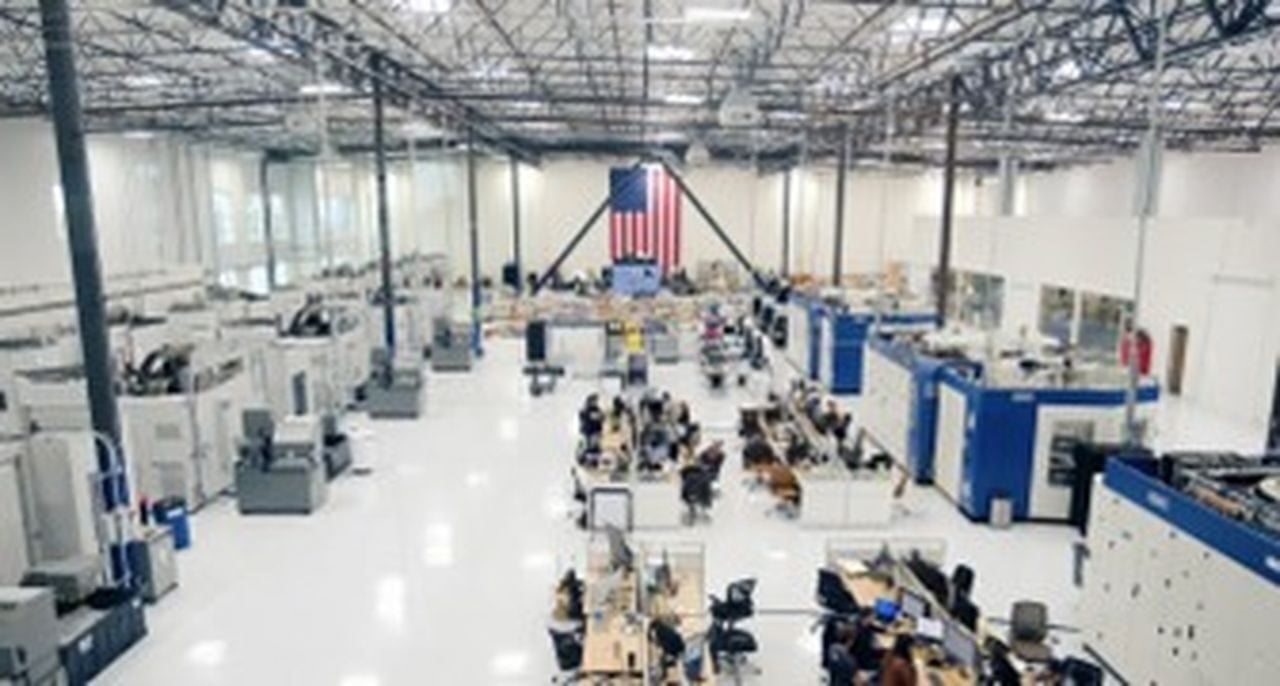
Although Hadrian is known primarily for CNC and automated machining, their expansion roadmap explicitly mentions additive methods: e.g., with their recent US$260 M Series C fund raise, they stated plans to broaden into casting, additive and other processes. Currently, Hadrian is headed by Chris Power (pictured above).
Why this matters: A 3D printing-enabled manufacturer like Hadrian positions itself not as an accessory user of 3D printing, but as a factory that uses additive technologies as a foundational capability for defense and aerospace supply chains. For patriotic investors, this orientation checks multiple boxes: manufacturing sovereignty, supply-chain speed, and advanced hardware for defense.
Apex Space & Defense Systems (Santa Ana / Los Angeles)
Apex Space & Defense provides high-rate manufacturing for space and defense, delivering “lightweight, durable solutions for the space, defense and mission-critical infrastructure industries.”
Their website indicates manufacturing volumes (e.g., over 5,700 finished parts per month) and heavy use of composites and high-rate production methods.
While their public materials don’t explicitly label “3D printing” in every case, the use of advanced composites, high-rate manufacturing and mission-critical lightweight parts strongly implies that additive manufacturing is part of their toolbox—and certainly fits the patriotic-investing lens (space, defense, manufacturing at scale).
Anduril Industries
Anduril, founded by Palmer Luckey, is a flagship defense-tech company that emphasizes hardware, software and autonomy
In our Fabbaloo article, Anduril’s use of 3D printing (additive manufacturing) is singled out in the context of its unmanned underwater vehicle (UUV) product DIVE-LD: “3D printing has revolutionized … components … lightweight, durable … for unmanned submersibles.”
What makes this relevant: Boyle helped secure funding for Anduril when she was at General Catalyst, which underscores that the intersection of patriotic investment and additive manufacturing is real, not theoretical.
Saronic Technologies (Austin, Texas)
Boyle is a board observer for Saronic Technologies, which develops autonomous surface vessels (ASVs) for naval and maritime use.
Saronic’s vessels (like the Spyglass, Cutlass, and Corsair) emphasize modularity, high payload, and autonomous performance.
While specifics of their 3D printing usage are not widely publicized, given the modular and scalable nature of their platforms, 3D printing is very likely an enabler for lighter hulls, custom payload integration, and rapid prototyping of vessel interiors or structures. The patriotic theme: maritime autonomy, defense manufacturing, and advanced platforms.
The 3D printing Industry: Why Track Patriot-Focused Funds
For players in the 3D printing industry—whether printer manufacturers, material suppliers, service bureaus, or integrators- the rise of patriotic investing creates both opportunity and diligence criteria.
Opportunity side:
- Companies aligned with national-interest sectors (defense, space, critical infrastructure) are receiving growing VC and growth-capital interest.
- These companies are receptive to 3D printing for supply-chain resilience, rapid prototyping, lightweighting and advanced geometry.
- Highlighting 3D-printing capability improves your attractiveness to funds like American Dynamism: it signals you’re not just making gimmicks; you’re solving national-scale manufacturing problems.
Diligence side (for investors/fund managers):
- Don’t simply evaluate whether a company uses additive manufacturing; ask whether they optimize for it—do they design for additive, use it in production (not just prototyping), and integrate it into supply-chain logic?
- Is the company addressing a national-interest sector (like defense, space, infrastructure, logistics)? That background is increasingly relevant to patriotic-investment mandates.
- Does the company’s technology and manufacturing enable faster, cheaper, higher-quality parts—and thereby contribute to manufacturing sovereignty or supply-chain resilience?
Several companies are operating at the intersection of patriotic investing in the defense, space, and infrastructure markets, as well as 3D printing. We have described two of them below.
Velo3D
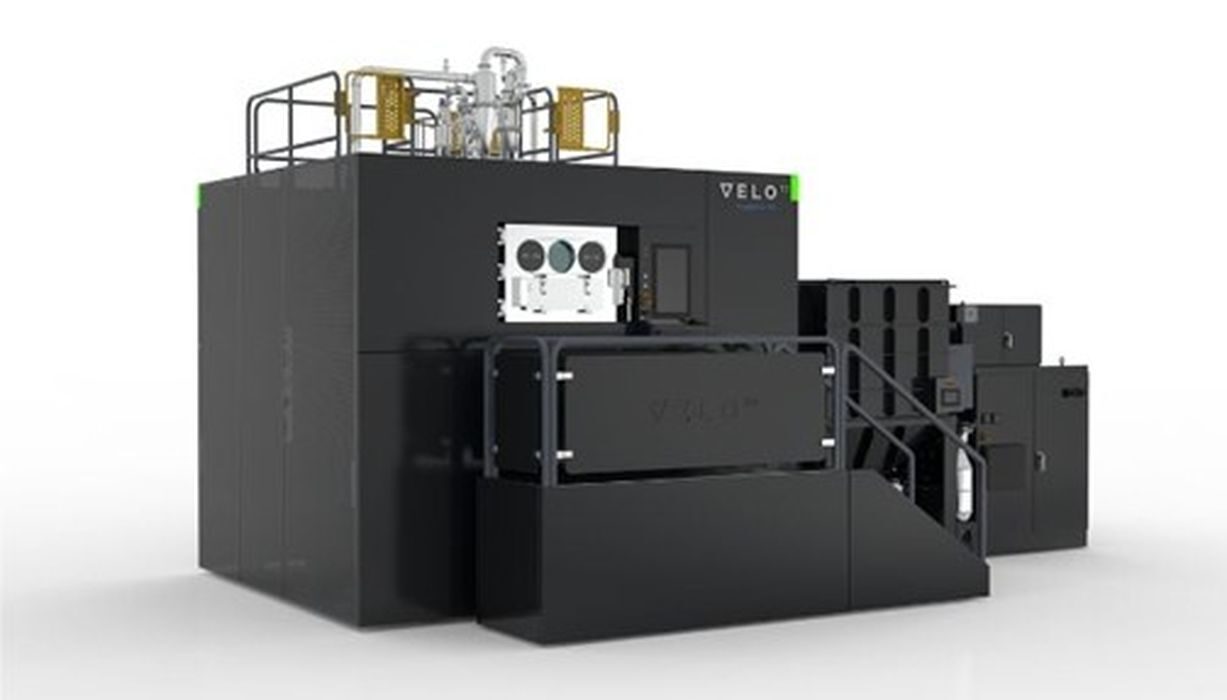
Velo3D is a U.S.-based, publicly traded, metal additive-manufacturing company that targets mission-critical aerospace, defense and space parts. Example: They have a contract with the U.S. Navy to develop copper-nickel alloy (CuNi) parts using their large-format “Sapphire XC” printers for ship-repair and maritime-industrial-base applications. Velo3D, Inc. can be viewed from a patriotic-investing lens: they supply domestic manufacturing capacity for defense supply chains (so less reliance on foreign sourcing), and integrate advanced 3D printing into sectors like naval shipbuilding and aerospace propulsion.
Key takeaway: Companies like Velo3D are exactly the type that a patriotic fund might consider because they combine advanced additive manufacturing + defense/space infrastructure.
Continuous Composites
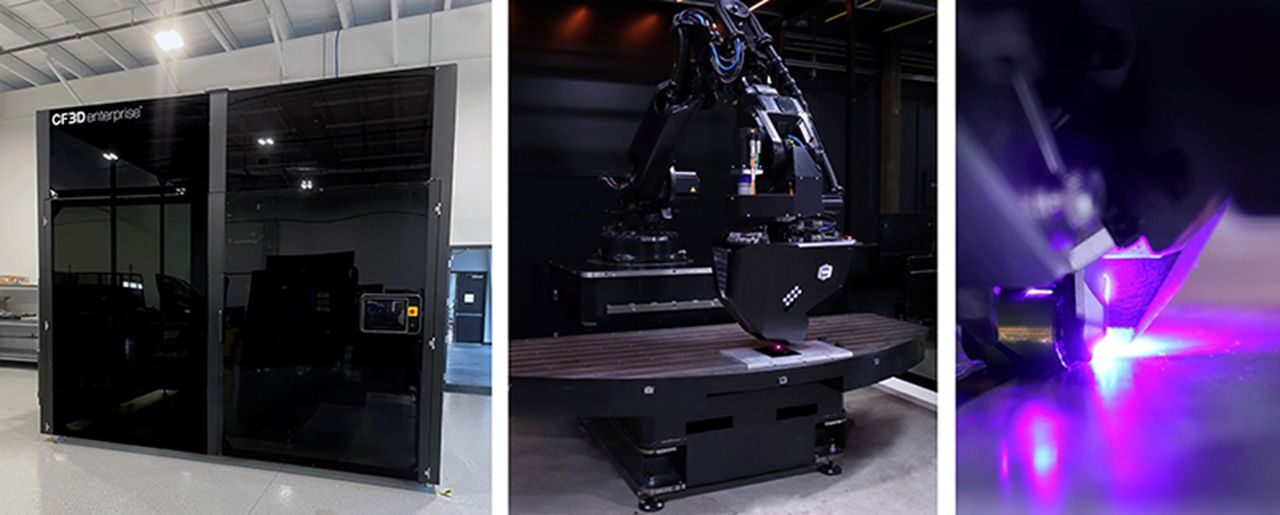
Continuous Composites offers a continuous fiber 3D printing platform (CF3D®) that fabricates high-performance composite structural parts for aerospace & defense—UAVs, hypersonics, thermal protection systems. Metal, composite additive manufacturing matters for weight savings, new designs, and advanced platforms (which are important for defense/space). That fits patriotic investing themes (manufacturing sovereignty + advanced hardware).
In fact, Continuous Composites (CCI) has been awarded a US$1.9 million Tactical Funding Increase (TACFI) contract from the U.S. Air Force to develop a groundbreaking Finite Element Analysis (FEA) tool for Continuous Fiber 3D Printing (CF3D). This contract, which started in November 2024, will operate through August 2026, and represents a significant advancement in the simulation of anisotropic composite materials, which have unique directional strengths based on fiber orientations.
As of now, FEA solutions are limited to certain types of isotropic materials; however, CF3D® composites are anisotropic, with primary strength in the direction of fibers – critical for the aerospace and defense industry.
Tip: When screening companies, don’t restrict to just metal powder bed fusion; advanced composites in additive manufacturing are also relevant.
The Research and Development Tax Credit
The now permanent Research and Development (R&D) Tax Credit is available for companies developing new or improved products, processes, and/or software. 3D printing can help boost a company’s R&D Tax Credits. Wages for technical employees creating, testing, and revising 3D-printed prototypes can be included as a percentage of the eligible time spent on the R&D Tax Credit. Similarly, when used as a method of improving a process, time spent integrating 3D printing hardware and software counts as an eligible activity. Lastly, when used for modeling and preproduction, the costs of filaments consumed during the development process may also be recovered.
Whether it is used for creating and testing prototypes or for final production, 3D printing is a great indicator that R&D Credit-eligible activities are taking place. Companies implementing this technology at any point should consider taking advantage of R&D Tax Credits.
Conclusion
Patriotic investing—capital directed toward companies that strengthen national-interest industries—is more than a buzz phrase; it is actively reshaping how industry and manufacturing converge. Within that paradigm, the 3D printing industry occupies a pivotal role: design freedom, supply-chain resilience, lightweighting, and speed are all additive’s strengths—and they map neatly to defense, space, logistics, and infrastructure.
For the 3D printing industry and its service providers, monitoring funds and investors like American Dynamism is smart. Emphasizing production-grade additive manufacturing (not just prototyping) and aligning with national-interest sectors positions your business for growth and capital interest.
For fund managers or strategic investors, adding 3D printing-savvy criteria to your screening makes sense: does the target company use additive manufacturing as core production technology? Are they targeting defense, space, infrastructure, or logistics where patriotic investing is active? The intersection of national-interest mandates and additive manufacturing capability is now an especially fertile investment landscape.