
Charles R. Goulding and Aaron Rofe discuss how Michele Kang’s leadership and emerging 3D printed technologies are helping women’s sports finally move beyond scaled-down solutions toward true performance equity.
Women’s sports are entering a historic period of growth, fueled not only by rising viewership and commercial investment but also by leaders who are intentionally building long-term infrastructure. One of the most influential figures driving this shift is Michele Kang. Kangs US$30 million philanthropic gift to US Soccer in November 2024 – the largest donation ever made to its women’s and girls’ programs – will expand competitive opportunities, improve talent identification, and create new professional development pathways for female players, coaches, and referees across the country. This commitment build on her broader mission as founder and CEO of Kynsica, the first global multi-team organization devoted exclusively to women’s soccer, where she owns the Washington Sprit of the National Women’s Soccer League (NWSL) in the US, Olympique Lyonnais Féminin of the Premier Ligue in France, and the London City Lionesses of the Women’s Super League in England. Kang has repeatedly emphasized that women’s sports have been undervalued and under-resourced for too long, and her investments aim to raise the standard of excellence by giving women the same tools, support systems, and professional environment that men have benefited from for decades.
In a recent interview with David Rubenstein of Bloomberg, Kang stressed that the gaps holding women’s sports back are rooted in science and infrastructure, not talent. She notes that most training manuals, performance models, and injury research are built around male athletes, even though women have different hormonal cycles, nutritional needs, and injury risks, particularly the significantly higher rate of ACL tears. Almost all sports science research focuses on men, leaving women understudied and underserved. Kang argues that the industry cannot keep training and equipping women the same way as men, and her multi-team ownership model is designed to centralize resources, support female-specific research, and share innovations across clubs. For her, professionalizing women’s sports means treating it as a serious, profitable enterprise – and building the scientific and commercial foundations that her never existed for female athletes.
As women’s sports rise, one area where investment is still critically needed is in the design and manufacturing of women-specific sports equipment. Historically, most gear has been designed around male biomechanics and simply scaled down for women, despite clear evidence that this approach fails to meet the needs of female athletes. Research comparing elite male and female soccer players shows that women exhibit distinct physiological patterns, including higher fat mass index, higher hip-to-height rations, and differing water distribution and cellular mass across the thighs and calves. These differences meaningfully affect movement, power generation, equipment fit, and injury risk, underscoring why gear engineered around male anatomy cannot meet female performance needs. Broader sportswear design research also shows that women generally have wider hips, different waist-to-hip ratios, fuller bust structures, and greater variation in body shape, all of which influence fit, comfort, support, and range of motion in ways that differ significantly from men. Designing equipment based on male geometry, then shrinking it, is no longer acceptable for a growing, high-performance sector.
This is where the rapid advancements in 3D printing and additive manufacturing become especially important. Across the sports industry, 3D printing has already reshaped high-performance gear for professional athletes. Technologies such as the Vicis Zero2-R football helmet and the Riddell SpeedFlex Diamond helmet rely on 3D-printed lattice padding precisely contoured to each athlete’s head shape, resulting in dramatically improved protection compared to traditional foam interiors. Swiss firm Tailor Fits custom ski boots use 3D scanning and printing to create inner boots molded exactly to an individual skier’s feet and lower legs, and 3D printed protective masks allow for faster recovery and better protection following facial injuries. These technologies have moved beyond novelty; they are now reliable, repeatable, and commercially viable. As one industry analysis notes, additive manufacturing is no longer limited to prototypes or elite experiments but is increasingly used where customization provides clear performance advantages, supported by improved materials, scanning systems, and digital design tools.
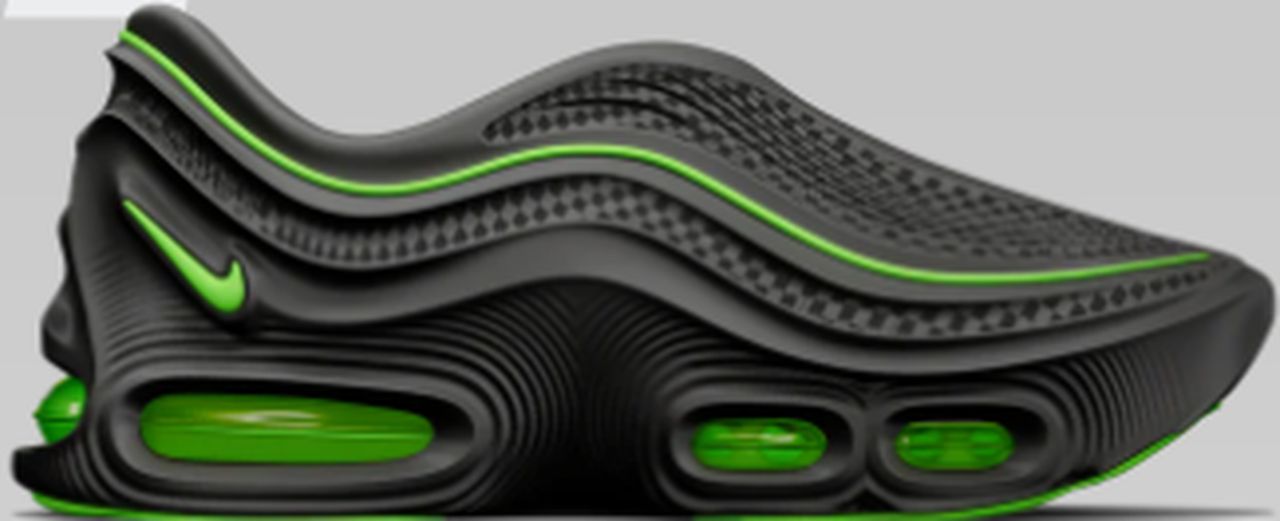
The next frontier is to apply these innovations directly to women’s sports, where the benefits of customization are even more pronounced. Female athletes experience different pressure points, impact zones, and anatomical structures that directly influence how protective gear, footwear, and performance garments should be engineered. For example, difference in thigh and calf composition indicate that women may require different padding densities, pressure distribution patterns, or support structures to reduce injury risk and optimize performance. Footwear is another major opportunity as women’s feet often have narrower heels, different arch shapes, and unique pronation tendencies – differences that can be precisely addressed through digitally turned midsoles or fully 3D printed, as already demonstrated by brands like Carbon, Adidas, and Zellerfeld. Even apparel has entered the additive space; Nike’s 3D printed sports bra for Faith Kipyegon illustrates how flexible lattice structures can provide support and breathability in ways conventional textiles cannot.
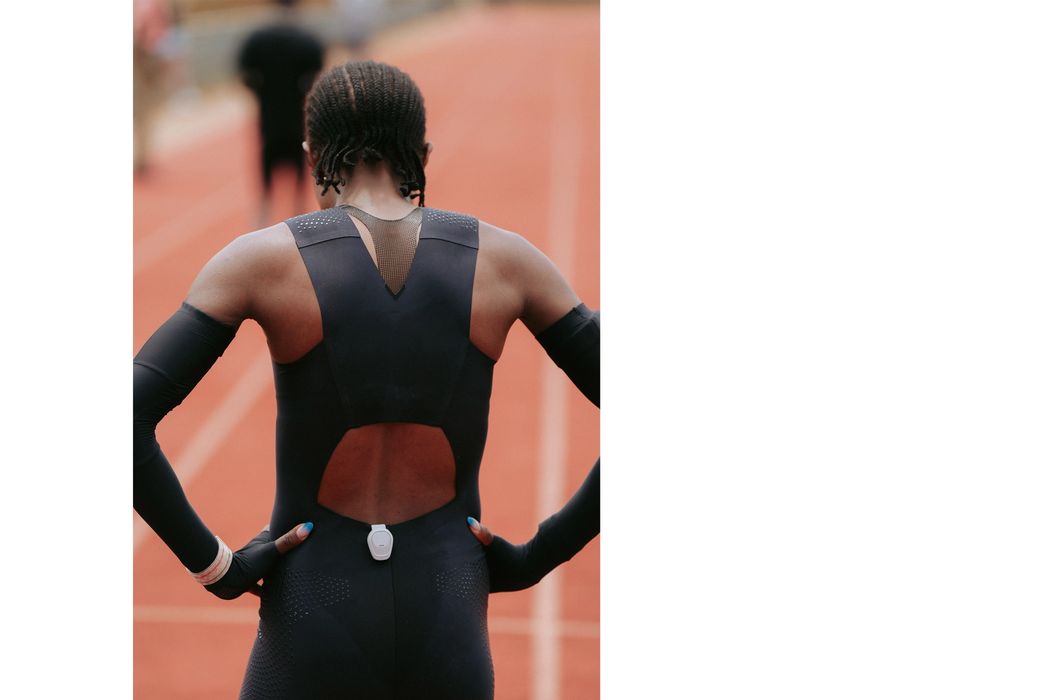
These innovations also align directly with Kang’s focus on expanding youth development. As her investment allows US Soccer to scale talent identification platforms and double the number of youth national team camps, there is a growing need for equipment designed specifically for girls at various stages of physical development. Custom shin guards, tailored insoles, protective headgear, and developmentally appropriate fit solutions could dramatically improve both safety and performance for young female athletes entering competitive pipelines. The combination of Kang’s investment in opportunity and the industry’s expanding capacity for customization creates an ideal moment to rethink equipment design from the ground up.
The Research & Development Tax Credit
The now permanent Research & Development Tax Credit (R&D) Tax Credit is available for companies developing new or improved products, processes and/or software.
3D printing can help boost a company’s R&D Tax Credits. Wages for technical employees creating, testing and revising 3D printed prototypes can be included as a percentage of eligible time spent for the R&D Tax Credit. Similarly, when used as a method of improving a process, time spent integrating 3D printing hardware and software counts as an eligible activity. Lastly, when used for modeling and preproduction, the costs of filaments consumed during the development process may also be recovered.
Whether it is used for creating and testing prototypes or for final production, 3D printing is a strong indicator that R&D-eligible activities are taking place. Companies implementing this technology at any point should consider taking advantage of R&D Tax Credits.
Handing Off the Baton…
Ultimately, true investment in women’s sports requires more than funding competitions and training environments. It requires reengineering the tools athletes rely on. Michele Kang’s leadership has opened the door to a new era in which women receive not only equal opportunities but also equal innovation. As 3D printing continues to expand, it offers the most promising path toward equipment that reflects the actual biomechanics, physiology, and performance needs of women. By pairing Kang’s vision with the possibilities unlocked by additive manufacturing, the sports industry can finally build a system designed for women rather than adapted from men – a system grounded in precision, safety, personalization, and respect for female athletes’ bodies. This is not only an investment in fairness; it is an investment in the future of performance itself.