
Charles R. Goulding and Aaron Rofe… reveal how overlooked incentives can quietly turn everyday operations into major savings.
This week, F. Hoffmann-La Roche (Roche) announced that it will more than triple its footprint at Harvard University’s Enterprise Research Campus (ERC) in Allston, expanding from 30,000 square feet to 100,000 square feet. Roche originally signed on to the ERC in 2024 with plans to open an innovation center focused on cardiovascular, renal, and metabolic research through its Genentech subsidiary. With this newly announced expansion, set to begin opening in mid-2026, the ERC will become one of Roche’s most significant research hubs in the United States. Roche’s new footprint is part of One Milestone, a 100-acre life sciences district developed by Breakthrough Properties, a joint venture between Tishman Speyer and Bellco Capital.
The district is designed as a full-scale innovation ecosystem, complete with laboratory space, the new Atlas Hotel, retail areas, residential units, and Harvard’s upcoming David Rubenstein Treehouse conference center. The developers have emphasized that proximity to Harvard’s research community was a key factor in the project’s vision. They see the district as a place where academic discovery and industry-driven R&D can coexist and directly inform one another. Breakthrough properties CEO Dan Belldegrun described Roche’s expanded presence as an ideal anchor for that mission.
The expansion also aligns with Roche’s wider US strategy. In April 2025, the company announced a US$50 billion investment plan dedicated to strengthening its American R&D and manufacturing infrastructure over the following five years. New and expanded sites are planned across Indiana, Pennsylvania, Massachusetts, California, and Kentucky – an initiative expected to create more than 12,000 jobs nationwide. In a moment when universities are facing more financial pressure than ever, Roche’s deepening commitment to the Boston research ecosystem reflects how industry capital is becoming critical to sustaining cutting-edge scientific work in the United States.
Just as important as the physical expansion is the type of research Roche intends to pursue at the ERC. The company is placing increasing emphasis on advanced manufacturing technologies, particularly the use of additive manufacturing and microfluidic systems to support next-generation drug development. While other major pharmaceutical companies have focused heavily on 3D printed pharmaceuticals or customized surgical tools, Roche is emerging as a leader in applying additive manufacturing to organ-on-a-chip platforms.
Organ-on-a-chip devices combine 3D-printed microstructures, microfluidic channels, and engineered human cells to recreate physiological functions on a miniature scale. This approach allows researchers to evaluate how drug candidates behave in human-like environments far earlier in development, generating insights into toxicity, absorption, metabolism, and therapeutic effects. Although animal studies still play an essential role in later-stage development, organ-on-a-chip systems allow companies like Roche to identify potential failures earlier, reduce dependency on animal models, and accelerate the pace of discovery. The ERC’s proximity to Harvard’s engineering programs, stem-cell research facilities, and microfluidics labs positions Roche to push these technologies forward.
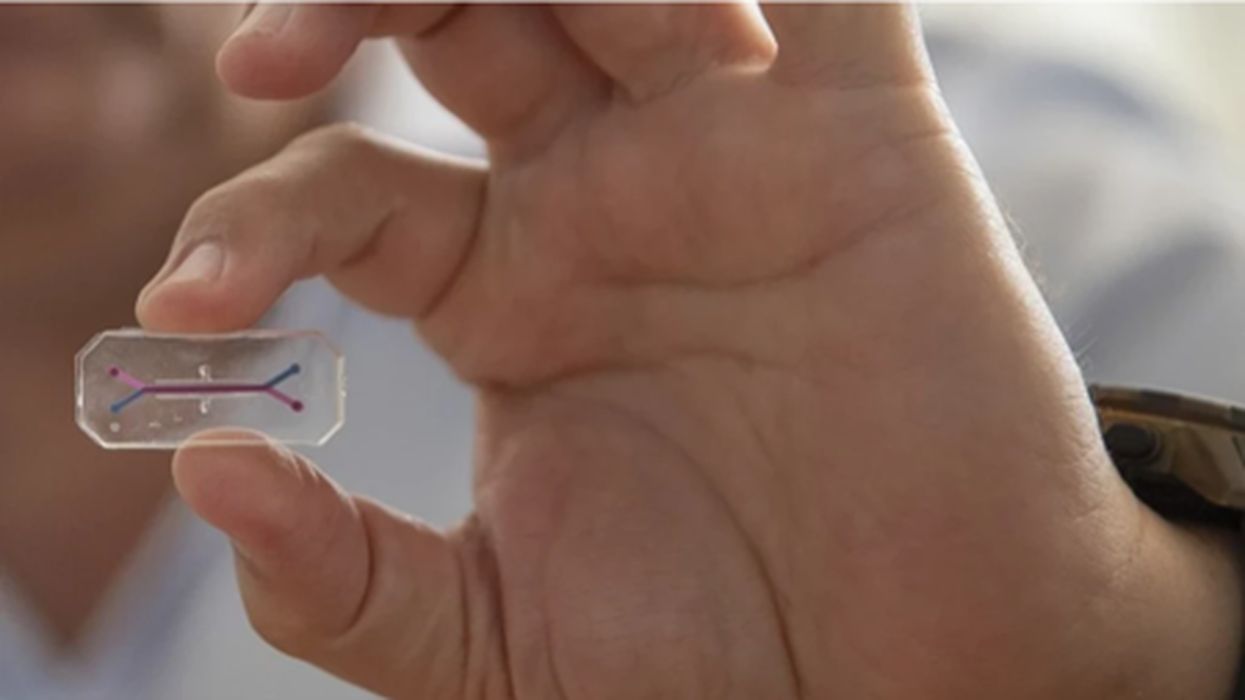
Additive manufacturing is central to this work because it allows rapid prototyping of microfluidic chips, custom labware, organ scaffolds, and experimental tools. Integrating AM into early-stage research shortens design-test cycles and enables more precise control over experimental conditions, both of which mirror the energy-focused practices universities are adopting in response to federal funding constraints. By embedding these capabilities directly into its ERC laboratories, Roche is helping create a research environment that is more agile, more experimental, and better equipped to pursue complex biological questions.
Federal support for scientific research in the United States is facing one its most uncertain periods in recent memory, and university laboratories are already feeling the effects. While congress continues to negotiate final budgets for major science agencies – including the NIH and NSF – the consensus is that the final numbers will land somewhere in the middle of competing proposals. That may spare the research community from the most severe cuts originally suggested by the Trump administration, but it still represents a tightening environment for academic research. Reports show the impact clearly: delayed grants, reduced awards, slower hiring in federal science agencies, and fewer international graduate students entering research programs. For many academic labs, especially those run by graduate students and postdoctoral researchers, even a modest reduction in funding can stretch already thin budgets to their limit.
In the Spring 2025 issue of Rice Magazine, Rice University published a feature titled “Where our Research Dollars Go,” offering one of the clearest explanations of how federally funded research actually works. For fields like additive manufacturing, the piece is more than an exercise in accounting – it showcases a framework for efficiency that could reshape the way universities manage 3D printing research. Rice breaks research expenses into two pillars: directs and indirect costs. Directs costs cover the hands-on essentials – researcher salaries, lab materials, travel, and interns. These funds are expected to support projects with real-world, “common-sense benefits.” For example, a materials science group testing a new resin for biomedical 3D printing would classify those experiments as direct costs, and if that resin ultimately improves surgical prep time or reduces implant rejection, the return on investment becomes immediately clear. Rice also highlights an increasingly important trend: the growing role of AI-powered data analysis in managing these expenses. With predictive modeling, labs can reduce material waste, streamline their experiment cycles, and maintain inventory more effectively – an especially valuable capability in additive manufacturing, where misaligned print parameters or failed builds can quickly become expensive.
Indirect costs, meanwhile, support the infrastructure that makes research possible but is harder to tie to any one experiment. These costs include utilities, lab facilities, IT systems, compliance personnel, and administrative support. Although less visible, indirect costs keep large-scale scientific research functional and safe. Together, these two pillars reveal how dependent university laboratories are on consistent federal support and how disruptive funding uncertainty can become.
With federal appropriations tightening and research programs becoming more expensive to run, universities are increasingly turning to automation, AI-driven efficiency tools, and advanced manufacturing workflows to bridge the gap. Yet even as they optimize internally, a broader trend is emerging: industry investment is beginning to fill the space left by slowing federal growth. This shift is especially pronounced in the life sciences, where companies are making record investments in US-based research and development. Roche’s latest move in Boston is a prime example.
The Research & Development Tax Credit
The now permanent Research & Development Tax Credit (R&D) Tax Credit is available for companies developing new or improved products, processes and/or software.
3D printing can help boost a company’s R&D Tax Credits. Wages for technical employees creating, testing and revising 3D printed prototypes can be included as a percentage of eligible time spent for the R&D Tax Credit. Similarly, when used as a method of improving a process, time spent integrating 3D printing hardware and software counts as an eligible activity. Lastly, when used for modeling and preproduction, the costs of filaments consumed during the development process may also be recovered.
Whether it is used for creating and testing prototypes or for final production, 3D printing is a strong indicator that R&D-eligible activities are taking place. Companies implementing this technology at any point should consider taking advantage of R&D Tax Credits.
Conclusion
As federal budgets tighten and technological demands rise, the landscape of American research is evolving. Universities must stretch their dollars further, and industry partners are increasingly stepping in with the resources, tools, and infrastructure needed to advance scientific discovery. Roche’s decision to triple its footprint on Harvard’s Enterprise Research Campus illustrates how these partnerships can reshape the future of biomedical innovation. It also highlights a broader reality: the next generation of breakthroughs in life sciences may emerge from spaces where academic expertise and industrial capability operate side by side.