
Charles Goulding and Lia Palumbo examine how women transformed soccer and why athlete-informed 3D printing could help create more personalized footwear and protective equipment for the women’s game.
Introduction
Soccer has a uniquely global reach. FIFA has estimated that the sport has approximately five billion fans, and the 2026 FIFA World Cup, jointly hosted by Canada, Mexico, and the United States, has again placed the sport at the center of international attention.
The sport’s accessibility has contributed to that reach. A ball and an open area can be enough for informal play, while broadcasting, streaming, and social media allow supporters to follow teams and players across borders. Yet soccer’s institutional history has not been equally accessible. In many places, women were excluded from official structures, denied comparable facilities and funding, and given substantially less media exposure.
Women nevertheless helped build the game for more than a century. Their influence can be seen in historic clubs, landmark players, expanding international tournaments, labor advocacy, and growing demands for equipment designed around female athletes. That last area now creates a direct connection with additive manufacturing. If 3D printing can translate athlete scans and performance data into individualized equipment, women should help shape the technology from the beginning.
The Early Women’s Game
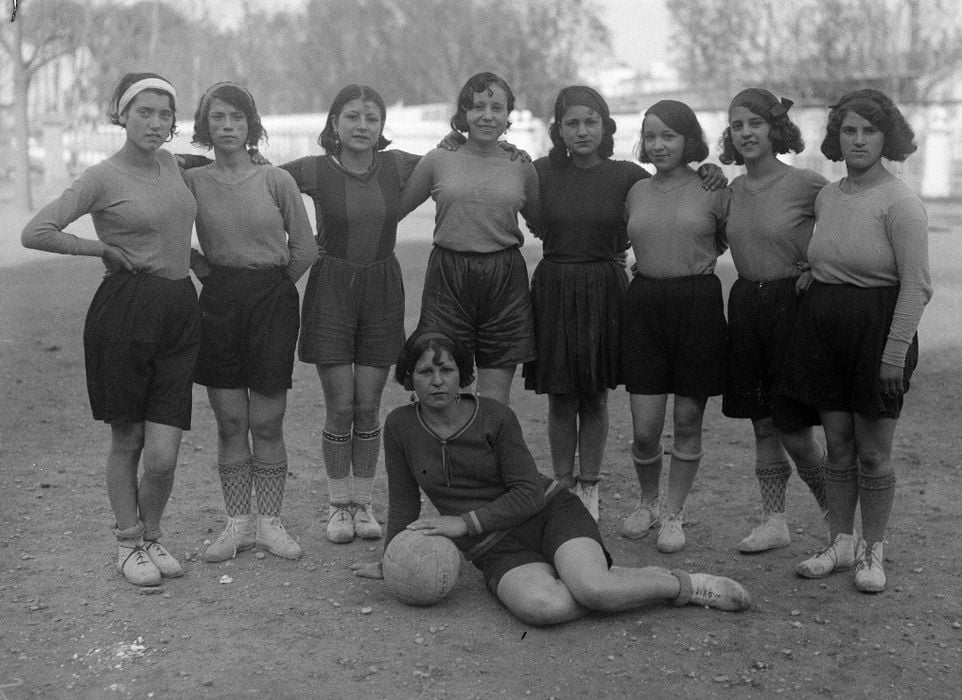
The earliest widely cited recorded women’s match under association football rules took place in Edinburgh on May 7, 1881. The teams were billed as Scotland and England, although the English Football Association notes that the players’ nationalities are uncertain. Historical sources also disagree on the final score, so it is more accurate to focus on what the match established: women were organizing and playing the codified game in the nineteenth century.
Women’s soccer expanded in Britain during the First World War as factories formed teams. Dick, Kerr Ladies became the best-known example, playing charity matches during and after the war and remaining active until 1965. By 1921, approximately 150 women’s clubs existed in England, and some matches attracted tens of thousands of spectators.
On December 5, 1921, the English Football Association declared soccer unsuitable for women and barred women’s matches from the grounds of affiliated clubs. The restriction also denied the women’s game access to registered referees. It was not a complete prohibition on playing, but it pushed teams toward parks and smaller independent grounds, sharply limiting attendance, resources, and institutional growth.
Women continued to play. Dick, Kerr Ladies and other clubs remained active, while new organizations and international competitions emerged outside the established governing structure. Unofficial tournaments were staged in Italy in 1970 and Mexico in 1971. The English Football Association restored women’s access to affiliated grounds and registered referees in 1971, and FIFA held the first official Women’s World Cup in 1991.
Players Who Expanded the Game
Lily Parr became one of the first stars of women’s soccer. A leading player for Dick, Kerr Ladies, she continued competing after the 1921 restriction and is credited by the National Football Museum with approximately 1,000 goals over a career spanning about 30 years. Because recordkeeping from the period is incomplete, that total is best treated as a historical estimate. Her longevity and influence, however, are not in doubt.
Mia Hamm helped move women’s soccer into the American mainstream. She appeared in four FIFA Women’s World Cups and three Olympic Games, winning two World Cups and two Olympic gold medals, according to Team USA. Hamm was also a founding player in the Women’s United Soccer Association, which began play in 2001 as the first fully professional women’s soccer league in the United States.
Brazil’s Marta Vieira da Silva extended that influence globally. She has been named FIFA’s top women’s player six times, and her 17 Women’s World Cup goals remain the tournament record. Parr, Hamm, and Marta played in different eras, but each showed how individual excellence could expand the audience and expectations for the women’s game.

Growth, Visibility, and Equality
The 2023 FIFA Women’s World Cup demonstrated the scale the sport has reached. It was the first edition with 32 teams, up from 24, and eight countries made their tournament debuts: Haiti, Morocco, Panama, the Philippines, Portugal, the Republic of Ireland, Vietnam, and Zambia. FIFA’s tournament recap reports that more than 1.8 million tickets were sold and that the competition established a total-attendance record for the Women’s World Cup.
Growth on the field has been accompanied by advocacy off it. U.S. Women’s National Team players pursued litigation and collective bargaining over compensation and working conditions. In 2022, U.S. Soccer and the women’s and men’s national-team unions agreed to collective bargaining agreements with identical economic terms. The agreements also made U.S. Soccer the first national federation to equalize World Cup prize money for its senior women’s and men’s teams by pooling and sharing portions of the FIFA awards.
Equality also concerns the equipment available to players. A 2024 UK parliamentary report cited a survey of approximately 350 elite female players in Europe in which 82% reported discomfort with their soccer boots. The same report emphasized that anterior cruciate ligament injuries have multiple possible causes. Footwear design may be relevant, but it should not be presented as the sole explanation or as a proven means of preventing injuries.
From Female-Specific Design to 3D printed Boots
The equipment industry is beginning to respond with more athlete-specific research. In 2025, adidas introduced the F50 SPARKFUSION, a soccer boot developed specifically for women. The company reports that the design drew on more than a decade of foot-anatomy data, new scans, and testing and feedback from players including Trinity Rodman, Linda Caicedo, and Jule Brand.
The boot uses a women-specific last, modified support features, and a stud configuration informed by foot-pressure data. The F50 SPARKFUSION is conventionally manufactured rather than 3D printed, but its data-driven development process points toward a natural application for additive manufacturing.
Additive manufacturing builds parts from digital models, usually layer by layer. Unlike machining, which removes material from stock, 3D printing can produce complex internal structures and individualized geometries without requiring a new mold or last for every variation. It may also reduce material waste in certain applications, although sustainability depends on the material, printing process, energy use, product life, and available end-of-life systems.
In April 2026, Adidas provided a direct glimpse of this future when it unveiled a 3D printed soccer boot through Project R.A.P., or Radical Athlete Perception. According to the company’s announcement, the concept was developed from athlete feedback, testing, and data to provide a bespoke fit and tailored support. Professional players Khvicha Kvaratskhelia and Ademola Lookman participated in its development. As of July 2026, adidas still describes the soccer boot as a live innovation concept and has not announced a full consumer release.
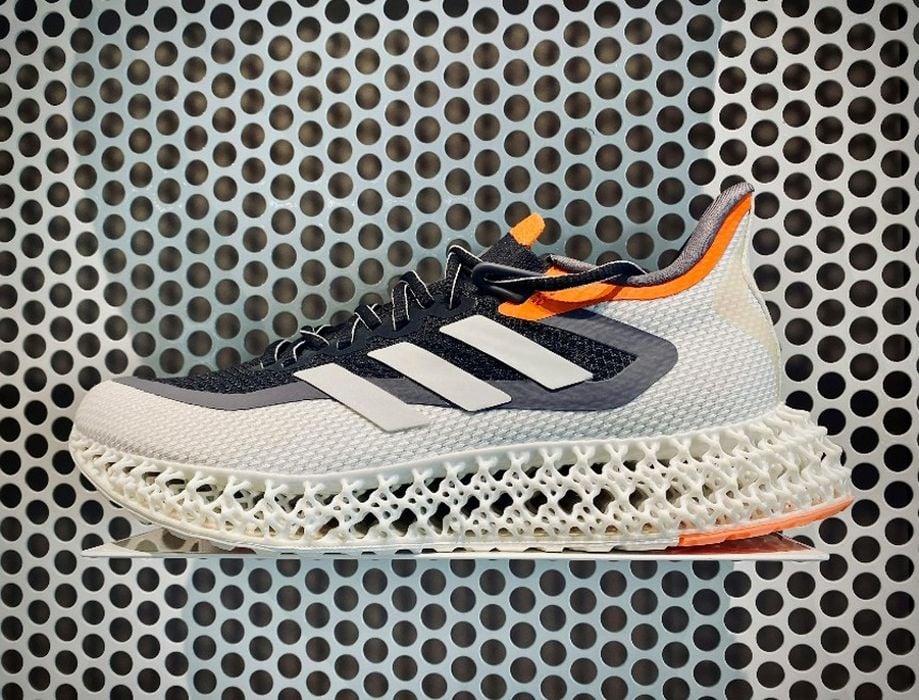
That distinction matters. The Project R.A.P. boot shows that a major manufacturer can apply additive manufacturing directly to soccer footwear, but it does not yet establish superior performance, durability, safety, or injury prevention. It also appears that the first development inputs publicly identified by adidas came from two male players. Applying the technology to the women’s game should include scans, movement data, feedback, and field testing from female players across multiple foot shapes, positions, skill levels, and playing surfaces.
For women’s soccer, the most valuable feature of 3D printing may be controlled variation. A digital workflow could allow engineers to adjust fit, flexibility, stiffness, stud geometry, or pressure-relief zones without relying on a single scaled-down last. However, any claimed benefit would require extensive testing. A secure fit may support comfort and control, while excessive traction or an unsuitable stud pattern could create different risks during cutting and pivoting movements.
Beyond Boots: Personalized Shin Guards
Soccer footwear is not the only potential application. A 2026 peer-reviewed study demonstrated a low-cost scan-to-print workflow for personalized, dual-zone shin guards manufactured through fused filament fabrication.
Researchers used a 3D scan of a player’s leg to design a guard with a stiff outer load-distribution layer and a more compliant inner energy-absorbing layer. Mechanical testing and computer simulations indicated that selected dual-zone designs could balance stiffness, weight, and impact response.
The work remains a research demonstration rather than evidence of protection during match play. Nevertheless, it illustrates why additive manufacturing is relevant to soccer. Digital scanning, computer-aided design, and controlled material structures can connect the geometry of an individual athlete to a physical product without relying on conventional mass-production tooling.
Challenges That Remain
Personalization is not automatically progress. Printed boots and shin guards must withstand repeated impacts, moisture, heat, abrasion, and rapid changes of direction. Manufacturers will need repeatable processes, appropriate materials, reliable post-processing, and testing that compares printed products with established equipment. Soccer boots also require careful evaluation of traction and rotational release on different natural and artificial playing surfaces.
Access presents another challenge. If scan-based products remain expensive or limited to elite players, additive manufacturing could widen the equipment gap between well-funded programs and grassroots teams. The long-term opportunity is therefore not only to create technically impressive one-off products, but also to make validated customization affordable at a meaningful scale.
Female athletes must also be represented throughout the research and development process. Including women only after a product has been developed would risk repeating the equipment industry’s historical reliance on male-centered data. Foot scans, movement studies, material selection, prototype testing, and performance validation should all reflect the athletes who will ultimately use the equipment.
The Research and Development Tax Credit
IRC § 41 generally requires research to involve domestic research or experimental expenditures, technological uncertainty, development of a new or improved business component, and a process of experimentation. The qualifying purpose must relate to function, performance, reliability, or quality, not style, taste, cosmetic, or seasonal design factors.
The activities described could help companies build a strong IRC § 41 research credit narrative because they appear aimed at solving technical design and performance problems, not merely making products look different. For example, athlete-informed development using scans, movement data, testing, and player feedback may help identify uncertainty about fit, support, traction, impact response, durability, or safety. Female-specific soccer boot design, including a women-specific last, modified support features, and stud configuration informed by pressure data, may support the “new or improved business component” requirement where the work seeks better function, performance, reliability, or quality.
The 3D printing examples are especially relevant because additive manufacturing can allow engineers to test complex internal structures, individualized geometries, and alternative designs without creating a new mold for each variation. A 3D printed boot concept developed from athlete feedback, testing, and data, together with scan-to-print shin guards using dual-zone structures, simulations, mechanical testing, and validation, may evidence a process of experimentation. Companies should still separate qualifying R&D from excluded work: post-commercial-production activities, customer-specific adaptation, duplication, funded research, foreign research, and style or cosmetic design generally may not qualify.
Conclusion
Women shaped soccer by continuing to play when institutions restricted them, building audiences, and demanding better professional and economic conditions. Their next contribution may be to shape the data and design standards behind a new generation of equipment. Women’s sports are entering a historic period of growth, fueled not only by rising viewership and commercial investment but also by leaders who are intentionally building long-term infrastructure. We previously covered how Michele Kang’s leadership and emerging 3D printed technologies are helping women’s sports finally move beyond scaled-down solutions toward true performance equity.
The emergence of a 3D printed soccer-boot concept and personalized 3D printed shin guards shows that additive manufacturing is moving closer to the field. Its value for women’s soccer will depend on inclusive athlete research, rigorous testing, and practical access. If those conditions are met, 3D printing could help equipment evolve alongside the players who transformed the game.