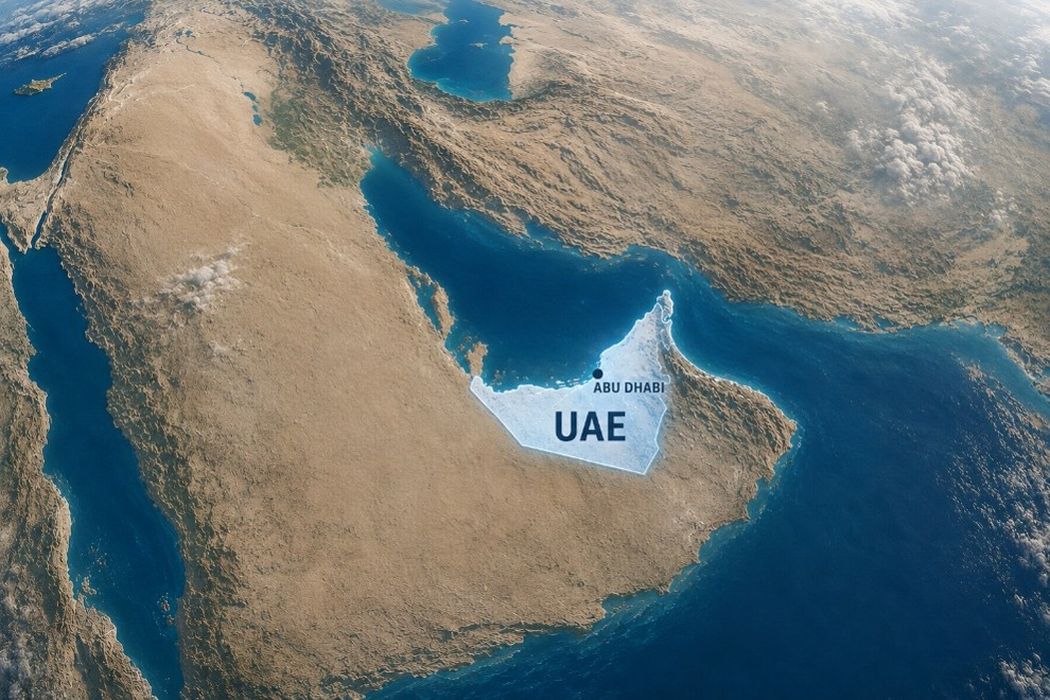
Charles R., and Charles G. Goulding connect the dots between the recent geopolitical conflicts and the vulnerability of desalination infrastructure, emphasizing the key role 3D printing can play.
Desalination in Conflict
Recent conflicts have demonstrated that the vulnerability of desalination infrastructure is no longer theoretical. Since the current regional conflict began, desalination facilities or closely related water infrastructure have been damaged in several locations across the Middle East.
Since early 2026, desalination infrastructure has become an increasingly visible feature of regional conflict. In March 2026, a freshwater desalination plant on Qeshm Island, Iran, was reportedly struck, disrupting water supplies to approximately 30 villages, although responsibility for the attack remains disputed. Days later, Bahrain reported that a drone strike damaged one of its desalination plants.
During the same conflict, desalination facilities in Gaza were repeatedly forced offline because of damage to surrounding infrastructure, prolonged power outages, fuel shortages, and the inability to conduct repairs. Most recently, in July 2026, Kuwait reported damage to a major combined power and desalination plant following a missile and drone attack.
These attacks wreak havoc on critical infrastructure. Modern desalination plants are among the most complex pieces of public infrastructure in operation today. Every day they convert seawater into drinking water through a tightly coordinated network of pumps, membranes, intake systems, pretreatment equipment, energy recovery devices, sensors, and computerized controls.
The process must operate continuously while maintaining strict water quality standards and minimizing energy consumption. A brief interruption can affect thousands of homes and businesses that depend on a reliable supply of fresh water.
The consequences of an attack extend far beyond the plant itself. A damaged bridge slows transportation. A damaged factory reduces production. A damaged desalination plant can interrupt the supply of drinking water for hundreds of thousands of people. In much of the Gulf, there is no large river or freshwater lake that can quickly replace that lost capacity.
The UAE’s Desalination Leadership
The United Arab Emirates has become one of the world’s leading operators of large-scale desalination systems. Over several decades, utilities such as the Emirates Water and Electricity Company (EWEC) and the Dubai Electricity and Water Authority (DEWA) have expanded and modernized desalination capacity while improving operational efficiency and reliability. Landmark facilities, including Taweelah Reverse Osmosis, Jebel Ali, and the new Hassyan desalination plant, illustrate the country’s continued investment in advanced water infrastructure. At the same time, engineering firms such as Metito have developed decades of experience designing, constructing, operating, and maintaining desalination facilities throughout the Middle East and beyond.
This long operating history has also coincided with a significant technological transition. The UAE has increasingly shifted from energy-intensive thermal desalination toward large-scale reverse osmosis plants that consume less energy and offer greater operational flexibility. That evolution has required utilities to adopt new maintenance practices, train operators on new technologies, and continually refine plant operations. The result is not simply a larger desalination network but a more sophisticated body of operational knowledge.
Much of that knowledge depends on experience rather than equipment alone. Plant operators learn how systems respond to changing temperatures, seasonal water conditions, and fluctuations in demand. Maintenance teams develop inspection routines that identify problems before they become failures. Engineers refine operating procedures as new technologies are introduced. Over time, this institutional knowledge becomes as valuable as the physical infrastructure itself.
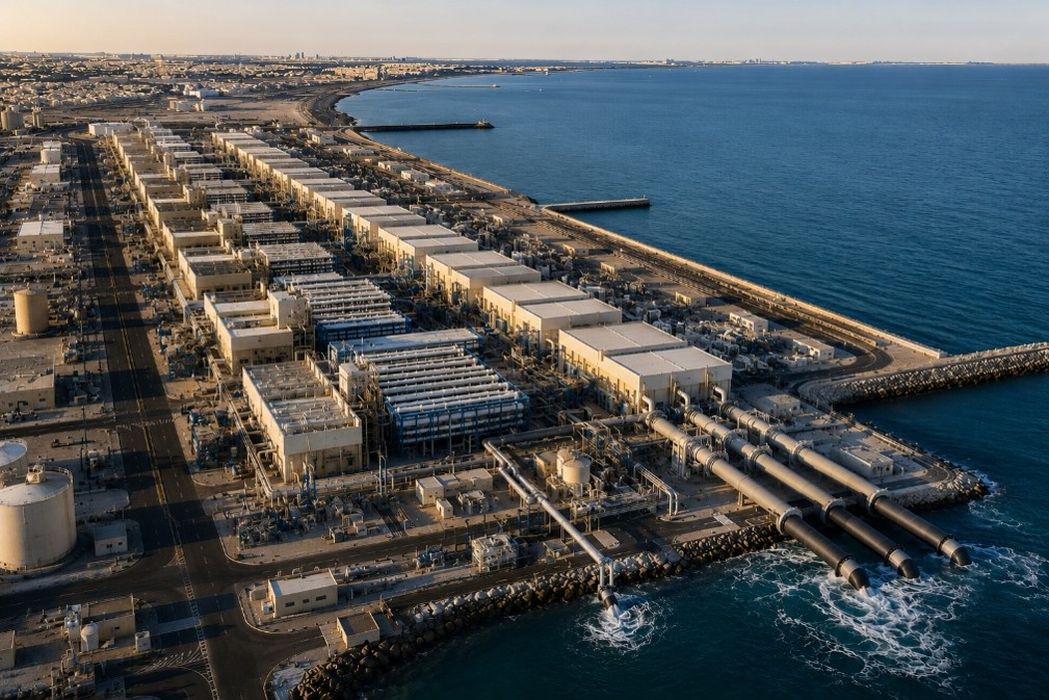
Building a desalination plant creates infrastructure. Operating one creates knowledge. That distinction becomes especially important when a facility is forced to operate under unusual conditions or recover from an unexpected disruption. In those situations, the expertise of engineers, operators, and maintenance personnel often determines how quickly water production can be restored.
UAE Water Security Strategy 2036
As desalination plants become increasingly essential to national survival, they are also becoming more attractive targets during armed conflict. The recent damage to desalination facilities and related water infrastructure across the Middle East has demonstrated that producing fresh water is no longer the only engineering challenge. Protecting that capability before, during, and after a disruption has become equally important.
The United Arab Emirates has spent years preparing for that reality. Through its UAE Water Security Strategy 2036, the country is moving beyond a traditional focus on expanding desalination capacity and toward building a water system that can withstand disruption and recover quickly. The strategy combines large-scale reverse osmosis facilities with strategic water storage, interconnected utility networks, demand management, emergency planning, and continued investment in modern infrastructure. Rather than relying on any single desalination plant, it seeks to create a water system that remains reliable even when individual components are under stress.
The strategy reflects decades of operational experience. Utilities such as EWEC and DEWA have overseen the transition from thermal desalination to large-scale reverse osmosis while operating some of the world’s largest desalination facilities. Companies such as Metito have exported UAE expertise by designing, constructing, operating, and maintaining water projects throughout the Middle East, Africa, and Asia. The result is not simply a collection of large desalination plants, but an ecosystem of engineering, operations, and maintenance expertise.
That experience offers an increasingly relevant lesson. Modern water security depends on much more than production capacity. It depends on how quickly utilities can inspect damaged equipment, obtain qualified replacement parts, restore critical systems, and return safe drinking water to the communities they serve. As recent conflicts have demonstrated, resilience is measured not only by how much water a country can produce, but by how quickly it can recover when that capability is threatened.
From Thermal Desalination to Reverse Osmosis
The UAE’s desalination strategy has evolved significantly over the past two decades. Historically, much of the country’s freshwater was produced through thermal desalination technologies such as multi-stage flash (MSF) and multi-effect distillation (MED). These systems, often paired with power plants, have a long record of reliable operation in the Gulf and are well suited to the region’s challenging seawater conditions. Their durability has made them a cornerstone of the region’s water infrastructure for decades.
In recent years, however, the UAE has increasingly shifted toward reverse osmosis (RO). Major projects such as Taweelah Reverse Osmosis and Hassyan reflect a broader national strategy to reduce energy consumption, lower operating costs, and modernize the country’s desalination fleet. Today, reverse osmosis has become the preferred technology for most new large-scale desalination projects in the UAE.
The transition is not simply a matter of one technology replacing another. Each approach offers distinct engineering advantages. Thermal desalination systems are exceptionally robust and can tolerate variations in seawater quality that might challenge membrane-based systems. Reverse osmosis plants, by contrast, consume substantially less energy and rely on modular treatment trains that can often be expanded, serviced, or upgraded incrementally. They also benefit from increasingly standardized pumps, valves, instrumentation, and membrane assemblies that simplify maintenance and inventory management.
Those differences may also influence how facilities recover from disruption. Thermal desalination systems have demonstrated exceptional reliability over long operating lives, but repairing large evaporators and other specialized equipment can require considerable time and highly specialized resources. Reverse osmosis plants present different maintenance challenges, particularly with membranes and pretreatment systems. Their modular design, however, may allow unaffected treatment trains to return to service while repairs continue elsewhere. Standardized pumps, valves, instrumentation, and membrane assemblies can also simplify maintenance and reduce dependence on custom-fabricated replacement parts.
The UAE’s transition toward reverse osmosis may therefore offer benefits beyond lower energy consumption and operating costs. A more modular and standardized desalination fleet is also well suited to emerging approaches such as digital inventories and additive manufacturing, which can help utilities shorten repair times, improve spare-parts availability, and restore water production more quickly following a disruption.
Additive Manufacturing and Faster Recovery
When a desalination plant is damaged, the greatest obstacle is often not identifying the problem but obtaining the parts needed to restore safe operation. Engineers can inspect structures, evaluate pumps, test electrical systems, and assess control equipment within days. Repairs may still stall if a specialized valve component, instrument enclosure, pump housing, or other critical part cannot be obtained quickly. Every day spent waiting extends the interruption of fresh water production.
This is where additive manufacturing can play a meaningful role. It is not a replacement for conventional manufacturing, nor can it produce every component used in a desalination plant. It can, however, reduce delays for selected replacement parts while supporting a more flexible maintenance strategy. Digital inventories of qualified components allow approved designs to be manufactured closer to the point of need, reducing dependence on distant suppliers and lengthy production schedules.
The UAE has positioned itself at the forefront of this approach. Companies such as Immensa have developed digital warehousing and distributed manufacturing capabilities for industrial spare parts, while the country’s broader investment in advanced manufacturing complements its leadership in desalination. As reverse osmosis plants become increasingly modular and standardized, more components may become suitable for qualified digital inventories and localized production.
The objective is straightforward: shorten the time between damage and recovery. Additive manufacturing will not eliminate the need for conventional supply chains or traditional fabrication. It offers utilities another tool for restoring water production more quickly when conventional procurement becomes the bottleneck. In a region where uninterrupted access to fresh water is increasingly a matter of national resilience, even modest reductions in repair time can have significant operational and humanitarian value.
| Desalination System | Typical Function | Potential Additive Manufacturing Contribution |
| Intake and pretreatment | Brings seawater into the plant | Custom tooling, brackets, fixtures, selected replacement parts |
| Pumping systems | Moves water through the plant | Qualified housings, selected impellers, maintenance tooling |
| Instrumentation and controls | Monitors plant performance | Sensor mounts, enclosures, replacement housings |
| Piping systems | Transfers water through the plant | Pipe supports, alignment fixtures, selected fittings |
| Maintenance operations | Supports inspection and repair | Custom jigs, gauges, specialized tools, low-volume spare parts |
| Spare-parts inventory | Keeps critical components available | Qualified digital inventories and distributed production |
The larger opportunity lies in the digital inventory. Rather than maintaining extensive physical stockpiles of infrequently used components, utilities can maintain qualified engineering drawings, material specifications, inspection requirements, and manufacturing instructions. When a replacement part is needed, approved components can be produced closer to the point of use, reducing procurement delays while improving supply-chain flexibility.
The technology is not a universal solution. Reverse osmosis membranes, large pressure vessels, and many safety-critical components will continue to rely on conventional manufacturing and established qualification processes. Instead, additive manufacturing is best viewed as a complementary capability that expands the range of options available to maintenance teams during repairs.
The UAE is already helping to develop that model. Companies such as Immensa are advancing digital warehousing and distributed manufacturing, while established water engineering firms such as Metito contribute decades of expertise in designing, operating, and maintaining desalination facilities. Together, they illustrate how advanced manufacturing and operational experience can reinforce one another. As desalination systems become more modular and standardized, that combination may help utilities restore water production more quickly when conventional supply chains are under pressure.
The Next Generation of Desalination Plants
The next generation of desalination plants will likely be designed with maintenance and recovery in mind from the beginning. Rather than treating repairs as exceptional events, engineers may increasingly design facilities to minimize downtime when failures occur. Reverse osmosis has already accelerated this shift by replacing many large, centralized thermal processes with modular treatment trains that can be isolated, serviced, and returned to operation independently.
Future facilities may extend that philosophy further. Standardized equipment across multiple plants can simplify maintenance and reduce spare-parts inventories. Embedded sensors and digital monitoring can identify deteriorating pumps, valves, and membranes before failures interrupt production. Equipment layouts may also evolve to make critical components easier to inspect, remove, and replace, reducing both routine maintenance costs and recovery time following unexpected disruptions.
Beyond the Plant
The future of desalination will also depend on decisions made outside the plant itself. Utilities, manufacturers, engineering firms, and governments increasingly have an opportunity to think about desalination as an interconnected system rather than a collection of individual facilities. Common component standards, regional spare-parts strategies, qualified digital inventories, and distributed manufacturing capabilities could all improve the ability of operators to restore production when conventional supply chains are disrupted.
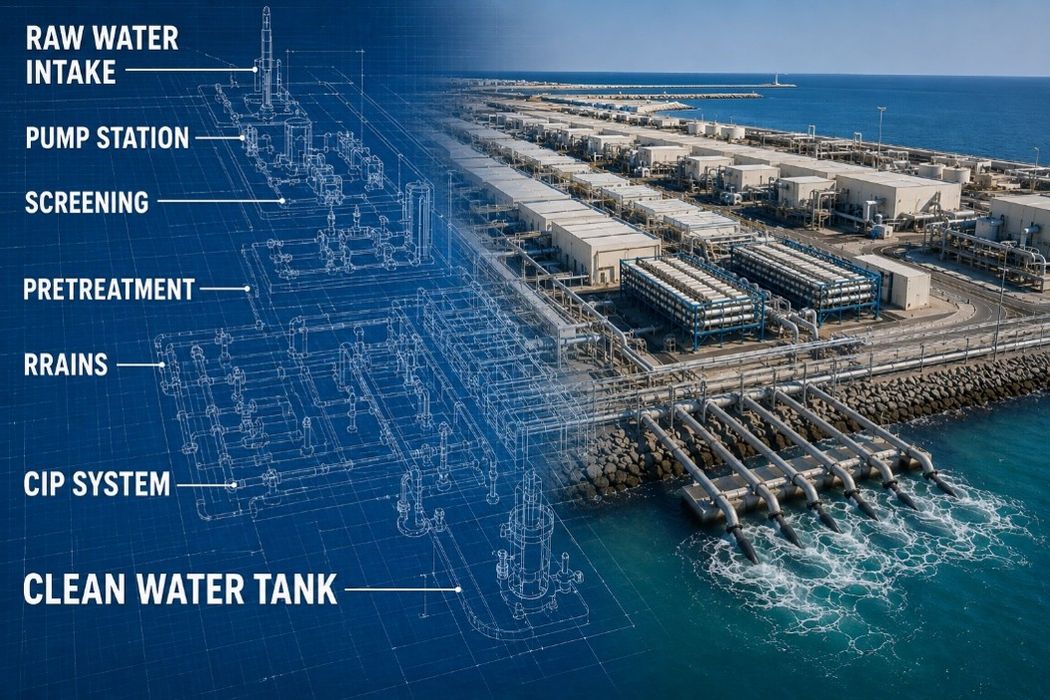
The UAE is particularly well positioned to demonstrate this broader model. Its experience operating some of the world’s largest desalination facilities, combined with continued investment in reverse osmosis, advanced manufacturing, and long-term water security, illustrates how operational expertise, resilient supply chains, and emerging technologies can reinforce one another. As more countries confront chronic water scarcity, the UAE’s approach may offer lessons that extend well beyond the Gulf.
Engineers will always measure desalination plants by the volume of fresh water they produce and the energy they consume. Increasingly, however, they may also judge them by another metric: how quickly they can recover and continue serving the communities that depend on them.
The Research & Development Tax Credit
Enacted in 1981, the now permanent Federal Research and Development (R&D) Tax Credit allows a credit that typically ranges from 4%-7% of eligible spending for new and improved products and processes.
Qualified research must meet the following four criteria:
- Must be technological in nature
- Must be a component of the taxpayer’s business
- Must represent R&D in the experimental sense and generally includes all such costs related to the development or improvement of a product or process
- Must eliminate uncertainty through a process of experimentation that considers one or more alternatives
Eligible costs include U.S. employee wages, cost of supplies consumed in the R&D process, cost of pre-production testing, U.S. contract research expenses, and certain costs associated with developing a patent.
On December 18, 2015, President Obama signed the PATH Act, making the R&D Tax Credit permanent. Since 2016, the R&D credit has been used to offset Alternative Minimum Tax (AMT) for companies with revenue below US$50 million. And, now, pre-profitable and pre-revenue startup businesses can also obtain up to US$500,000 per year in payroll tax offsets and cash rebates for up to five years.
Policy Considerations
The growing dependence on desalination raises questions that extend beyond engineering. International standards have improved the safety, efficiency, and reliability of desalination systems, yet comparatively little attention has been given to how those systems should be protected and restored during armed conflict. As desalination becomes indispensable to millions of people, governments, utilities, standards organizations, and manufacturers may wish to consider a more coordinated approach to resilience.
That discussion could include greater standardization of selected components, qualification frameworks for additively manufactured replacement parts, shared digital inventories, and internationally recognized inspection protocols that allow damaged facilities to return to service safely and efficiently. None of these measures would eliminate the risks posed by conflict, but they could reduce the time required to restore drinking water to affected communities.
Water has long been recognized as indispensable to civilian life. As desalination assumes a larger role in supplying that water, the international community may increasingly view the resilience and rapid restoration of desalination infrastructure not only as an engineering objective, but also as a matter of humanitarian policy.
Charles G. Goulding is a practicing attorney.