
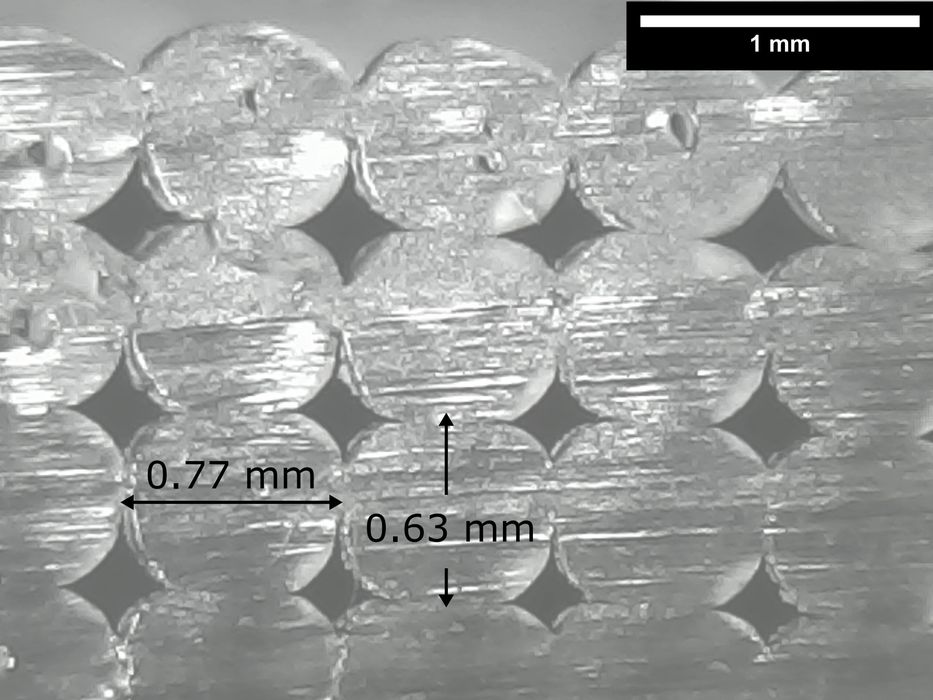
A new research paper takes a look at whether physics-informed machine learning could make FFF process predictions useful without requiring enormous amounts of experimental data.
The work, by Berkcan Kapusuzoglu and Sankaran Mahadevan, investigates a problem encountered when trying to qualify production parts made with the FFF process.
There is plenty of process data available. Nozzle temperature, layer height, print speed, infill and other settings are all easily recorded. What isn’t so easy to obtain is the expensive stuff: measured porosity, bond quality and tensile strength from parts that have actually been printed and tested. Producing thousands of test coupons and then breaking them is, well, challenging.
This makes conventional machine learning somewhat tricky for FFF. A sufficiently large neural network might discover useful relationships between process settings and part performance, but only if it has enough good training data. Give it a small dataset and it can happily produce predictions that look mathematically reasonable while making little physical sense.
The researchers wondered whether giving the machine learning system some knowledge of FFF physics could help.
Teaching The Network Some FFF Physics
They examined three different ways of doing this.
The first adds physical constraints directly to the neural network’s training process. The network isn’t simply penalized when its prediction disagrees with experimental results. It is also penalized when the prediction violates known physical relationships.
Instead of telling the model, “Here are some numbers, figure it out,” you’re effectively giving it some rules about how the process is supposed to behave.
A second method feeds results from a multiphysics FFF simulation into the neural network along with the normal process parameters. Those simulations can provide information about things such as thermal history and bonding conditions that may not have been measured directly during the print.
The third approach is particularly interesting. The researchers first train the neural network using data generated by the physics model, then refine it using real experimental results.
In other words, simulation teaches the network roughly what should happen, while actual printed specimens teach it what really happens.
The researchers tested eight combinations of these approaches. Their results suggest that combining the techniques can produce useful predictions even when relatively little experimental data is available.
Just as importantly, the resulting models can be kept physically sensible. For example, predicted bond quality should have a believable relationship with tensile strength, while porosity shouldn’t wander into impossible territory simply because that’s where the statistics happen to point.
There is a potentially useful application here for FFF process development.
Today, developing a good material profile usually involves printing quite a few specimens, testing them, changing parameters and doing it all again. Anything that can intelligently shrink that search space could save a lot of expensive tech time.
Printer manufacturers and material suppliers could conceivably incorporate this type of system directly into parameter development software. A physics-informed model might suggest promising parameter sets well before dozens or even hundreds of qualification prints are produced.
The ultimate value of this research may not be a system that knows exactly how strong a print will be. It could instead be a system that can identify when a set of parameters is moving into questionable territory, even when very little test data is on hand.
Via arXiv
