
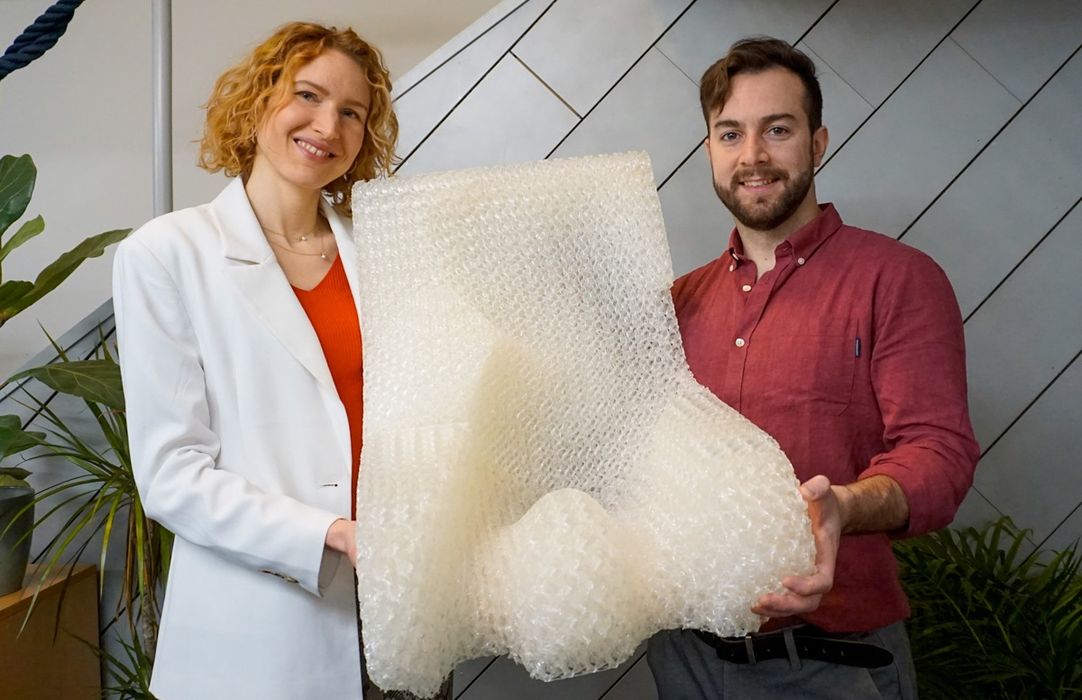
Create It REAL just productionized a new 3D print application: personalized cushions.
The Danish company has been working on advanced slicing applications for many years, and a few years ago they developed a method of producing what they call “programmable foam”.
It’s essentially a way to easily generate a complex lattice structure for 3D printing.
Their first application was low-volume orthotic inserts. These popular footwear accessories help people with arch support issues, and are best if they precisely fit the person’s foot geometry. That’s exactly what was done for this application: Programmable Foam was leveraged by their application to create the personal orthotic.
Now they’ve moved up a level with a new application, partnering with Swedish company Salubrious to produce customized wheelchair cushions.
Wheelchair users sit in place for many hours of the day, and require significant cushioning to prevent other issues from developing. While mass-manufactured cushions help, there’s even more benefit in cushions that precisely match the wheelchair patient.
Evidently, the two companies began developing this solution several years ago, and ended up with Salubrious’ AireRx line of personalized cushions.
By working together, the two partners were able to set up a serial production process to produce AireRx cushions. Large-scale production of 3D-printed products used to be a very rare thing, and it still is in many cases. Here there is a clear demonstration that it is indeed possible to do so.
Create It REAL lists some advantages of the Programmable Foam approach:
- Monolithic material: The Programmable Foam® cushions are made from a single material with no glue, no material changes, and no hard edges, ensuring maximum comfort and durability.
- Programmed design: Consistent performance is guaranteed as every detail is programmed into the design, protected by a proprietary ID and identical in every single cushion.
- Sustainability: Low-waste production, enhanced product durability, and material reuse to minimize environmental impact.
This is a pretty impressive achievement for 3D printing, and I’m quite sure it will be very welcome by anyone using a wheelchair.
Via Create It REAL
