Prusa has launched a product that none of its own 3D printers can use.
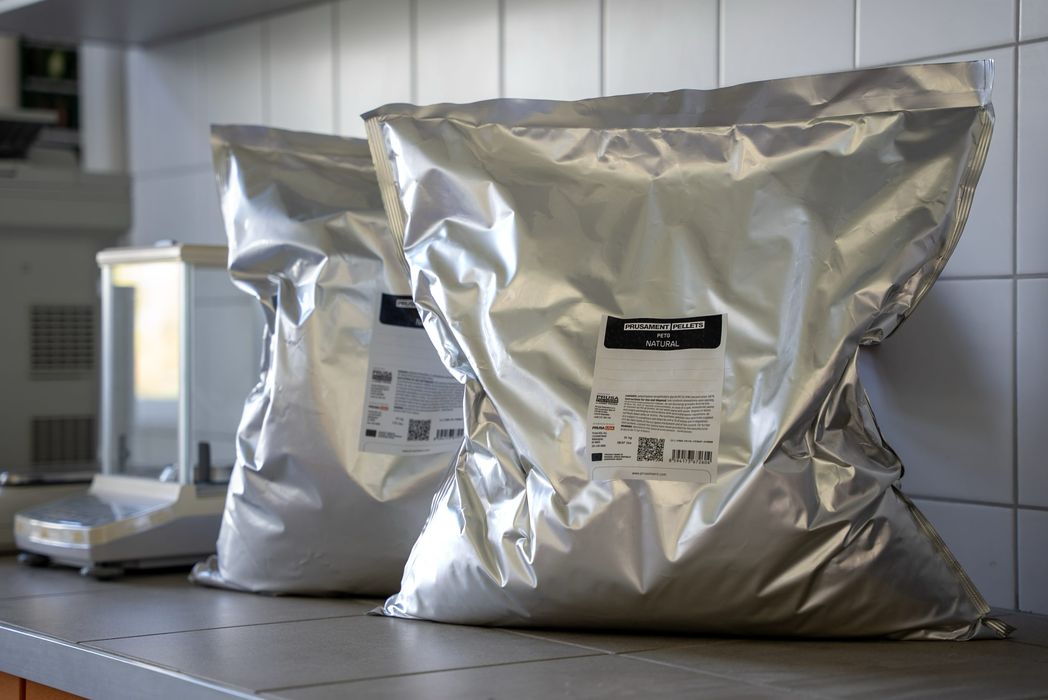
The company announced Prusament Pellets, offering PLA, PETG, ASA and PC Blend in packages ranging from 3.5kg to 14kg. They’re intended for large-format Fused Granular Fabrication (FGF) machines, which extrude pellets directly (no filament required), and laboratories experimenting with polymer formulations.
That’s a pretty strange move for a manufacturer whose printers use filament. Prusa doesn’t currently sell a pellet printer, so why enter this market?
I suspect the first explanation is straightforward: it would be almost free for them to do so.
Prusa already purchases polymer pellets in vast quantities to make its Prusament filament products. Those pellets arrive from suppliers, and Prusa dries them before feeding them into its filament extrusion equipment.
For the new product, the company just needs to divert some of those dried pellets, seal them in moisture-resistant packaging, and ship them. Prusa literally describes this process in its pellet announcement.
In other words, its existing filament production operation already performs almost every preparation step needed for the pellet business. There is no additional extrusion process to develop, no spooling, and no need to establish an entirely new material supply chain. Packaging, inventory and sales are the main additions.
That’s a really inexpensive way to launch a completely new product line.
The prices are interesting, too. A 14kg package of natural PLA costs US$149.99, or about US$10.71/kg. Prusa avoids the cost of turning that material into precision filament, although we don’t know its pellet margins. However, the general rule of thumb is that filament costs about 10X that of pellets, so it would seem that Prusa could be making good money on the new pellet product.
But the easy manufacturing explanation doesn’t entirely answer why Prusa would bother doing this.
One clue could be the intended customers. Large-format pellet printers are made by other manufacturers. Laboratories may use their own extrusion equipment to compound experimental mixtures or produce test filament. These customers have no specific reason to own Prusa hardware, although some may use Prusament filament if they also have FFF equipment.
The small package sizes could be particularly interesting for researchers. Industrial polymer suppliers usually require much larger orders (e.g. by the pallet), while a university lab might only want a few kgs for an experiment. Prusa can sell those smaller amounts through it’s own retail channels with this new product line.
There’s also a possible hardware angle. Could Prusa be preparing a pellet extrusion accessory, perhaps for the XL, or even a dedicated pellet printer?
Perhaps, but a pellet toolhead requires a feeding system, pellet hopper, screw extrusion hardware and a very different thermal setup. It isn’t as easy as swapping in another hot end. Prusa hasn’t announced such a product, and pellet sales alone are not great evidence that one could be in the works.
A more interesting possibility involves the company’s long-term business.
Competition from Asian printer manufacturers has made the hardware market increasingly difficult. Prusa therefore has good reasons to introduce more products that don’t completely depend on selling another FFF printer.
Consumables are a good idea here because customers buy them repeatedly. Prusament filament already works in competitors’ machines, but pellets push the idea even further: Prusa can now sell materials to an entirely different category of 3D printing equipment. And that’s a market (low quantity pellets) that the big Asian manufacturers haven’t been addressing.
It’s also possible the company is also testing demand. Without making a major equipment investment, Prusa can discover which polymers sell, who buys them, and whether the industrial and research markets warrant further attention. We might be seeing their research into the form a future pellet printer might take.
And there’s an intriguing long term possibility. Prusa already has a lot of experience sourcing and formulating polymers. Perhaps Prusament could gradually become a materials business with customers far beyond the printer business.
But this is all speculation, based on a rather unusual announcement. In all probability, it’s likely that Prusa simply noticed an easy money-making opportunity while making filament.
But it’s very curious when a printer manufacturer looks for customers who may never need one of its printers.
Via Prusa Research