

How do you stop a 3D printed object from peeling off a piece of cloth?
That’s a real issue when printing rigid plastic onto a flexible textile, which is something Stratasys has been working on for quite a while now. When printing on fabric, it bends and stretches, while the printed material may have only a surface bond holding it in place.
A newly granted Stratasys patent proposes an interesting solution: make the printed object grab the fabric from both sides.
US12779772B1, granted on November 3, describes a process that begins before the fabric is even put into the printer.
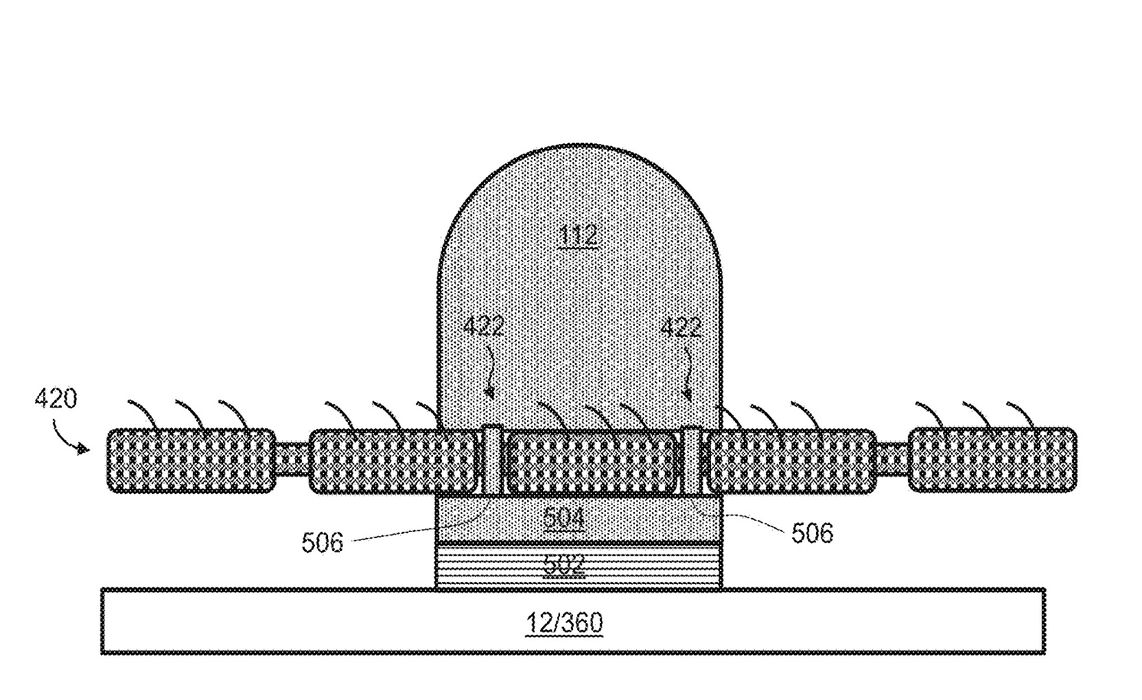
First, an inkjet 3D printing system deposits and cures a small securing feature on its work tray. It can sit on a sacrificial support pedestal, which would later be removed.
Printing can then pause while a sheet of fabric is positioned over that element. A frame can stretch the fabric to keep it flat and, conveniently, open up the tiny spaces between its fibers. That seems fairly obvious, as you would need to stretch out any fabric you’re printing on.
The inkjet head deposits more liquid building material onto the upper surface of the fabric, directly above the previously printed securing element. Instead of immediately exposing those droplets to curing radiation, the system waits!
During that delay, the liquid can soak through the openings in the textile and reach the printed material underneath. The printer then cures it all, creating what the patent calls “penetration elements” that connect the two sides.
Finally, the actual object is 3D printed on top of all this. The result is something like a plastic rivet, formed in place, with a printed feature above the cloth and an anchor underneath it. This should make these printed elements essentially inseparable from the fabric.
The controlled curing delay is critical. Stratasys describes several ways of controlling the delay, including temporarily disabling the curing source or adjusting the motion of the printhead and tray.
There are some intriguing variations. The object itself can be printed first, upside down, before the fabric is laid over it. The printer then builds the connecting elements and an upper securing layer. That might be useful for features too tall to print easily with the fabric already in place.
The patent also describes one-sided connections in which liquid penetrates only partway into the weave. It says that fibers sticking out from the textile can contribute to adhesion.
Stratasys lists possible applications including garment fasteners, optical features, circuits and heating or cooling elements. A printed snap connector on a textile is an very understandable example. But it means that you could, in theory, print a jacket with the snap buttons on it.
Instead of hoping a 3D printed structure will stick to fabric, Stratasys proposes printing the attachment through the fabric itself.
Via Espacenet