
Preeti Sulibhavi and Jacob Nolan set sail on a journey to discover Hanwha Philly Shipyard and its increasing use of 3D printing.
Revolutionizing the Shipyard
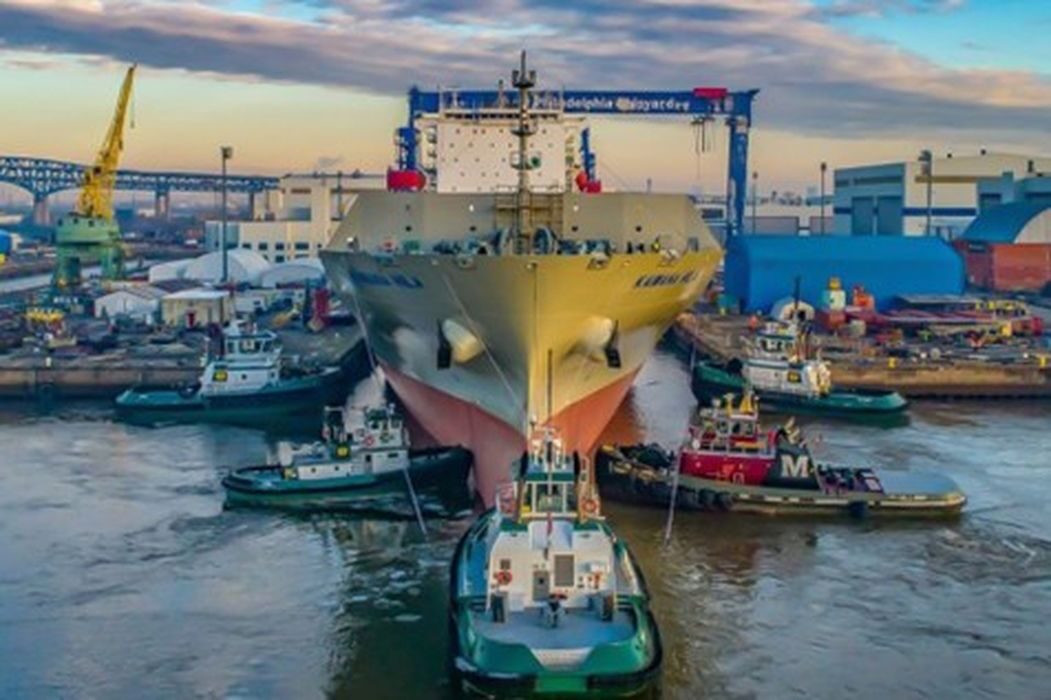
Hanwha Philly Shipyard, a prominent U.S. commercial and government shipbuilding facility, is steering into the future with additive manufacturing at its helm. As one of the most advanced shipyards in the United States, the Philadelphia-based Shipyard is increasingly turning to 3D printing to improve production timelines, reduce costs, and enhance the precision of complex ship components. In an industry where even minor inefficiencies can lead to multimillion-dollar delays, the integration of 3D printing isn’t just a bonus – it’s becoming essential.
The Power of Precision: 3D Printing in Metal Fabrication
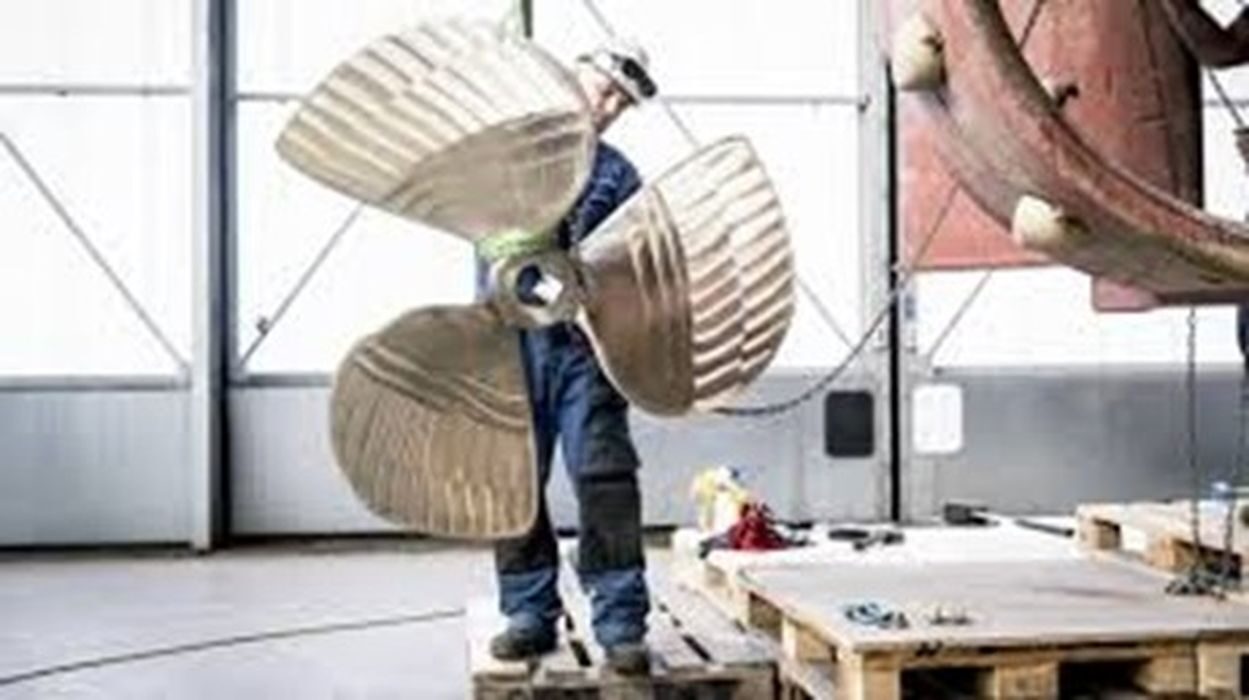
Traditionally, shipbuilding has relied on manual processes and large-scale fabrication techniques. However, Hanwha is now using 3D printing, particularly metal additive manufacturing, to fabricate highly complex components with precision that would be difficult and costly to achieve through conventional methods. By printing custom fittings, valves, and structural elements directly from CAD models, the shipyard reduces material waste, shortens design cycles, and eliminates the need for costly tooling.

Boosting Production Efficiency
3D printing is also helping Hanwha tackle one of the shipbuilding industry’s biggest bottlenecks: lead time. With traditional suppliers often requiring weeks or months to deliver specialty components, the ability to print parts on-site significantly shortens project timelines. It also minimizes downtime due to part shortages or delivery delays. This speed is especially crucial for government contracts, where project timelines are tight and penalties for delays can be steep.
Training the Workforce of the Future
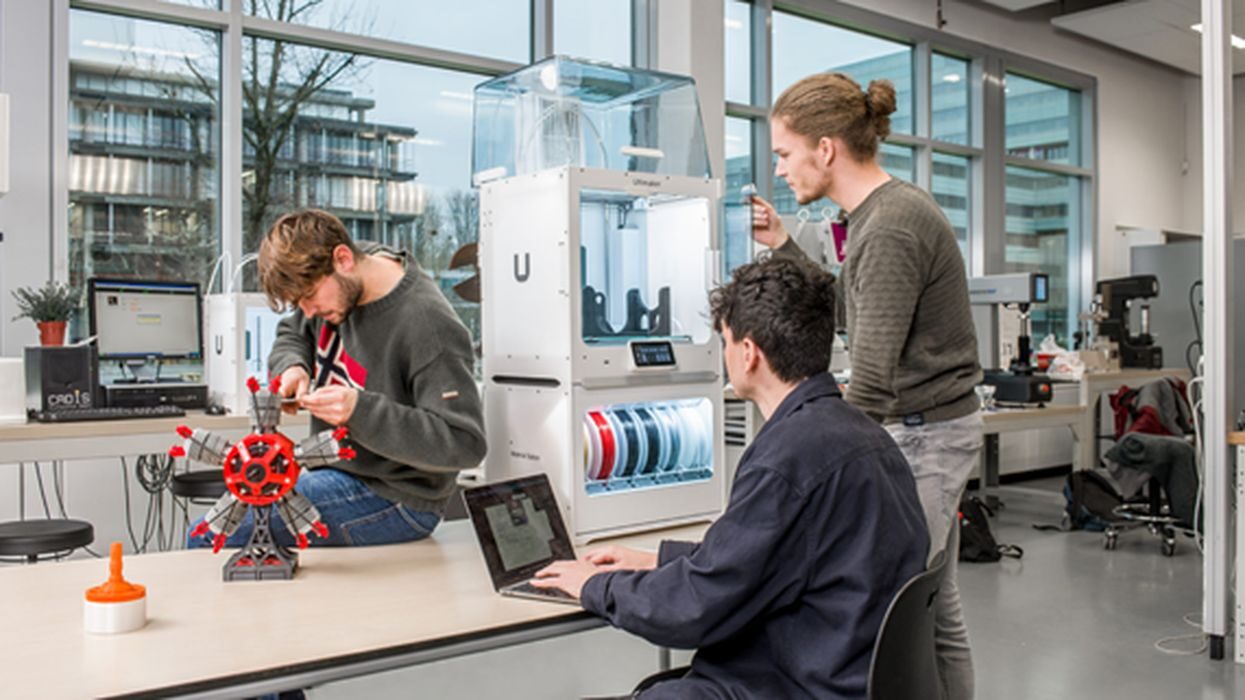
Recognizing that technology is only as powerful as the people using it, Hanwha Philly Shipyard is investing in workforce training programs to upskill technicians in additive manufacturing. The shipyard collaborates with local tech schools and engineering programs to teach workers how to design additive manufacturing, operate 3D printers, and integrate digital production into a shipbuilding workflow. These efforts help ensure that the company remains competitive in an increasingly digital and automated industrial landscape.
Strategic Partnerships and Government Integration
Hanwha’s efforts at the Philly Shipyard align closely with broader government initiatives to modernize U.S. shipbuilding through innovation and technology. In partnership with the U.S. Navy, defense contractors, and federal research institutions, the shipyard is participating in multi-agency pilot programs to test and qualify 3D printed components for active-duty vessels. These parts range from internal piping structures and engine components to specialized brackets and housing units, all produced using advanced metal and polymer additive manufacturing. Some of the most promising applications include lightweight lattice structures and corrosion-resistant titanium alloys, which improve ship performance while reducing maintenance requirements.
To meet strict defense standards, Hanwha is investing in robust certification and testing protocols. These include x-ray and ultrasonic scans of 3D printed parts, fatigue testing under simulated sea conditions, and compliance with MIL-SPEC qualifications. The shipyard has also adopted digital twin technology and real-time monitoring systems to track the performance of these components throughout a ship’s operational life. Combined with AI-driven predictive maintenance tools, this approach allows engineers to make data-informed decisions about part replacements or upgrades, ultimately improving fleet readiness and longevity.
The Research & Development Tax Credit
The now permanent Research & Development Tax Credit (R&D) Tax Credit is available for companies developing new or improved products, processes and/or software.
3D printing can help boost a company’s R&D Tax Credits. Wages for technical employees creating, testing and revising 3D printed prototypes can be included as a percentage of eligible time spent on the R&D Tax Credit. Similarly, when used as a method of improving a process, time spent integrating 3D printing hardware and software counts as an eligible activity. Lastly, when used for modeling and preproduction, the costs of filaments consumed during the development process may also be recovered.
Whether it is used for creating and testing prototypes or for final production, 3D printing is a great indicator that R&D Credit eligible activities are taking place. Companies implementing this technology at any point should consider taking advantage of R&D Tax Credits.
Conclusion: Printing a New Maritime Legacy
The integration of 3D printing at Hanwha Philly Shipyard represents a powerful shift in how ships are imagined, engineered, and assembled. By merging age-old maritime craftsmanship with digital manufacturing technologies, the shipyard is not only transforming its own operations but setting a precedent for the entire U.S. shipbuilding industry. As global competition intensifies and demands for military and commercial fleets grow, innovation like this will define who leads the next generation of shipbuilding. Hanwha, clearly, intends to be at the front of that fleet.