
You know all about Lithophanes, but have you heard of LithoBulbs?
Lithophanes are flat 3D printed that leverage light transmission through the material. By thickening the print, more light is blocked. This principle is leveraged by printing a surface that, when lit from behind, produces an image. It’s quite striking to see, as the light transforms an otherwise ugly surface of clumps into a brilliant image. It’s like printing stained glass, except a lot less expensive.
But lithophanes are always flat. What if you wanted a different shape?
Enter the LithoBulb: it’s a lithophane, but in spherical form. The idea is to 3D print the LithoBulb and then put an LED light source inside. The light travels through the varying thickness of the bulb, presenting an image on the outside.
It’s a brilliant idea.
How do you get one? It turns out that Mike Lejeune has created a website where you can generate LithoBulbs. He explains:
“A browser-based tool for creating LithoBulbs. Design collage-style compositions, generate STL files, print them, and light them with LED bulbs.”
And:
“Design your collage-style composition below. Add photos, text, and styling, then generate a 3D printable STL file. All features are completely free to use—including all editing tools, PNG export, and STL generation. No ads, no unlocks, no restrictions.”
It’s ridiculously simple to use: create an image design on a 4000 x 4000 pixel map, and then generate an STL file. Print the STL file.
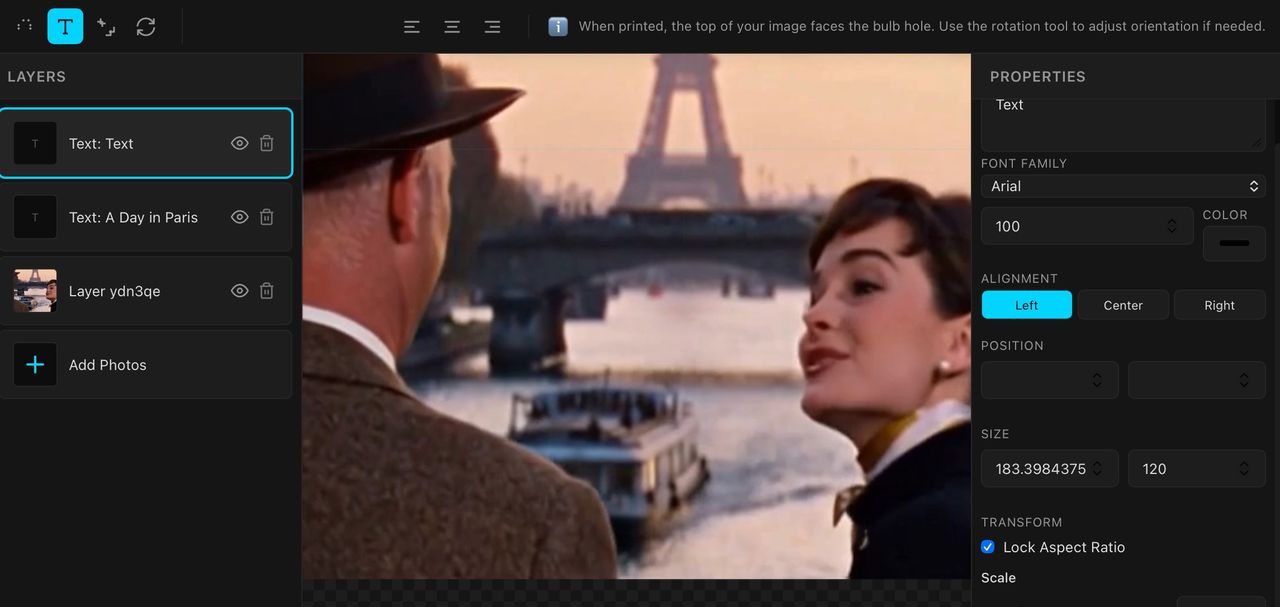
The tool allows import of images, and can create text as well, with the usual modifiers present. It’s fairly straightforward to create a design, although you must consider that the bulb doesn’t have a lot of space to display views. In fact, because the bulb is spherical, you see only a fraction of the entire 4000 x 4000 workspace at a time.
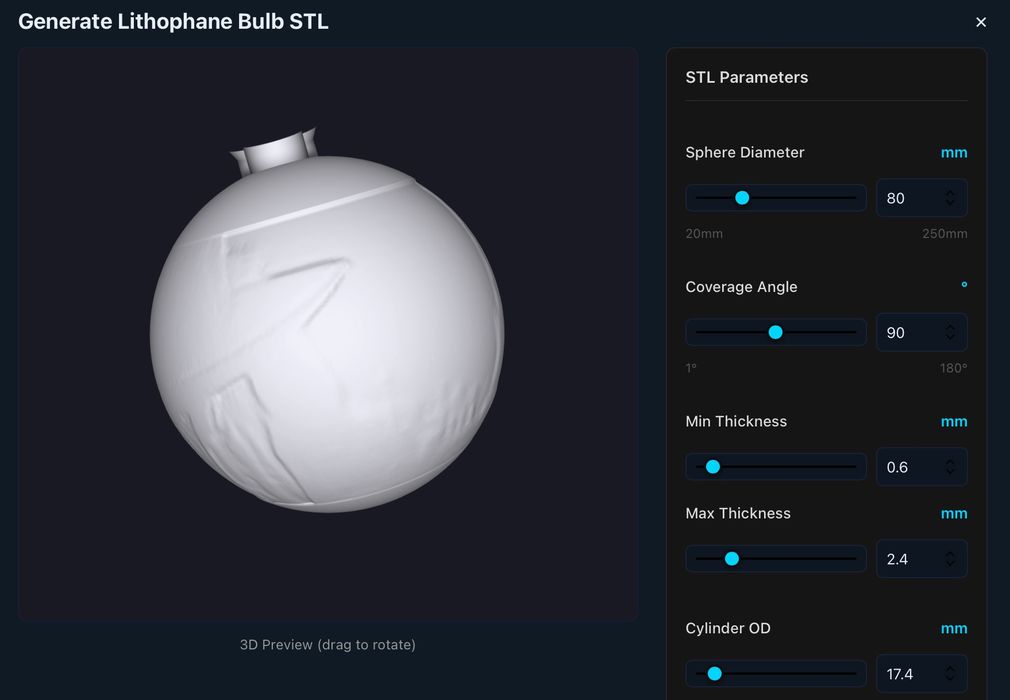
From there you generate the STL file, and there are a ton of knobs to adjust how this is done. There are a couple of presets for typical LED setups, but the knobs let you handle any conceivable configuration.
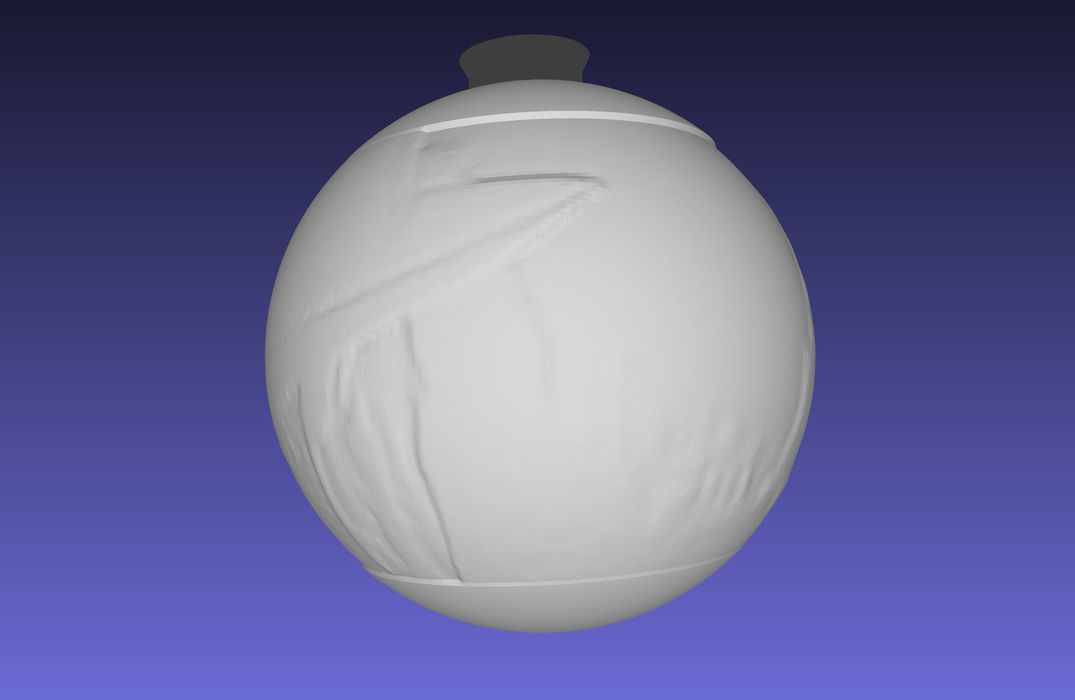
The output, as you can see here, is a competent file. However, you’re looking at the surface, not how it looks when illuminated.
For that, you’ll need some LEDs.
Via LithoBulb
