
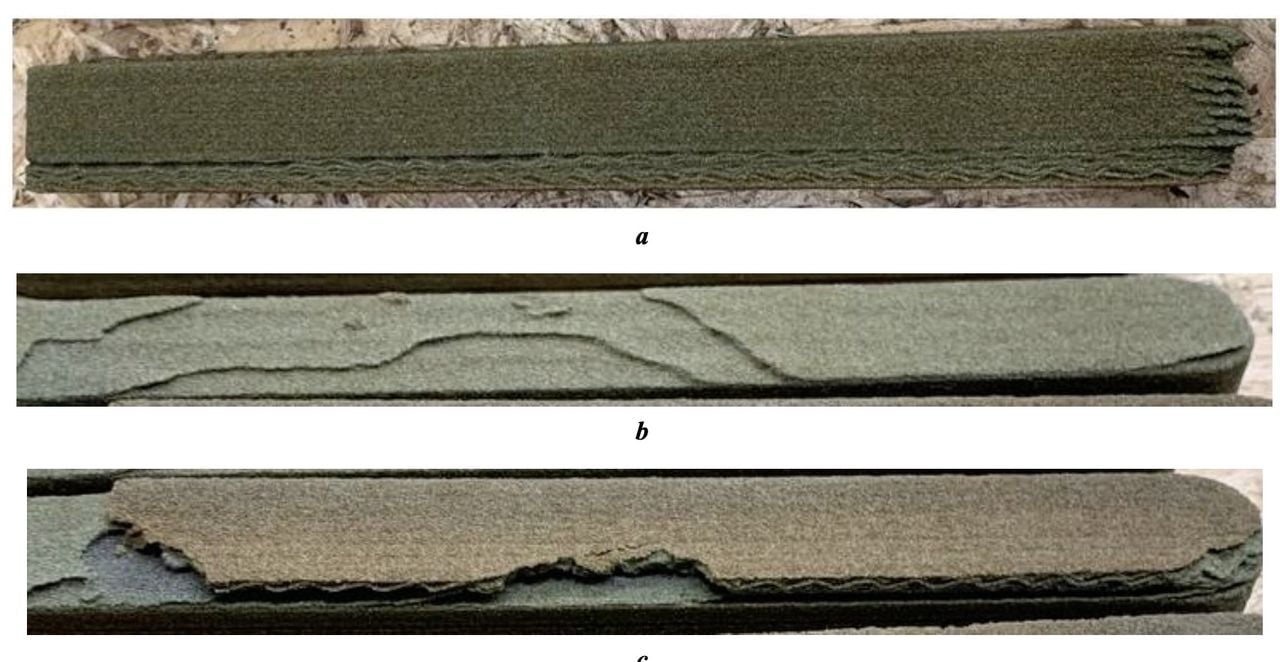
A new research paper proposes a physics based control model to improve powder layer formation in powder bed AM.
Why Layer Formation Matters
Powder layer formation is the key to powder bed fusion and binder jetting, yet it is still tuned largely by trial and error. Uneven layers create spatter, lack of fusion, binder pooling, dimensional drift, and the even dreaded recoater crash scenario. In other words, if the powder layer is wrong, everything that follows is compromised.
Industrial systems from EOS, SLM Solutions, GE Additive, Renishaw and HP protect their recoater recipes very closely. Operators fiddle with blade or roller type, traverse speed, gap, preheat, and stripe overlaps, then cross their fingers that today’s powder spreadability matches yesterday’s. Metals often require layers in the 20 to 60 micron range; polymer SLS tends to be thicker; binder jetting can vary even more. The tighter the layer, the smaller the process window — and the higher the risk.
The paper examines the problem by offering a mathematical model of the mechatronic subsystem that actually makes the layer: drives, carriage, blade or roller, feed and build pistons, and the flowing powder itself. They want to predict layer thickness and density uniformity as a function of machine dynamics and powder properties, then use that to set or even control the process.
Inside The Mechatronic Model
This research connects motor and transmission dynamics with carriage motion, blade gap geometry, and a simplified granular flow description in a single framework. Think of it as a state space for the recoater: inputs include speed, acceleration, vibration, and hopper feed rate; outputs include local layer height, compaction and edge roll-off.
This should be exactly what an operator needs for model predictive control or digital twin scenarios. With such a model, one could simulate parameter sweeps before a build, detect combinations that cause ridging or powder starvation, and compute a motion profile that avoids resonances. It should also support what-if studies across powders with different particle size distributions or additives.
From Open Loop To Closed Loop
Where could this matter commercially? Machine manufacturers get ways to size actuators, set acceleration limits, and design blade shapes that deliver uniform layers without overbuilding the mechanicals. Operators gain faster changeovers between powders because they can compute viable recoater settings instead of burning hours printing test coupons.
Pair the model with sensing — laser height maps, torque or current signatures, acoustic or vibration data — and you have the makings of a closed loop layer formation system. That could reduce human labor, improve first time yield on fine layers, and cut the frequency of expensive stop and recoat interventions. For binder jet, better layer compaction models could also reduce binder spread and drying variability.
The impact on throughput is nontrivial. If the model lets you run slightly faster traverses without inducing ripples, or safely push to thinner layers for a given alloy, every build finishes sooner or with better detail. Over a fleet of machines, that might compound into a huge cost per part gain.
This sounds right: move the recoater from a parameter table to a predictable, controllable subsystem.
