
Researchers have done a comprehensive study to understand and control the variability of the LPBF process.
LPBF is used to 3D print metal powder, which follows a multi-step process from powder manufacturing to printing to heat treatment. Most parts produced using this process are for end use, meaning they must meet stringent tolerances to achieve the required engineering performance.
Because of this, there is considerable attention paid to the parameters of the process, as the ultimate performance of the part depends significantly on the microstructure formed during printing. Most operations spend a great deal of effort iteratively tuning their print jobs to meet that goal.
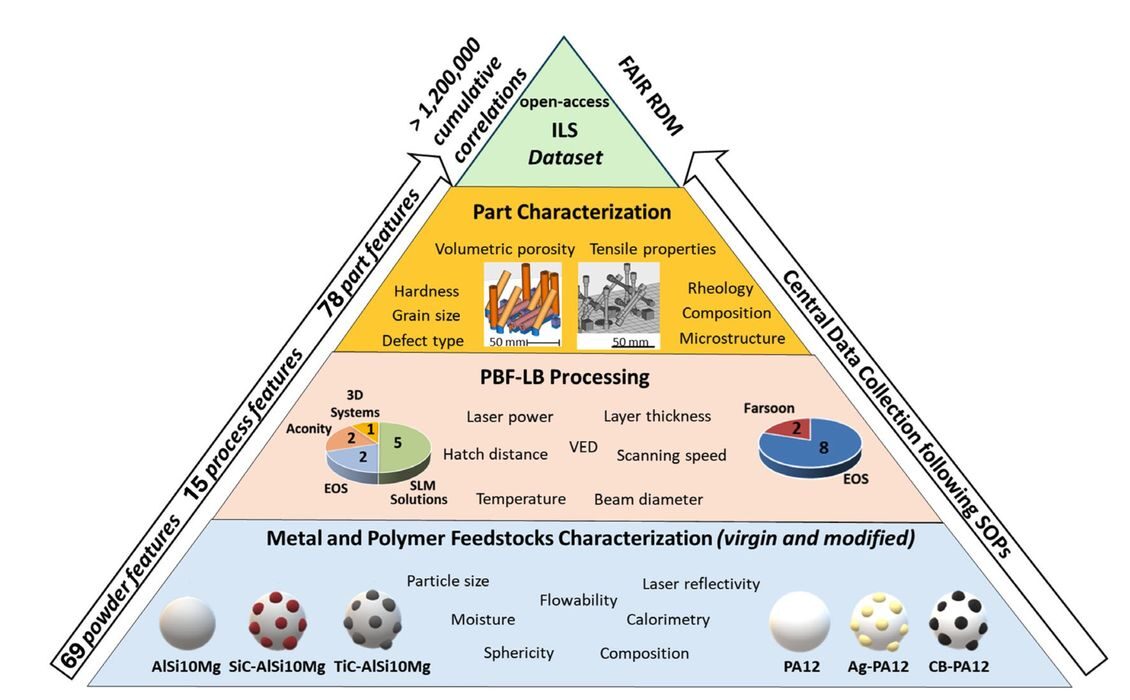
Here, the researchers wanted to understand the process at a large scale. They collected data from 32 different operations using 20 different types of LPBF 3D printers. Using this data, they were able to see how print results changed when different operators, machines, and labs printed the same materials. They were able to quantify repeatability (same lab, same setup) vs. reproducibility (different labs/setups).
They also investigated the effects of nanoparticle modifications to input powders to improve powder flow, densification, heat absorption, crystallinity, and final part strength.
Using all this, they recorded 69 powder features, 15 process parameters, and 78 part properties in a large database. They generated 1.2M correlations that uncovered hidden relationships between powder, process, microstructure, and part.
Finally, all of this new knowledge was wrapped up in some new benchmarks that measure variability. These could ultimately lead to new standards and certifications for LPBF operations.
