
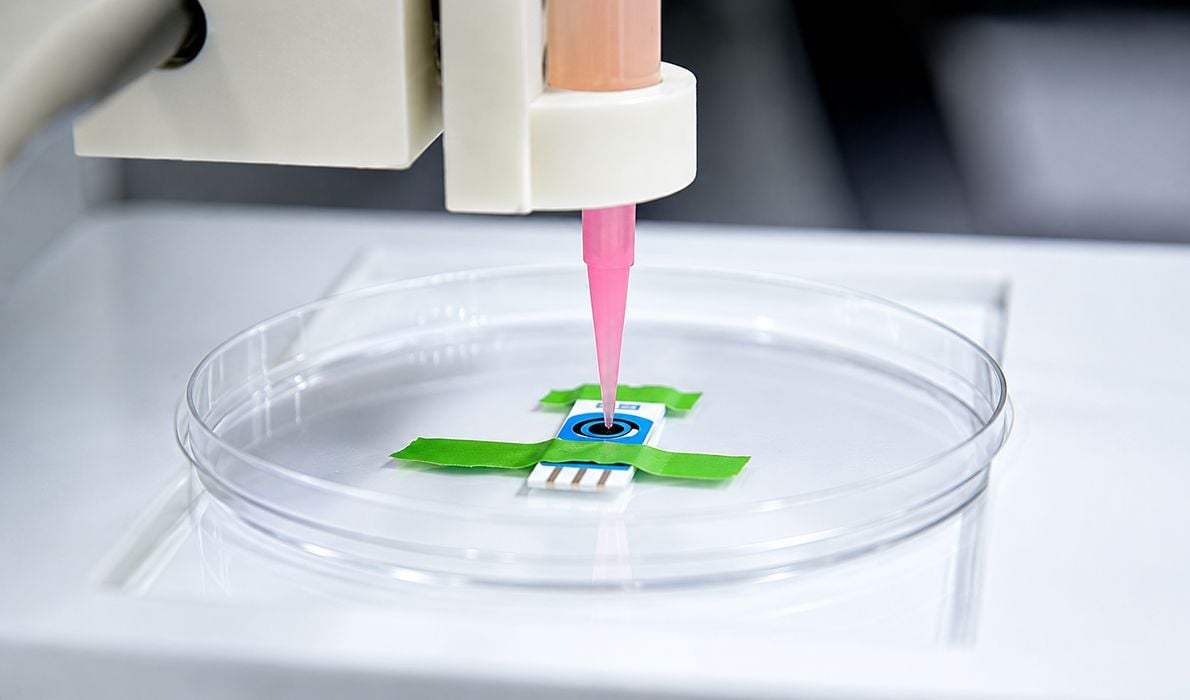
A report said that researchers have been able to successfully 3D print a living cornea.
The cornea is a critical part of the human optical system. While light is focused by the lens inside your eye, the cornea is another fixed lens on top of the eye. The problem is that as people age, their corneas can become clouded, causing sight loss.
This issue affects millions of people worldwide. Treatment depends on the degree of damage, but ultimately the worst cases require a cornea transplant.
Transplant material has historically been from deceased human donors via an “eye bank”. This obviously has some limitations, but artificial corneas have been problematic.
The issue is that the cornea must be absolutely perfectly clear in order for light to properly pass through. Artificial corneas have been unable to achieve this.
Now, the new research seems to have broken through that barrier. According to the report, the researchers used some donated cornea material as the source, but removed the cells, leaving just structural material. Then they introduced stem cells, which can create other cells. The resulting structure “grew” new cornea cells.
Interestingly, they were able to use extrusion shear forces to align the collagen to precisely match that found in actual human corneas. This property enables a clear path for light to pass.
Their results show that cell viability was 90%, showing that the 3D printed cornea would actually survive well. They also observed nerve regeneration, which will also be quite useful.
As this is just a study, you cannot use this procedure on people. However, it seems so promising that clearly it will be deployed to healthcare professionals at some point in the near future.
Via Science Aim
