
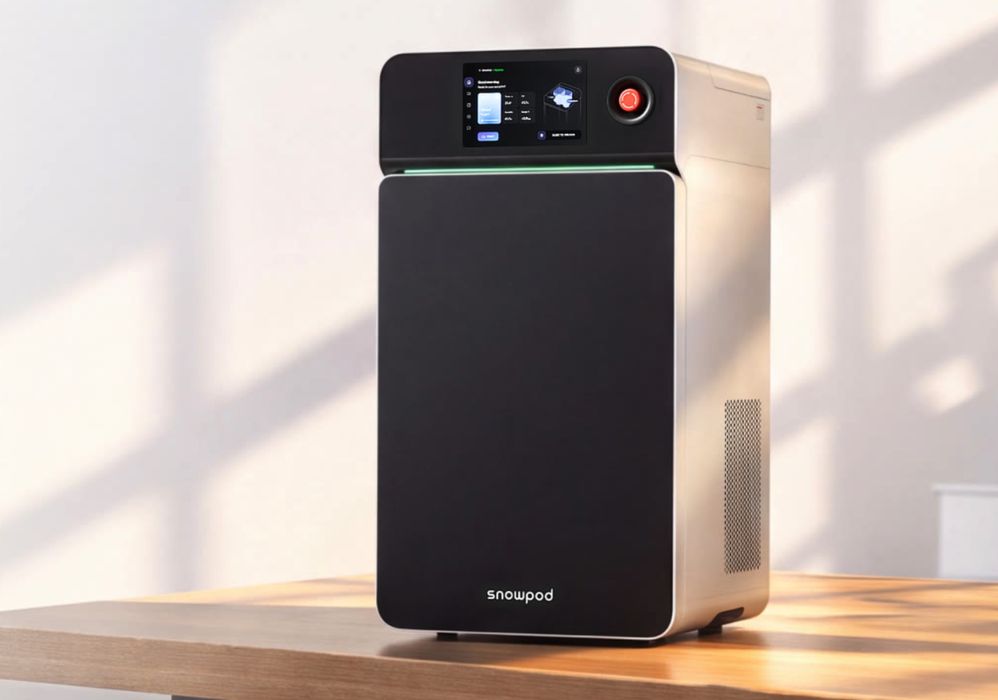
Metal laser powder bed fusion 3D printing is about to get a very inexpensive option.
SnowX is preparing to launch the SnowPod, a desktop laser powder bed fusion (LPBF) system with a planned Kickstarter launch price of US$5,299, or US$5,899 with its companion nitrogen generator. The regular prices are US$9,299 and US$9,999, respectively. Orders for the system has not yet been launched.
In spite of the rather low cost of the system, the specifications are actually LPBF,
SnowPod uses a 200W fiber laser with a 40-micron spot, 30–60-micron layers and a maximum scanning speed of 800mm/s. The build volume is relatively small at only 80 x 80 x 100mm. It weighs 40kg, and draws 700W of power. SnowX can handle either 316L or 17-4PH stainless steel powder, and slicing software is included.
It appears that SnowX has spent as much effort simplifying the system’s workflow as compacting the size of the 3D printer.
Metal powder is in sealed cartridges, and unused powder is automatically collected for reuse. SnowX claims more than 90% recovery with their testing.
A “transfer box” lets operators retrieve completed builds without exposing the powder in the build chamber. Dual HEPA filtration, particulate monitoring and interlocks handle some of the usual LPBF hazards that almost always require specialized facilities. However, you still need to use proper procedures and protective equipment.
SnowX has also developed what it calls origami-style supports. These are designed to hold the part during printing but collapse progressively when pulled from one side, allowing removal with pliers instead of sawing or cutting parts from a build plate. That’s quite an interesting idea, because post processing is usually one of the most challenging parts of metal printing.
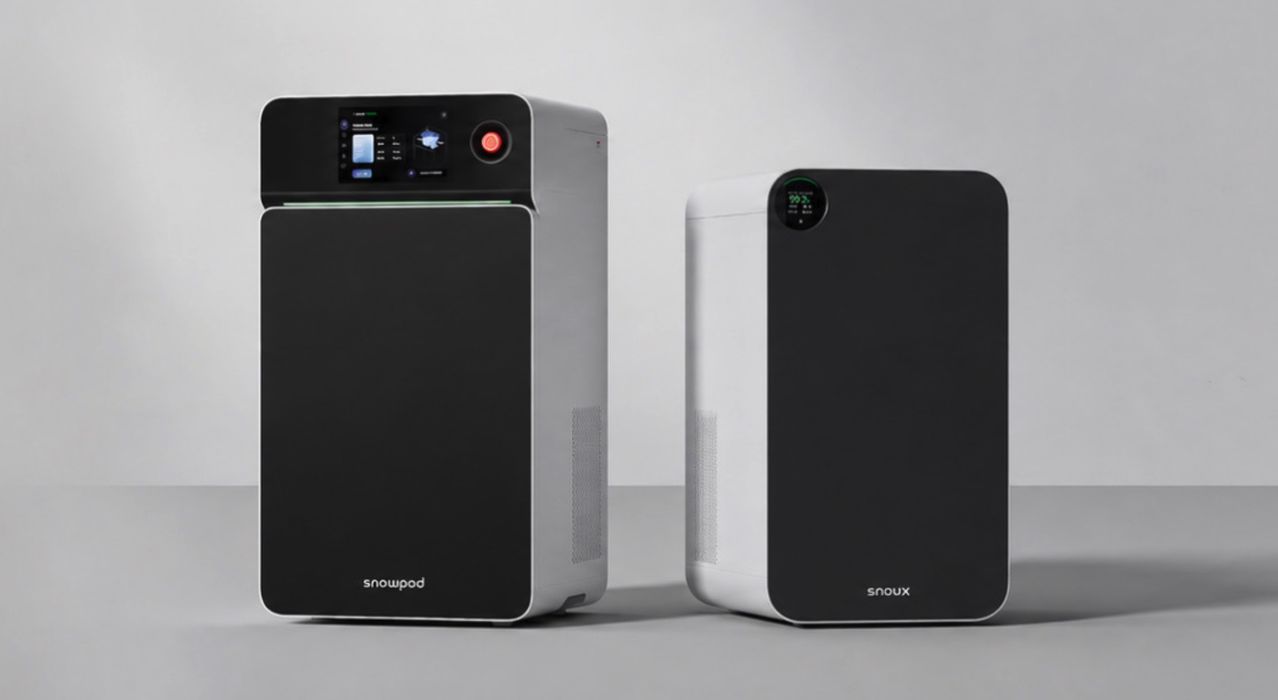
Then there’s “NitroPod”. LPBF needs oxygen kept out of the build chamber to maintain powder quality, which is often done in commercial LPBF systems using argon. NitrPod generates nitrogen from the air, at 99.9% purity. This could eliminate the many troubles of handling gas cylinders.
But how much of industrial LPBF capability really survives at this price?
Traditional machines are expensive partly because they manage difficult thermal behavior. Metal expands when heated and contracts while cooling. As laser passes accumulate, residual stresses can warp parts or pull features away from their intended positions. Industrial systems often use thermal simulation, carefully designed supports and stress relief to limit warping and cracking.
SnowX doesn’t explain any comparable thermal compensation methods. That doesn’t mean they’re not handled, but it leaves me wondering about the dimensional accuracy of some printed parts.
They say the system has 0.05mm dimensional accuracy, which comes from internal testing of a 12 x 12 x 12mm lattice. That’s a pretty small specimen. Would a 75mm component, or several closely fitting parts, have the same accuracy? We don’t know.
For the breakaway supports, I have some questions: conventional supports often conduct heat into the build plate as well as physically restrain the part. How does SnowX balance that with easy removal?
Maybe its intended market doesn’t require the same industrial tolerances that traditional LPBF does? Look through SnowX’s sample gallery and you’ll find plenty of rings, bracelets, figurines and ornamental pieces, alongside a far smaller set of mechanical components. For decorative metal objects, fine detail and an attractive finish might be way more important than the dimensions.
SnowX also allows connecting several SnowPods under a single dashboard, effectively creating a miniature production line. I can imagine a jeweller or creative maker running (say) three machines to produce small batches of metal designs without having to set up a traditional industrial LPBF farm.
We don’t know much more about the SnowPod, but we’ll certainly find out as they reach the marketplace. Interestingly, the company might find its best customers are people who never needed an industrial metal printer in the first place.
Via SnowX