
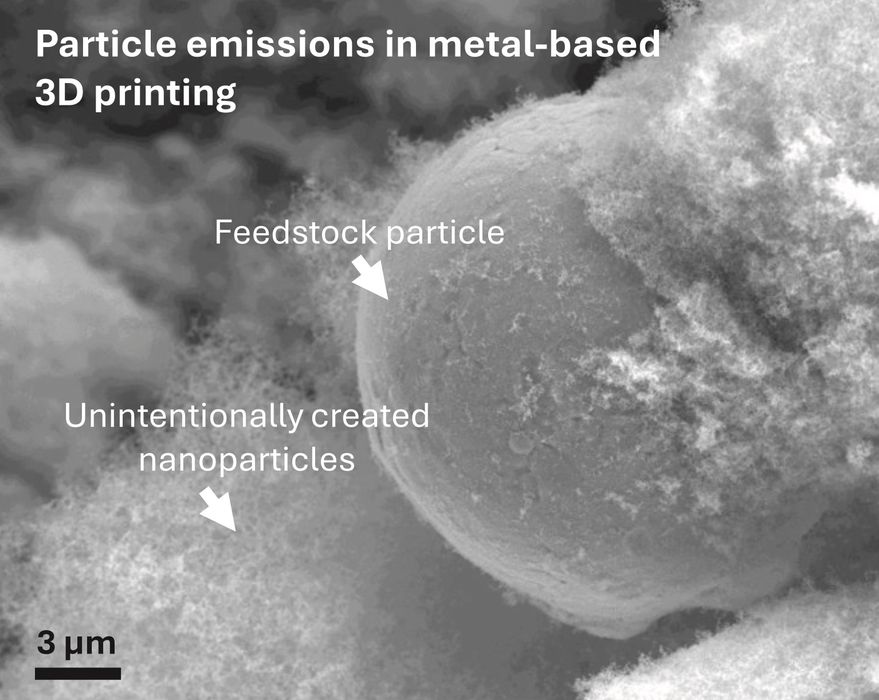
A new study raises significant concerns about home 3D printing safety.
The research report investigated the use of 3D printers at home because of predictions of future sales. It’s expected that by 2030 there may be as many as 50 million 3D printers sold, and each of them could present a safety risk to operators.
Some of what they found is already well known, including:
ABS/ASA produce vastly more emissions than PLA material.
VOCs (volatile organic compounds) are a concern.
But their investigation revealed several other notable — and concerning — concepts.
For example, they discovered that with an open gantry FFF 3D printer, the use of a vent hood or “open window” style ventilation is absolutely insufficient to remove the emissions.
They also surprisingly found that if you preheat your hot end and print plate, you can reduce ASA/ABS emissions by up to 75%. Apparently, if ABS/ASA is in the hot end while heating, a significant amount of emissions occur. By preheating, you avoid that period of emissions.
They found the presence of BPA and related phenols — BPA is an endocrine disruptor — were emitted when printing polycarbonate material.
They suggest home 3D printer operators consider:
- Using retrofit enclosures to capture emissions, preferably then vented outside.
- Monitoring systems, like IAQ monitors.
3D Print Safety Implications
As knowledge of these safety concerns increases with the number of machines sold, we could see several future developments in the industry. These could include:
- Increased use of enclosures, especially those with filtration and safety measures.
- Publication of emission data from filament providers.
- Increased demand for low-emission filament products.
- Development of emission rules by governments and regulatory bodies.
- Best practices for placement of 3D printers in homes (e.g. treated like kitchen smoke).
- Increased awareness of the need to avoid food-contact applications, and kid-contact labeling.
- More focus on the microplastic problem, resulting in waste capture and potential recycling.
What should you do in light of this information? Here are some tips:
- Prefer lower-emitting materials when you can (often PLA over ABS, and be very cautious with high-emitting materials like ASA).
- Use an enclosure (ideally sealed + filtered) rather than relying on room ventilation alone.
- Treat warm-up as a high-emission phase; for ABS, preheating can reduce emissions substantially.
- If printing in shared/public spaces, follow guidance like the Swedish Chemicals Agency (KEMI) and the National Institute for Occupational Safety and Health (NIOSH) (enclosures + localized ventilation).
- Assume emissions differ widely by filament brand/colour; don’t treat “PLA” as a single uniform risk category.
Safety first, everyone.
Via iScience
