
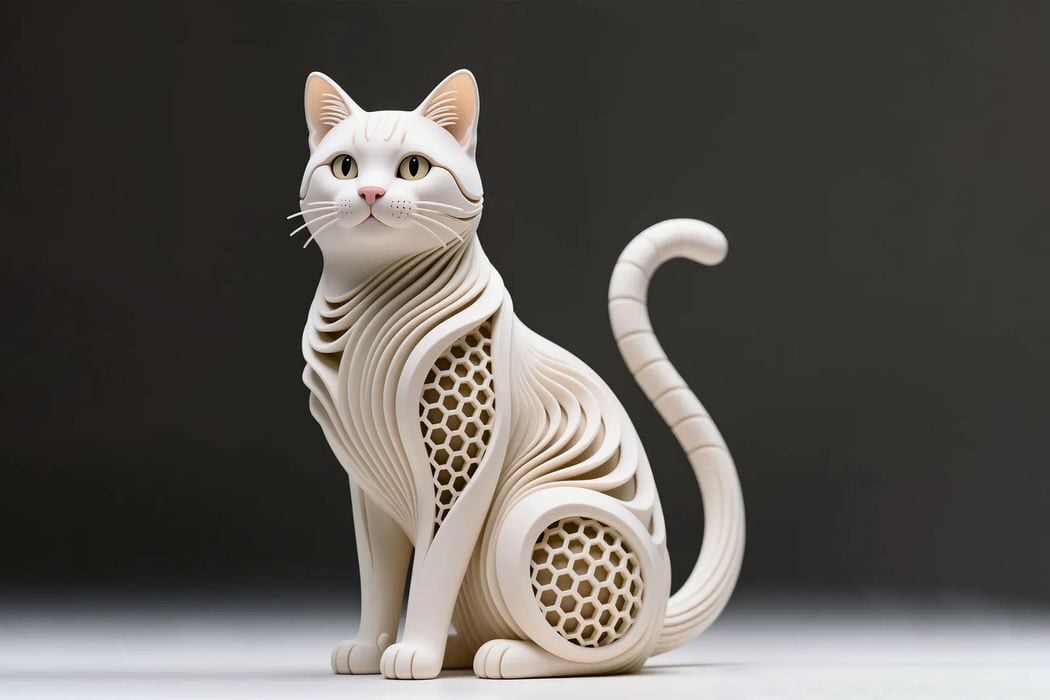
Things seem to be changing with generated 3D models on public download sites.
A year ago, I wrote a story about a questionable 3D model I encountered on Printables. The model was a rather attractive pencil case, but when I downloaded it, I got a surprise. The model was really nothing like the image.
What had happened was this: the author generated a cool-looking 2D image of a design concept and then fed it into an image-to-3D tool. The generated 3D model was then uploaded to Printables.
Printables users were frustrated with this approach, as there were increasing numbers of 3D models appearing that weren’t quite the same as their highlight images.
What’s happened in the past year? Certainly, we’ve seen so much more of this happening on all of the popular 3D model download sites, including not only Printables but also Thingiverse, MakerWorld, and the others.
This week, I saw a trending model of a cat and took some time to investigate. The unusual design by Printables contributor spezialuniversal was one of several similar designs, each a weird hybrid of an animal and infill-like structures.
But unlike some of the crappy AI models I saw a year ago, this one was trending. The comments on it were positive. Has something changed?
I downloaded the cat model and compared it to the AI-generated image, which you can see at top. We know it was AI-generated because the author marked it so. Also, it just looks like an AI image.
Does the 3D model match the image? Let’s take a look. Here is a rendering of the downloaded 3D model from this entry:
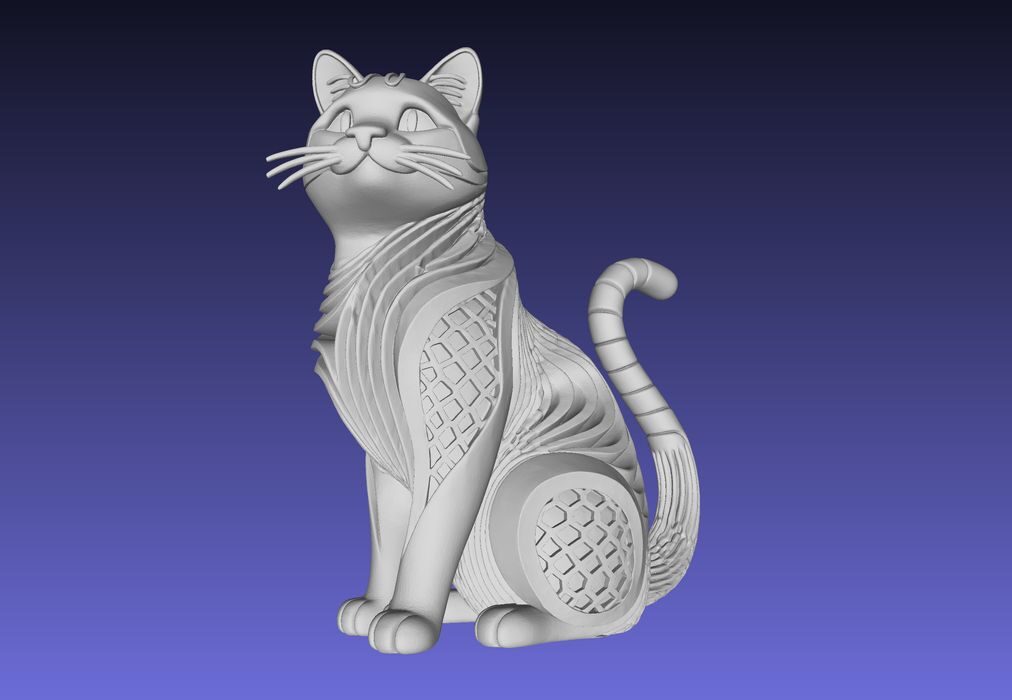
As you can see, it’s actually very close to the geometry of the image. The number of segments on the tail are identical, for example. However, there are some differences if you look closely, such as the hex infill in the image has become quad infill in the 3D model.
But here’s the point: this 3D model, although slightly different than the portrayed image, is close enough to be good. Regardless of its heritage and accuracy, it seems that a lot of Printables users like it.
A year of progress on image-to-3D tools has clearly improved the accuracy of the generations. It’s obviously not perfect, but you can see the trajectory: next year, or the year after, the image-to-3D tools will become far better.
That would be a milestone. But I believe we just passed another one with this weird cat 3D model: they are good enough for most people.
Via Printables
