
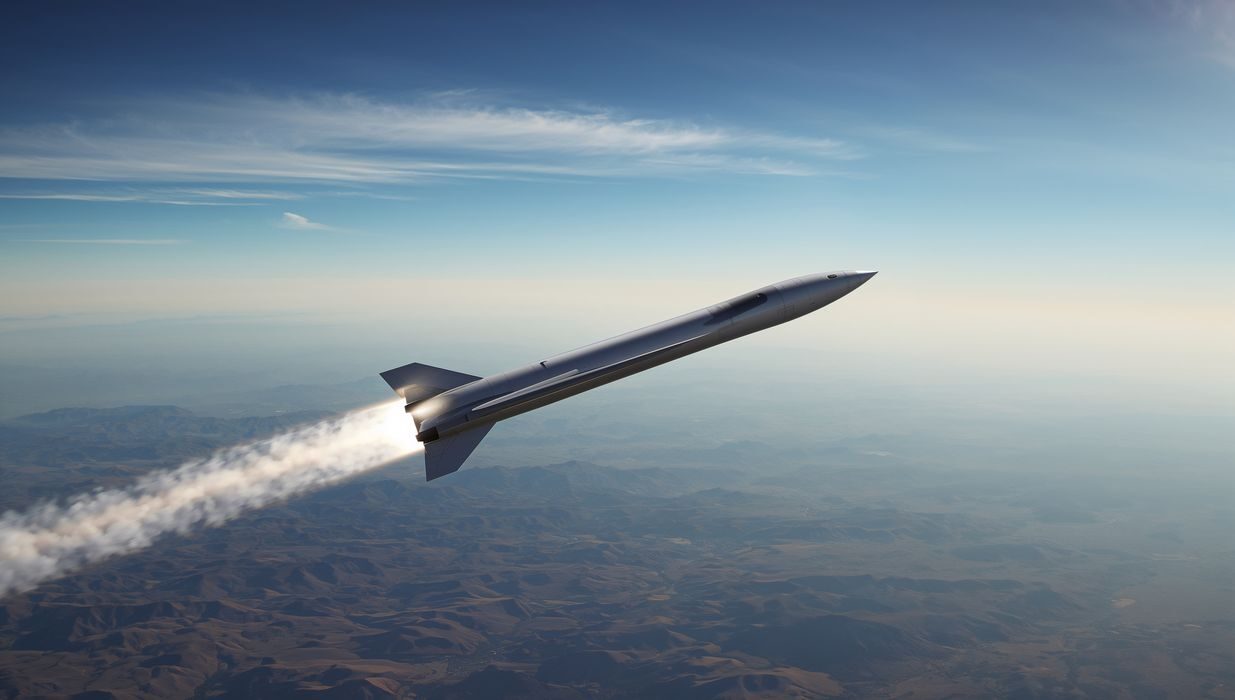
It appears the major area for metal 3D printing applications could become military.
For a long while the major (and most profitable) areas were aerospace, healthcare and dental.
The latter two were driven by the need for customization: you can’t mass manufacture identical dental aligners, for example. They need to match the patient. Aerospace was driven by the ability to design radically different parts with highly complex geometries to lower weight. Less weight in aerospace is extremely valuable, as it means less energy is required, or more payload can be carried.
Those applications have worked for many years, and still do.
Recently I’ve been seeing an increasing number of announcements from major 3D print players about deals involving various militaries. For example, a recent release from EOS described how one of their clients, Ursa Major, had acquired an additional three huge metal 3D printers to double their capacity.
The reason for the doubling was to scale up hypersonic production at their Ohio plant. The press release said:
“As the company builds out its production capacity to meet rising national security and aerospace demand, Ursa Major has decided to expand with EOS for its proven laser powder bed fusion (LPBF) industrial 3D printing technology, deep AM expertise, and collaborative approach to pushing the boundaries of AM industry.”
The key words in that quote are “national security”. Hypersonics refer to airborne weaponry that vastly exceeds the speed of sound. The rapid speed of these weapons is such that enemies would have far less time to react and intercept them, as well as packing much more kinetic energy.
EOS’ announcement is far from the only one. There are many moves by 3D print companies in the military direction. That is not surprising, as the current geopolitical situation is becoming more risky, and governments worldwide are spending more on defense.
NATO members, for example, recently committed to raising the expected spend level. This means many of NATO countries (not those already at that level) will be spending an enormous amount of money to acquire new weaponry and other assets.
Some of those projects will involve hypersonics, and many other additive manufacturing-friendly applications. I expect many to involve metal 3D printing, but there will be polymer applications as well.
This is good news for 3D printing as a whole, as it opens up a new path to revenue. 3D print companies that have been adjusting their strategies in this direction will likely find positive results, while others may find themselves catching up.
Via EOS
