Charles R. Goulding and Preeti Sulibhavi explain how the U.S. Army is scaling 3D printing from battle-damage repairs to mass-producing drones and next-generation military infrastructure at Rock Island Arsenal.
The Army’s adoption of 3D printing—or additive manufacturing—is shifting gears rapidly, and by “very, very soon,” it expects to sprint, not just walk, claims Randl Besse, commodity manager at the Rock Island Arsenal (RIA) Joint Manufacturing and Technology Center (JMTC).
Besse also said, “The Battle-Damaged Repair and Fabrication program (BDR&F) is the perfect use of additive manufacturing technology, as we’re producing limited quantities of many different parts.” At the August 2025 Government Vehicle Systems (GVSETS) conference, Besse noted that the service has already printed over 1,500 unique parts for in-service platforms. Yet, even more ambitious aims are on the horizon—like producing 10,000 drone bodies per month to support unmanned aerial systems (UAS) in high volume.
Rock Island Arsenal: Anchoring Army Innovation
The Rock Island Arsenal (RIA), on a 946-acre island in the Mississippi River between Illinois and Iowa, is central to all this upward trajectory in Army 3D printing.
- The island comprises 946 total acres; 868 acres are managed by U.S. Army Garrison RIA, with the remainder held by the VA National Cemetery and Army Corps of Engineers.
- RIA employs about 6,000 people—soldiers, civilians, and contractors across more than 80 tenant organizations, including: Army Sustainment Command, First Army, Joint Munitions Command, JMTC, DEVCOM Armaments Center, DEVCOM Chemical Biological Center, Office of Army Contracting, Civilian HR Agency, and the Network Enterprise Center.
- The infrastructure is vast: roughly 2.1 million sq ft of manufacturing space, 3.8 million sq ft of storage, and 2 million sq ft of administrative areas. It hosts vital regional services—Post Exchange, Commissary, Health Clinic—for active duty, reserves, and some 15,000 retirees within 125 miles.
- At its heart is the RIA Joint Manufacturing and Technology Center (JMTC). Occupying some 1.5 million sq ft of the Kingsbury Complex, it’s the DoD’s sole multi-purpose, vertically integrated metal manufacturer, offering technical expertise and sustainable manufacturing.
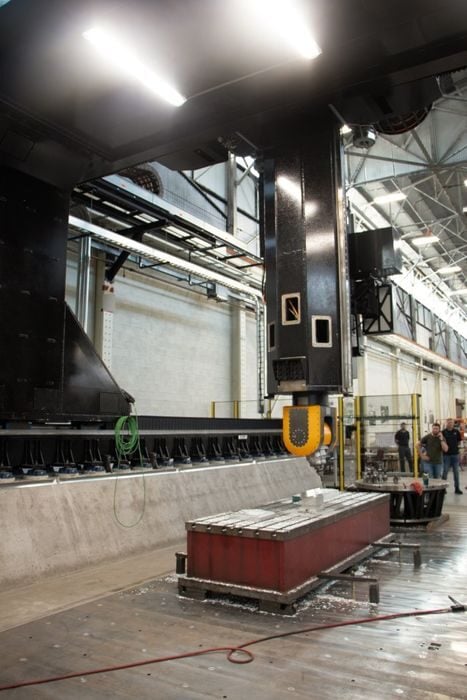
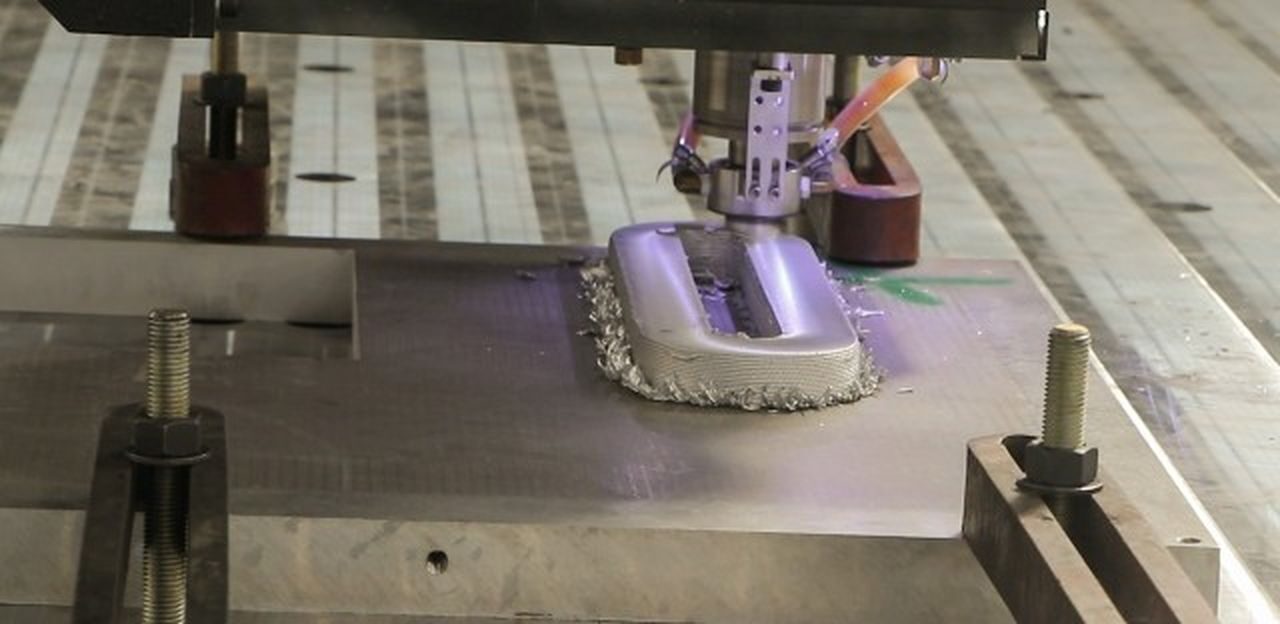
- Its flagship asset: the Jointless Hull machine, the world’s largest additive/subtractive manufacturing system. It earned the 2024 Technical Achievement Award for 3D Printing Innovation. This unit can print forging-quality large metal parts in one piece—eliminating weld joints and revolutionizing part strength and integrity.
The strategy is shifting from stopgap fixes to standardized qualifications. Jason Duncan of TACOM’s Integrated Logistics Support Center stressed the move from battle-damage repair to fully qualified components. Simultaneously, the DEVCOM Ground Vehicle Systems Center invites industry collaboration—partners can print prototypes using RIA’s machines and labs, with emphasis on “giant shapes and forms” made from aluminum and various alloys.
Real-World Examples of Army Additive Manufacturing
- Drone Sprint Initiative: In spring 2025, Army Futures Command and AMC ran a 3D printing sprint to produce inexpensive group-1 drones (under 20 lb). Production is currently around 10 drones per week, with parts printed at RIA and electronics integrated at Tobyhanna Army Depot in Pennsylvania. Scaling could push this to 10,000 units per month—a clear step toward mass production.
- Battle Damage Repair and Fabrication (BDRF): TACOM, in collaboration with DEVCOM GVSC and Rock Island Arsenal, has leveraged 3D printing to fabricate temporary replacement parts for ground vehicles that were previously hard to source or obsolete. Since early 2024, they’ve successfully produced and approved parts across nearly four dozen product lines to restore operational readiness.
- 3-Week Army Course – UALC: In late August, the Army launched the Unmanned Advanced Lethality Course (UALC) at Fort Rucker, Alabama. The training teaches soldiers how to maintain 3D printers (both FDM and resin), work with advanced materials like carbon fiber, design STL files, build drones from scratch, and fly them FPV. Though currently for 28 students, the course is slated for expansion via Mobile Training Packages.
- Frontline 3D Printing in Europe: During Combined Resolve 25-02 exercises in May–June 2025, soldiers brought mobile 3D printers to the battlefield to produce FPV drones in theater. The emphasis was on lowering cost, increasing speed, and transforming adversary drones into training assets. Units grappled with balancing field constraints—power, mobility, and rapid relocation—against the advantages of in-place printing.
- Hellhound S3 Kamikaze Drone: At the 2025 Army Expeditionary Warrior Experiment at Fort Moore, Georgia, Cummings Aerospace showcased the Hellhound S3—a turbojet-powered, 3D-printed kamikaze drone capable of flying faster than 375 mph. This modular system aims to bring the firepower of armored brigades to Infantry Brigade Combat Teams in long-range precision strikes.
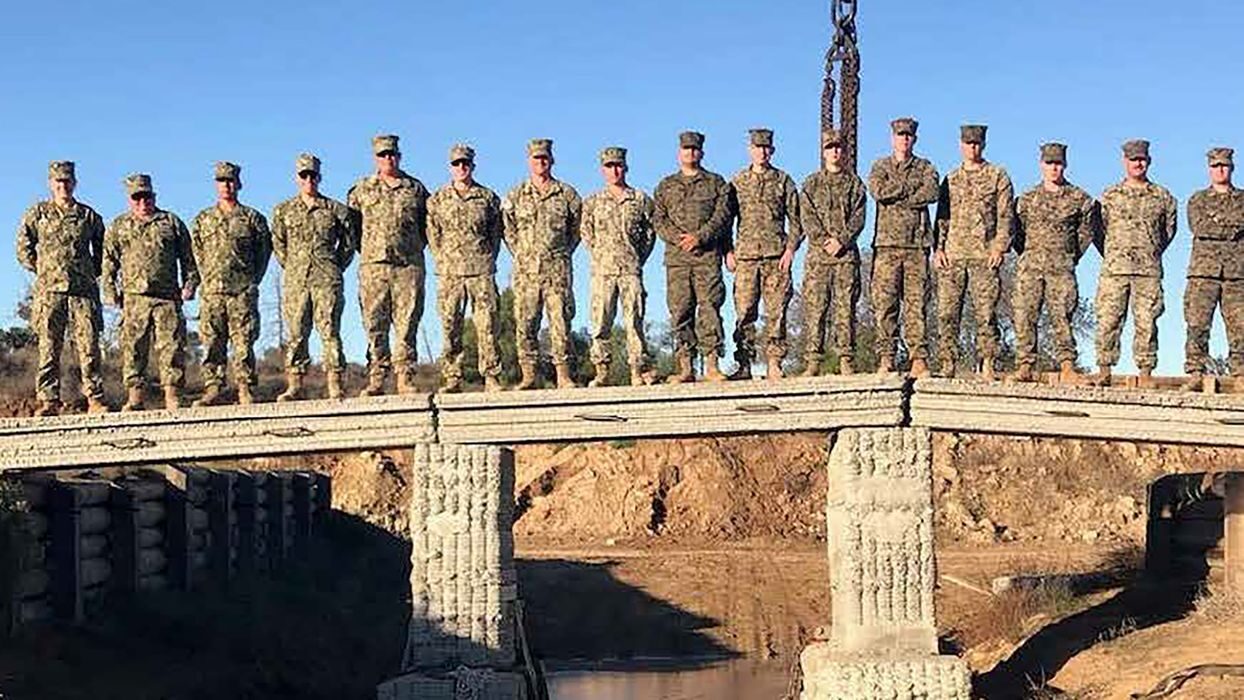
- Concrete Bridges and Structures: Beyond vehicles and drones, the Army is exploring additive construction. In spring 2025, the first prototype 3D printed concrete bridge in the Americas was constructed using double-T beams. These structures, printed on-site, can be rapidly deployed to enhance logistics and overcome battlefield infrastructure challenges.
Looking Ahead: More Growth at RIA
In June 2025, Army Secretary Daniel P. Driscoll indicated net growth is expected at Rock Island Arsenal amid global base reorganizations. Though some consolidation, for example merging Joint Munitions Command with Army Sustainment Command (affecting around 400 jobs), is underway, the broader trajectory leans toward expansion and enhancement of RIA’s capabilities.
The Research and Development Tax Credit
The now permanent Research and Development (R&D) Tax Credit is available for companies developing new or improved products, processes, and/or software. 3D printing can help boost a company’s R&D Tax Credits. Wages for technical employees creating, testing, and revising 3D-printed prototypes can be included as a percentage of the eligible time spent for the R&D Tax Credit. Similarly, when used as a method of improving a process, time spent integrating 3D printing hardware and software counts as an eligible activity. Lastly, when used for modeling and preproduction, the costs of filaments consumed during the development process may also be recovered.
Whether it is used for creating and testing prototypes or for final production, 3D printing is a great indicator that R&D Credit-eligible activities are taking place. Companies implementing this technology at any point should consider taking advantage of R&D Tax Credits.
Conclusion: Army 3D Printing—Scaling and Strategic Depth
At its core, the Army is transitioning 3D printing from a supporting technical innovation into a scalable, doctrinal capability. With Rock Island Arsenal (JMTC) as a manufacturing powerhouse, and real-world examples like drone sprints, battlefield printing, Hellhound kamikaze drones, and rapid structure construction, additive manufacturing is shifting from experimental to essential.
The implications stretch across logistics, readiness, obsolescence mitigation, cost, and speed. Through courses like UALC and partnerships with industry, the Army is not only deploying 3D printed systems but also growing the workforce and ecosystem needed to sustain and evolve these capabilities in the years ahead.