Ryan Donley and Aaron Rofe examine how AgEagle, under the seasoned leadership of Bill Irby, is driving regulatory change, global drone adoption, and BVLOS readiness in the race for commercial and defense drone dominance.
In June 2025, Charles R. Goulding, Ryan Donley, and Aaron Rofe had the privilege of interviewing Bill Irby, CEO of AgEagle Aerial Systems Inc., a pioneering company in the drone and aerial intelligence space. Irby, a United States Naval Academy alum, brings over 25 years of senior leadership experience in uncrewed air and maritime systems, ISR (Intelligence, Surveillance and Reconnaissance) technologies, and advanced communication platforms. His executive experience includes serving as Vice President at Northrup Grumman, President of VBAT following its acquisition by Shield AI, and President of MTI and Steel Partner Holdings LP. He also led L3 Harris Technologies’ Reconnaissance Mission Systems division. Irby holds a master’s degree in Technical Management from Johns Hopkins University and a bachelor’s in engineering from the Naval Academy. He currently serves as Immediate Past Chairman of AUVSI and sits on the boards of Ghost Robotics, Secmation, and LaunchPoint Electric Propulsion Solutions.
Under Irby’s leadership, AgEagle has actively participated in regulatory discussions in Washington, D.C., including follow-up meetings with the White House focused on FAA rulemaking for Beyond Visual Line of Sight (BVLOS) operations. His recent advocacy emphasizes the importance of the forthcoming Part 108 rule, which is expected to expand commercial drone capabilities significantly.
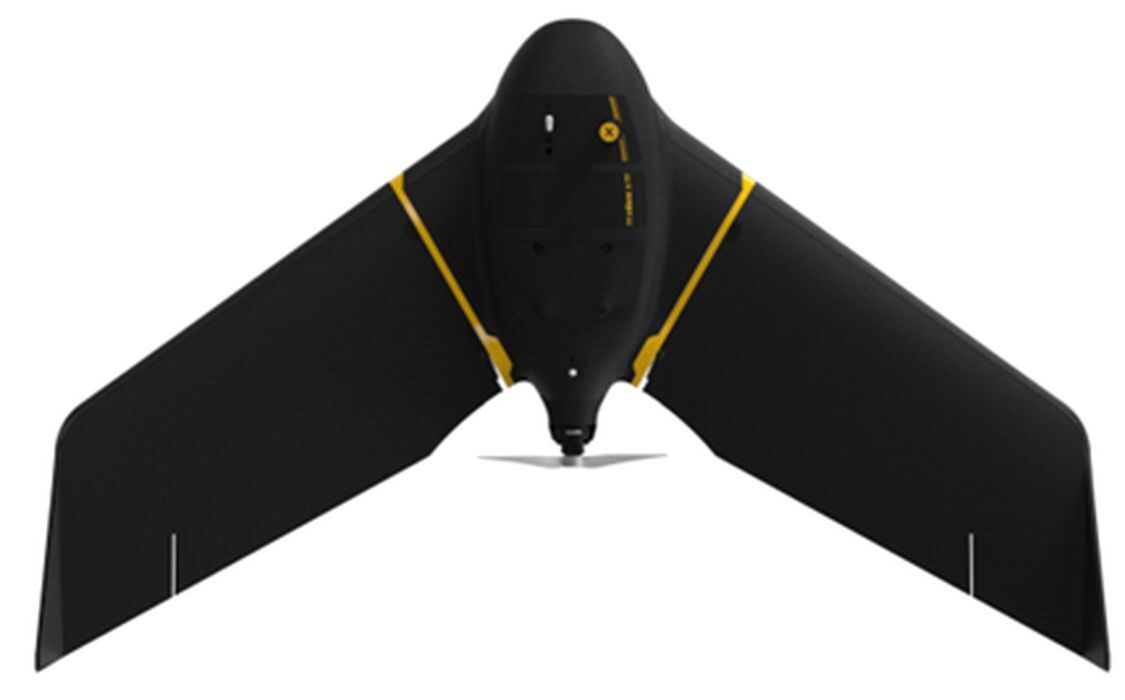
AgEagle Aerial Systems Inc. is a leading provider of advanced drone, sensor, and software solutions for automated aerial intelligence. The company’s projects primarily revolve around its proprietary line of eBee-branded fixed-wing drones, MicaSense series sensors, and accompanying software. AgEagle’s flagship fixed-wing mapping drone Is the eBee X, which specializes in high-precision geospatial data collection. The eBee X boasts impressive capabilities, including a 90-minute flight time and the ability to cover approximately 2,500 acres at 400 feet altitude on a single flight. It supports diverse applications such as precision agriculture, urban planning, disaster response and recovery, and emerging defense and security applications. Notably, the eBee X has received regulatory approvals for Operations Over People (OOP) in multiple counties and BVLOS operations. AgEagle has achieved a significant milestone with over 100 eBee drone sales to South Korea, strengthening its position in the Asia-Pacific drone market, which is projected to grow $4.1 billion by 2030 with a 15% Compound Annual Growth Rate (CAGR).
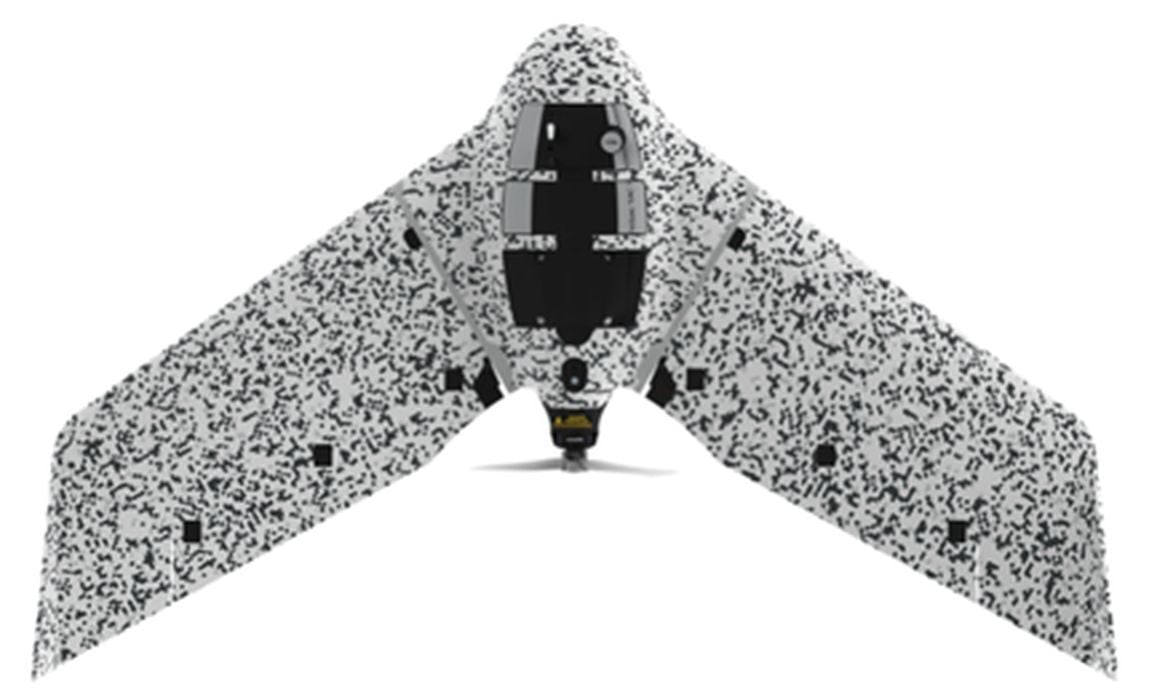
In addition to the eBee X, AgEagle offers specialized drone models. The eBee TAC is designed for government and public safety use and has been added to the Blue UAS Cleared List by the Defense Innovation Unit. The eBee VISION is described as a military-specific unit featuring a deployable sensor payload, designed for real-time situational awareness. An international sale of eBee VISION drones to the Paraguayan Government was recently announced. The company’s roots are in agriculture, but about three years ago, AgEagle began to shift its focus into the defense sector.
For sensors, AgEagle provides the MicaSense series of high-performance RGB, thermal, multispectral, and panchromatic drone sensors, including Altum-PT and RedEdge-P. These sensors are crucial for applications like multispectral and RGB composites with pansharpening. For instance, a RedEdge-P sensor was recently purchased by JEPICO Corporation to combat red tide pollution in Japan. The multispectral cameras are almost 100% used for agriculture to detect issues like insect infestation, crop damage, and soil damage. AgEagle’s software offerings include eMotion for automated flight control and Measure Ground Control for program management and data processing. The company conducts substantial Research & Development (R&D) operations, primarily located at the company’s factory in Switzerland.
The effect of recent legislation, particularly concerning Beyond Visual Line of Sight (BVLOS) operation and the anticipated FAA Part 108 rule, is significant for AgEagle and the wider drone industry. AgEagle has been actively engaged with regulatory developments, participating in follow-up discussions with the White House regarding critical FAA rulemaking for BVLOS operations.
Part 108 is the highly anticipated regulation from the FAA aimed at standardizing BVLOS operations for commercial drones. This rule is crucial because current regulations, primarily Part 107, generally restrict drone flights to within the visual line of sight of the operator unless a special waiver is obtained. Part 108 represents a significant shift by establishing a framework for long-range, complex missions without needing individual FAA waivers. The importance of Part 108 for the drone industry stems from several factors: it will unlock critical use cases such as inspecting miles of power lines or pipelines, enabling long-distance package deliveries, monitoring large agricultural fields more efficiently, and enhancing public safety initiatives like Drone as First Responder (DFR) programs. These capabilities can dramatically improve the return on investment (ROI) for drone programs by allowing centralized operations and covering more ground with fewer launches, leading to lower costs per mission. A clear BVLOS rule will also enhance safety by establishing standard requirements for equipage and pilot training, and it will give manufacturers like AgEagle a target for innovation, especially in developing reliable detect-and-avoid (DAA) systems and robust communication links.
Despite industry demand, the FAA has faced delays in releasing the Part 108 rule. The BVLOS Aviation Rulemaking Committee (ARC) provided 70 recommendations and a proposed Part 108 rule in March 2022, urging the FAA to create the rule. Although the FAA Reauthorization Act of 2024 mandated a Notice of Proposed Rulemaking (NPRM) by September 16, 2024, this deadline was missed. The FAA aimed to release the NPRM by the end of 2024 or early 2024, with the final rule expected sometime in 2025. Delays are attributed to regulatory caution, the need to balance safety and security concerns, and extensive inter-agency review.

Part 108 is expected to differ significantly from Part 107 by allowing routine BVLOS operations, requiring a special BVLOS rating or certification for pilots with additional knowledge in areas like risk management and airspace integration, and mandating technologies like Detect-and-Avoid systems and robust communication links on drones. It may also allow a single operator to oversee multiple drones remotely via a Remote Operations Center (ROC). While Part 107 generally limits drones to 400 feet AGL and requires yielding to all manned aircraft, Part 108 may introduce more flexibility for altitude, define “air corridors”, and propose new right-of-way rules where manned aircraft without ADS-B out transponders might yield to drones.
The impact of this legislation on AgEagle is substantial:
- AgEagle’s eBee X drones already having BVLOS approvals positions them favorably to meet future regulatory requirements and fully capitalize on the expanded possibilities and operational speeds that BVLOS will enable.
- Their active engagement with the White House on BVLOS operations indicates they are proactively involved in shaping the future of drone regulations.
- The anticipated requirements for DAA systems and robust communication links under Part 108 will likely drive AgEagle’s R&D efforts in Switzerland and the USA to integrate these advanced components into their drones and sensors, ensuring their products remain compliant and competitive.
- The move towards routine BVLOS operations will allow AgEagle’s customers in industries like precision agriculture, urban planning, disaster response, and defense to leverage their eBee drones for more extensive and efficient missions, significantly expanding the addressable market and value proposition of AgEagle’s solutions.
- The current “limbo” period before the rule is finalized provides an opportunity for AgEagle and its customers to invest in BVLOS-ready drones and infrastructure and upskill teams, positioning them to benefit when regulations are put in place.
Another major signal of drone market acceleration is Walmart’s recently announced expansion of its drone delivery service to five major US cities. The rollout includes:
- Dallas, Texas
- Tampa, Florida
- Phoenix, Arizona
- Salt Lake City, Utah
- Charlotte, North Carolina
This expansion positions Walmart as the leading US retailer in drone logistics, and presents major opportunities for drone manufacturers like AgEagle to meet increasing commercial demand for safe, reliable, and scalable BVLOS-capable platforms.
The Research & Development Tax Credit
The now permanent Research & Development (R&D) Tax Credit is available for companies developing new or improved products, processes and/or software.
3D printing can help boost a company’s R&D Tax Credits. Wages for technical employees creating, testing and revising 3D printed prototypes can be included as a percentage of the eligible time spent on the R&D Tax Credit. Similarly, when used as a method of improving a process, time spent integrating 3D printing hardware and software counts as an eligible activity. Lastly, when used for modeling and preproduction, the costs of filaments consumed during the development process may also be recovered.
Whether it is used for creating and testing prototypes or for final production, 3D printing is a great indicator that R&D Credit eligible activities are taking place. Companies implementing this technology at any point should consider taking advantage of R&D Tax Credits.
Conclusion
In conclusion, AgEagle is strategically positioned at the intersection of advanced drone technology, additive manufacturing, and evolving regulatory landscapes. Under Bill Irby’s leadership, the company is playing an active role in shaping drone policy, expanding global markets, and meeting new commercial opportunities like Walmart’s drone delivery service. With its advanced product line and commitment to innovation, AgEagle is poised to lead the next era of aerial intelligence and uncrewed systems.