
Two new polymer studies explore methods to biologically dismantle plastic.
Plastic waste remains one of the rising issues in additive manufacturing. Anyone running FFF machines knows the problem: failed prints, purge towers, support structures, test coupons, calibration parts, and obsolete prototypes can create a large scrap pile quite rapidly. Recycling that material sounds obvious, but the reality of mixed polymers, pigments, fillers, contamination, and thermal changes makes it far more complicated, not even considering the industrial processes required to do so.
That is why biological degradation research keeps attracting my attention. Instead of grinding and re-extruding waste into questionable filament, enzymes or microbes could potentially break polymer chains into smaller chemical units. This avoids the quality loss experienced when thermoplastics are repeatedly melted and extruded, and sets up a new input source material for fresh, properly behaving filament production.
These two papers, however, are not doing the same thing. One is a structural biology paper about a heat-tolerant enzyme that can break down certain plastics. The other is a material demonstration involving a living plastic made with engineered bacterial spores. While different, they are both tackling the microplastic 3D printer waste problem.
Enzymes Break Down Plastic
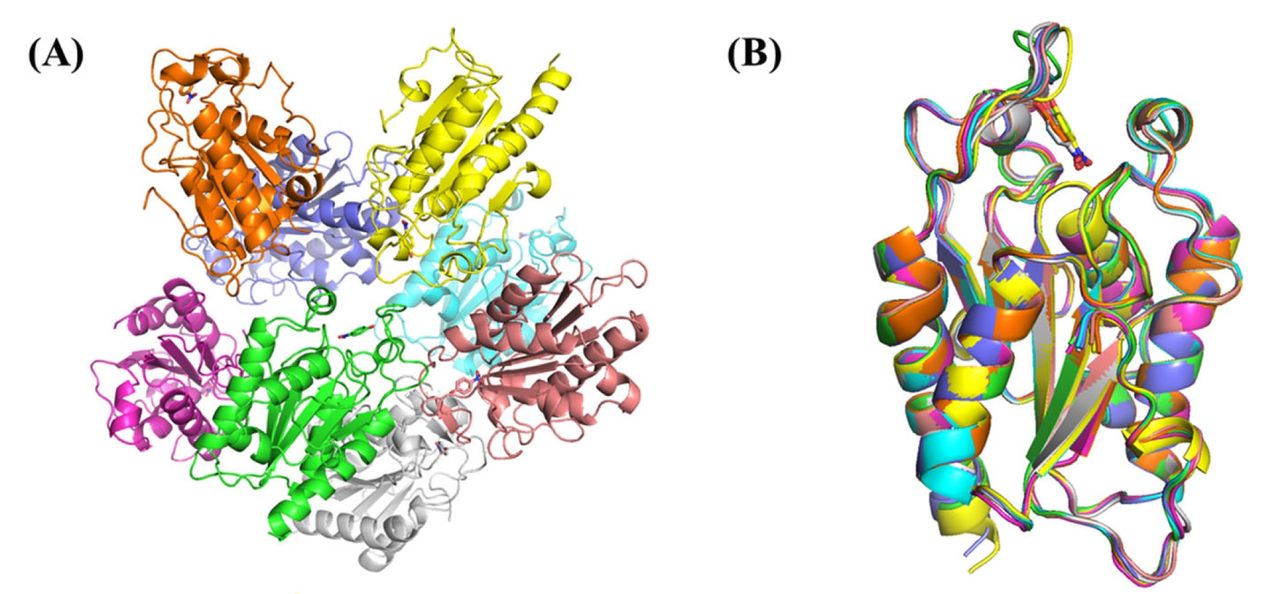
The Crystals paper examines a thermophilic cutinase from Chaetomium thermophilum, called CtCut. Cutinases are enzymes that can attack ester bonds in certain polyesters, which makes them interesting for polymer recycling. This study is not about recycling printer waste. It is about understanding the enzyme’s structure and how its active region changes shape.
Why? It’s because enzyme-based recycling usually requires heat. Some polymers become easier to break down by enzymes at higher temperatures, but at the same time, many enzymes lose their function when heated — that’s a bit of a problem.
The researchers report thermal unfolding behaviour around 66.4°C and 69.5°C, suggesting a useful thermal window for operation.
Living Plastic
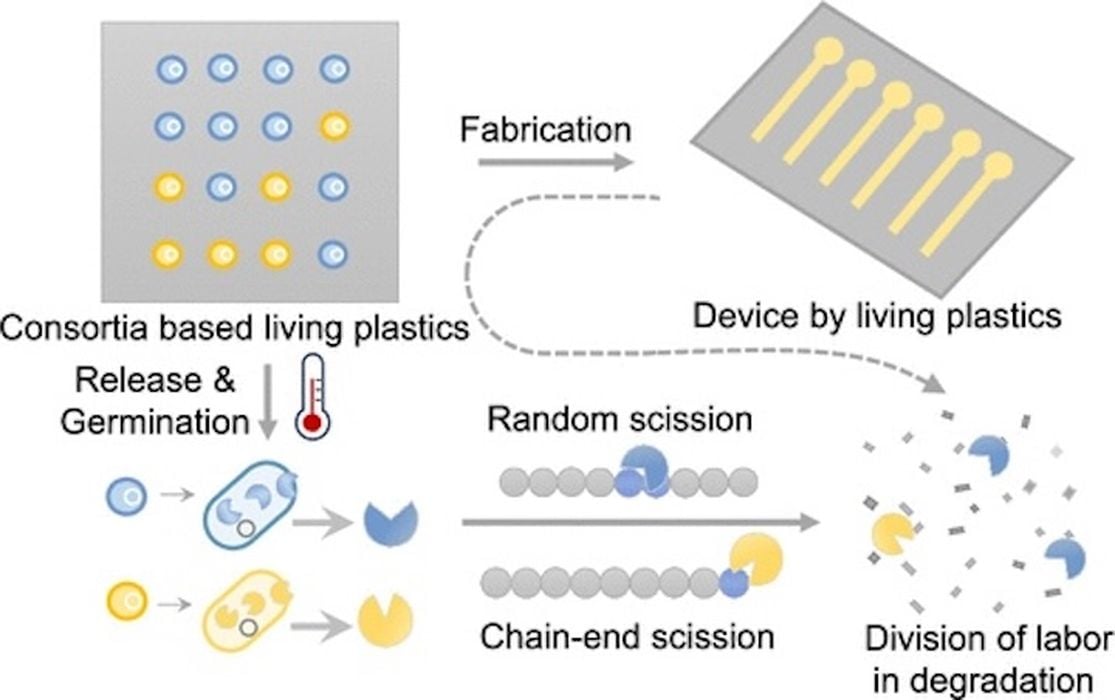
The ACS Applied Polymer Materials paper takes a more product-like step. Researchers embedded dormant spores of engineered Bacillus subtilis into polycaprolactone (PCL), a biodegradable polyester that has been used in 3D printing and medical applications. The bacteria were programmed as a small microbial team rather than a single enzyme system.
One engineered strain secretes Candida antarctica lipase, which randomly cuts long polymer chains. Another secretes Burkholderia cepacia lipase, which works more progressively from chain ends. In other words, one enzyme makes more bite-sized fragments, while the other chews those fragments down further.
Two Approaches for Biodegradable Materials
The ACS result is the more directly relevant of the two for additive manufacturing. The team reports that embedding the spores did not compromise the mechanical properties of the PCL films. When activated through controlled heating and nutrient broth at 50°C, the living plastic achieved near complete degradation of the PCL matrix within six days.
That sounds pretty spectacular, but there are some big constraints. This is PCL, not PLA, PETG, ABS, ASA, nylon, TPU, PC, or the other commonly 3D printed polymers. The process also required an activation environment, and that’s a lot more than casually tossing waste into a compost bin.
The MDPI work is even farther upstream. It could help scientists design tougher plastic-degrading enzymes, particularly for polyester recycling research. But it does not present a waste processing system, a printer-compatible material, or an additive manufacturing workflow. But it is a first step towards new methods based on their discovery.
Together, the two papers show why plastic degradation research is both promising and frustrating. The chemistry is becoming more sophisticated, and researchers are moving beyond simple claims of biodegradability. But additive manufacturing waste is not a single clean polymer problem. It is a widely distributed, mixed, low-margin, highly variable waste stream.
It will be interesting to see whether these biological approaches can work in real environments.
Programmable plastic decay is a fascinating idea, but the hard part is still programming it for the mess we actually make.
Via Crystals and ACS Applied Polymer Materials (Hat tip to Benjamin)
