
Bambu Lab announced the availability of a line of food-safe 3D printer filament materials.
The product is named “Pure PLA”, and is not only touted as being food-safe, but also safer in other ways. For example, they explicitly list the emissions expected during printing for this material, and mention specific EU certifications.
They explain the recipe for Pure PLA:
“Made from only five raw materials, all from globally leading raw-material companies. Each raw material complies with the core EU regulations for food-contact plastic materials and products, ensuring raw-material safety and traceability.”
And what are those ingredients? This is the short list:
- Polylactic acid — derived from natural corn and sugarcane
- Acrylate copolymer — commonly used in children’s toys
- Color pigment — commonly used in baby dinner plates
- Ethylene bis-stearamide — commonly used in food-preservation film
- Talc powder — commonly used in eco-friendly biodegradable straws
And the emissions reported are listed as:
- Formaldehyde: 0.01–0.02 mg/m³
- TVOC: 0.24–0.44 mg/m³
- PM2.5: 0.015–0.027 mg/m³
It is important to note that these appear only on the Chinese wiki, and not on the English/Western pages. I can imagine there would be quite an amount of legal and certification work done before Pure PLA could be released in the West.
Does Bambu Lab actually expect us to print plates, bowls, and cutlery on our P1S machines and use them in our kitchen?
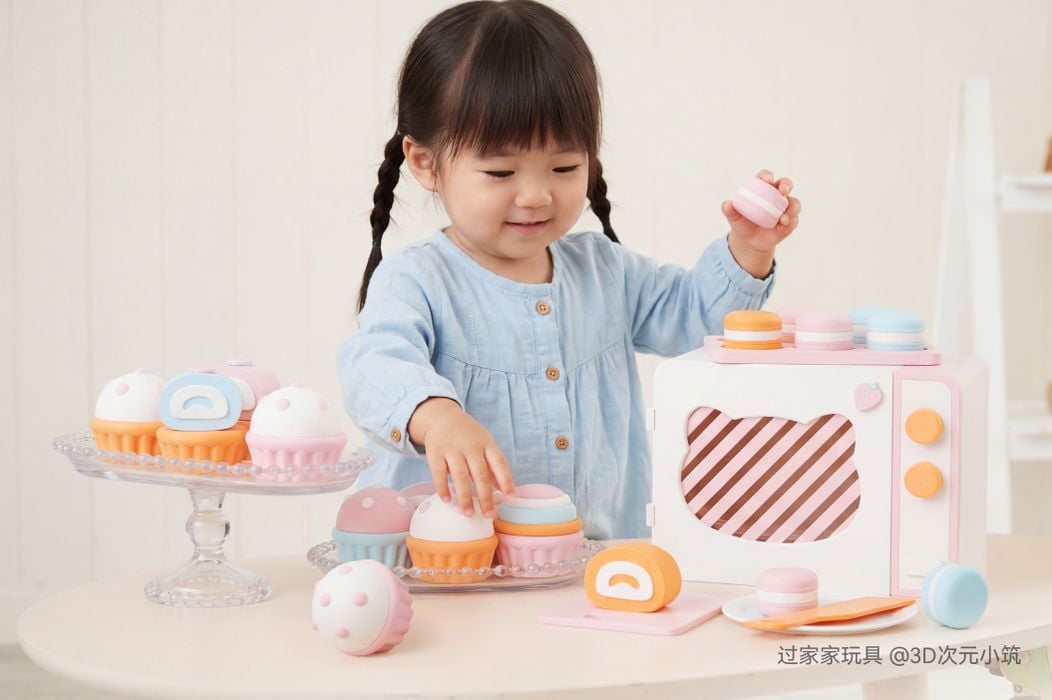
Reading between the lines, the answer is likely no. It seems that the material itself does pass EU food contact certification tests, but only in controlled conditions. That means certain types of models might be safe. Also, the promotion specifically focuses on children’s toys, rather than food containers. Ironically, one of the images is of toy food prints.
They provide a “printing guide” for this material, which includes highly detailed instructions on how to use the material. This goes well beyond just printing, and goes into post print cleaning and operational tips. For example, you should not coat the print plate with glue stick before printing a food safe item. It seems that Bambu Lab has done quite a bit of work on this material.
The Pure PLA printing guide seems to recommend printing the material on existing Bambu Lab equipment. This is interesting because my understanding is that a food-safe print would be produced using food-safe material (check) on a food-safe 3D printer (oops).
I do not believe that any of the current Bambu Lab line of devices has been certified as food-safe. To do so, the entire filament path would have to avoid unsafe chemicals and materials. That includes the nozzle, hot end, extruder gears, PTFE tube, and all the components in the AMS as well.
The documentation does say this, however:
“It is recommended to use a brand-new non-copper nozzle and dedicate it to PLA Pure in subsequent printing to avoid residue from other filaments or metal contamination.”
And:
”Due to layer lines, finished products should not hold liquid food; also, because of PLA material limitations, do not place in environments above 70°C.”
Where is Bambu Lab going with this? My guess is that they are attempting to make the machines safe to produce children’s toys, which often end up in mouths and are continually touched. By making them contact food-safe materials, they will achieve that. It’s just that the words “food safe” imply actual food is involved.
I also expect them to gain some experience in China with this product before they attempt a launch in the West. With the prospect of expensive lawsuits if they get it wrong, they will no doubt spend all the time they need to get it right.
Via Bambu Lab Wiki (Chinese)
