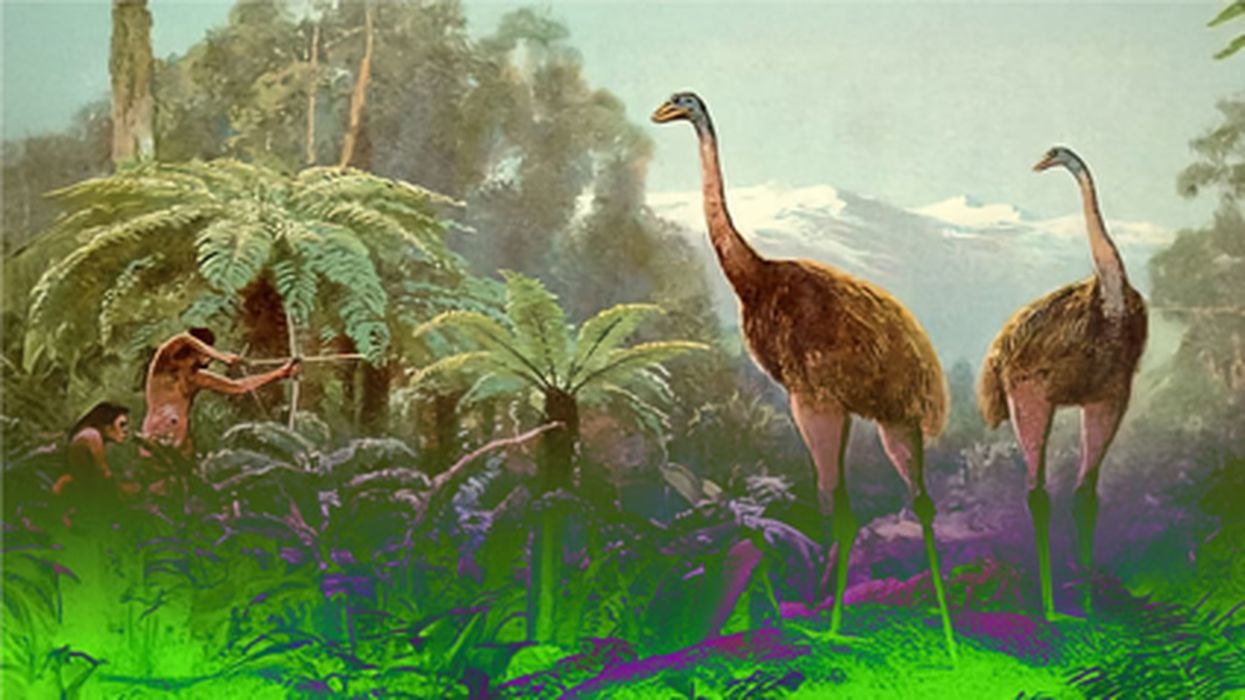
Charles R. Goulding and Andressa Bonafe show how a successful 3D printed incubation platform for bird embryos could mark a “Jurassic Park moment” for additive manufacturing, opening new possibilities in both wildlife restoration and life sciences.
Ever since Jurassic Park turned extinct animals, DNA, and artificial incubation into a global pop-culture image, the idea of bringing vanished species back to life has carried a special fascination. Colossal Biosciences has become one of the most visible companies pursuing that ambition, although the real science is far less cinematic than the movies suggest.
Progress comes through smaller technical advances: better genetic tools, improved reproductive methods, more controllable incubation environments, and, increasingly, the use of additive manufacturing. In May 2026, the company announced that it had hatched 26 live chicks using a 3D printed artificial eggshell system, drawing attention because of its broader de-extinction work involving birds such as the dodo and the South Island giant moa. Reuters described the platform as a possible way to address one of the hardest physical problems in avian de-extinction: birds develop in eggs, and there may be no living surrogate large enough to lay or incubate the egg of a giant extinct bird.
3D Printing and the R&D Tax Credit
The innovative design, material experimentation, and prototyping required to develop artificial eggshells, avian prostheses, and smart nesting tech are prime indicators of tax-deductible research. Under Section 41 of the Internal Revenue Code, companies engaging in these activities can claim the Research and Development (R&D) Tax Credit to offset their innovation costs.
How 3D Printing Activities Qualify for R&D Tax Credits:
- Qualified Wages: A percentage of salaries paid to engineers, biologists, software developers, and lab technicians who spend time creating, testing, and revising 3D printed prototypes can be claimed.
- Process Integration: Time spent integrating specialized 3D printing hardware and slicing software to achieve precision biological environments counts as an eligible activity.
- Supplies and Consumables: The cost of raw materials and filaments (such as biocompatible resins, silicone, or recycled plastics) consumed during the modeling and testing phases can be fully recovered.
Whether used for creating rapid prototypes or final, customized production tools, additive manufacturing is a strong indicator that a company is performing R&D Credit-eligible activities.
A New Kind of Eggshell: The Engineering Challenge
A natural eggshell is far more than a protective casing. It is a complex biological interface that:
- Supports vital gas exchange
- Regulates internal moisture
- Limits bacterial and viral contamination
- Provides mechanical protection
- Supplies crucial calcium to the developing embryo
This multi-functional combination makes artificial incubation a difficult engineering problem. A substitute shell must do more than hold an embryo in place; it must create a highly regulated environment where development can continue under tightly controlled conditions.
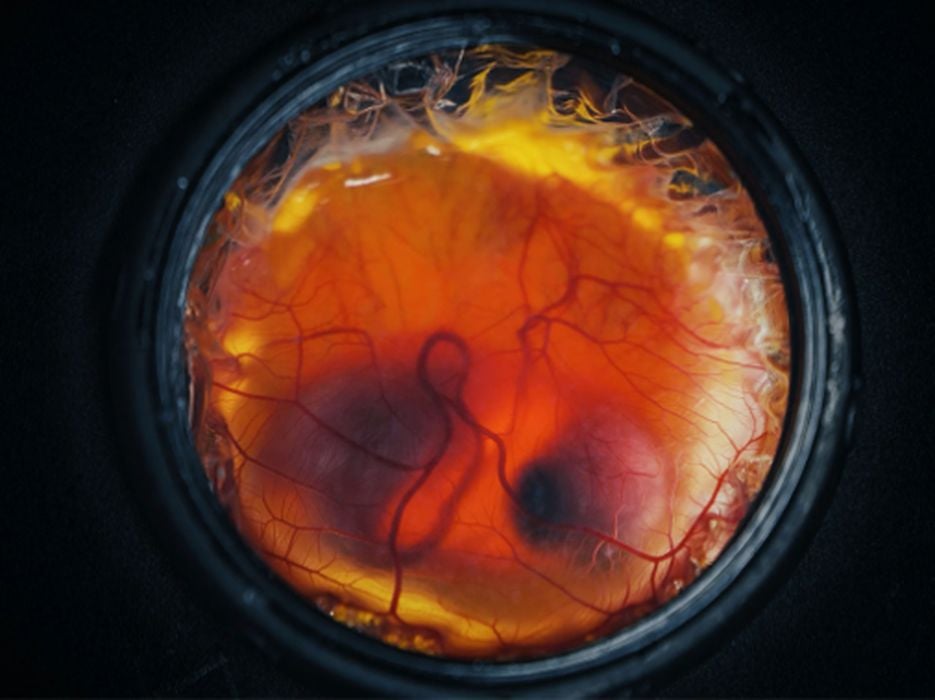
Researchers have been trying to solve parts of this problem for years. Shell-less avian incubation has been explored with surrogate eggshells, windowed eggs, plastic film vessels, and gas-permeable membranes. A 2014 Journal of Poultry Science paper focused on improving hatchability in shell-less culture, using plastic film vessels with calcium and water supplementation and pure oxygen aeration late in development. A 2024 University of Tsukuba study moved the field toward continuous observation, using transparent plastic film vessels to visualize chick embryo development from the blastoderm stage until hatching. Together, these studies showed that embryos could develop outside a natural shell, while also underscoring how sensitive the process is to oxygen, calcium, humidity, and vessel design.
Colossal’s recent system builds on that broader line of work with an additive manufacturing approach. The company transferred the contents of recently laid chicken eggs into transparent 3D printed containers, where the embryos continued developing. The printed structure includes an oval lattice-like support, a silicone-based membrane, and a viewing window that allows researchers to observe development without opening the system. According to Colossal, the membrane is designed to allow oxygen transfer while retaining moisture and limiting contamination, while the rigid printed structure provides the geometry needed to support the embryo and make the system scalable.
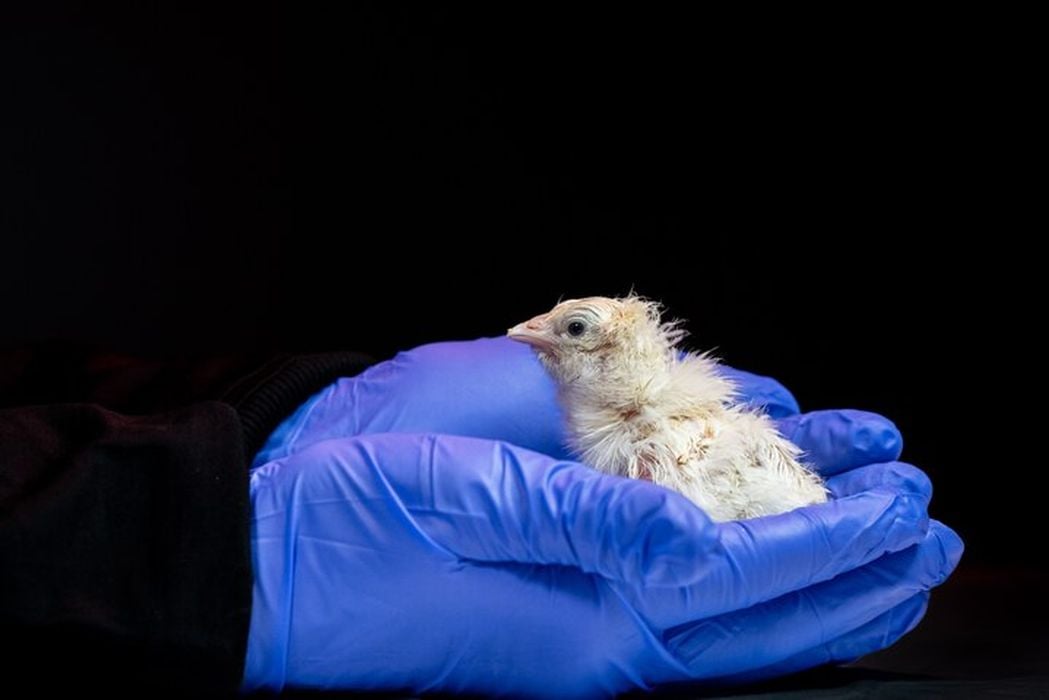
Colossal’s recent system builds on this research with an advanced additive manufacturing approach. The company transferred the contents of recently laid chicken eggs into transparent, 3D printed containers. The engineered structure features:
- An oval lattice-like support for structural integrity.
- A silicone-based membrane designed to allow oxygen transfer while retaining moisture and limiting contamination.
- A clear viewing window that allows researchers to observe development without breaching the sterile environment.
This is where the project deeply aligns with the additive manufacturing industry. The printed shell is a functional, dynamic chamber whose geometry, material composition, and access points can be iteratively revised as researchers learn more. For a field where each target species presents different sizing and incubation profiles, 3D printing offers a scalable way to move from improvised laboratory methods toward repeatable biological tooling.
The Dimensional Challenge of De-Extinction
The successful hatching of 26 chicks is an important proof of concept, but it represents only the beginning of the engineering challenge Colossal is trying to address. Chickens are a practical starting point because their embryos are accessible, well studied, and small enough to work with in existing incubation systems. However, the company’s longer-term avian ambitions, including the dodo and the South Island giant moa, move the problem into more demanding territory.
The successful hatching of 26 chicks is an important proof of concept, but it represents only the beginning of the engineering scaling challenge. Chickens are an accessible, well-studied starting point, but Colossal’s longer-term avian ambitions—the dodo and the South Island giant moa—move the project into demanding physical territory.
| Bird Species | Estimated Height | Estimated Weight | Egg Dimensions / Weight |
| Nicobar Pigeon (Closest Living Dodo Relative) | ~1.3 feet | 1–2 lbs | Standard small avian egg |
| Dodo (Extinct) | ~3 feet | 21–32 lbs | Substantially larger than pigeon egg |
| Ostrich (Largest Living Bird) | ~7–9 feet | ~250–350 lbs | 6″ L x 5″ W / ~3 lbs |
| South Island Giant Moa (Extinct) | ~12 feet | 440–550 lbs | 9.4″ L x 7″ W / ~8.8 lbs |
As the table illustrates, the massive size gap matters because avian de-extinction depends heavily on producing and supporting an egg that can physically sustain development. Even the ostrich, which produces the largest egg among living species, does not fully solve the scale problem for the giant moa.
This is where the unique flexibility of 3D printing becomes indispensable. A larger artificial egg cannot simply be scaled up in volume; it must be completely re-engineered. Changes in size radically affect wall thickness, lattice geometry, membrane surface area, sealing strategies, and internal chamber volume—all of which dictate oxygen transfer and structural stability. Additive manufacturing allows researchers to rapidly adjust these parameters, reposition observation windows, and test alternative materials without investing in expensive, rigid conventional tooling.
The dodo already illustrates the mismatch between extinct target species and living relatives. Native to the island of Mauritius, the dodo stood roughly 3 feet tall and is often estimated to have weighed about 21 to 32 pounds. Its closest living relative, the Nicobar pigeon, is far smaller, weighing roughly 1 to 2 pounds. That size gap matters because avian de-extinction depends not only on genetics, but also on producing and supporting an egg that can sustain development.
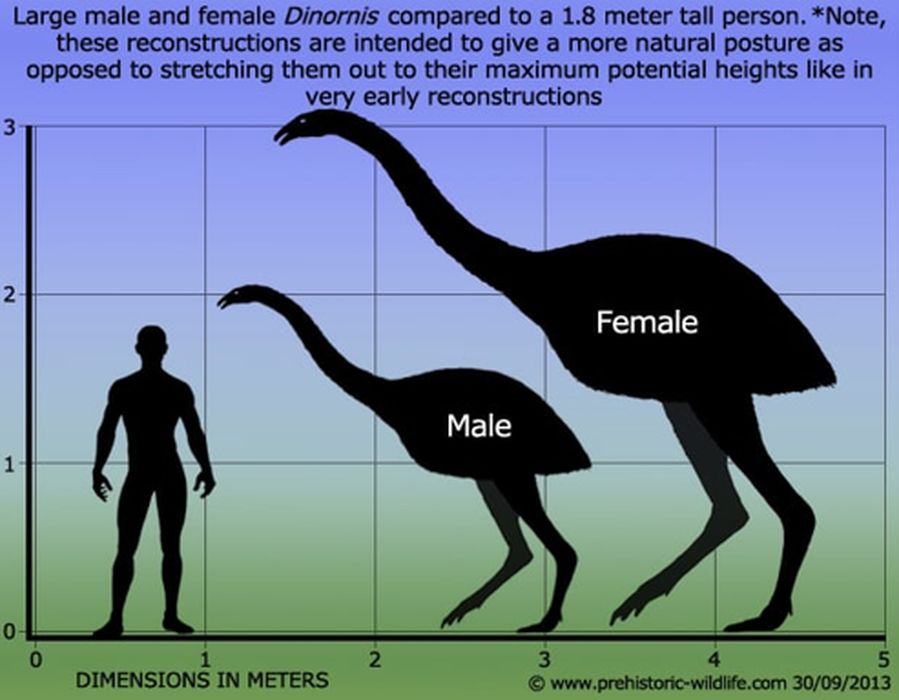
The moa pushes that challenge much further. Native to New Zealand, the South Island giant moa was one of the largest birds ever known. Females were especially large, reaching up to nearly 12 feet tall with the neck extended and weighing roughly 440 to 550 pounds. Its egg was correspondingly large. A known South Island giant moa egg measured about 9.4 inches long and 7 inches wide and is estimated to have weighed about 8.8 pounds fresh. Even the ostrich, the largest living bird and producer of the largest eggs among living species, does not fully solve the scale problem. Ostrich eggs average about 6 inches long, 5 inches wide, and 3 pounds.
That is where additive manufacturing becomes especially useful. A larger artificial egg would need more than added volume. It would still have to manage oxygen transfer, humidity, sterility, observation, nutrient support, and physical stability. Each of those variables can be affected by wall thickness, lattice geometry, membrane surface area, sealing strategy, and chamber volume.
3D printing gives researchers a practical way to adjust those features without committing to conventional tooling. A chamber can be resized, reshaped, reinforced, or modified with new access points. Observation windows can be repositioned. Internal supports can be changed. Different materials can be tested. For a field where the right design may vary by species, developmental stage, and research goal, that flexibility is central.
3D Printing Across Avian Science and Conservation
Colossal’s announcement is part of a broader trend of additive manufacturing integrating into avian science. Several other prominent applications demonstrate the versatility of this technology:
1. Smart Eggs for Conservation
In 2020, researchers at Texas A&M University developed a 3D printed “smart egg.” Packed with internal sensors, the device records crucial nest conditions such as temperature, sound, movement, and egg rotation. Currently used at the Oregon Zoo to support California condor conservation, the data gathered helps scientists precisely replicate natural incubation environments in captive breeding programs.
2. Environmental Decoys and Habitat Restorations
In the United Kingdom, 3D printing supports seabird nesting via the Hornsea 3 offshore wind project’s kittiwake compensation program. To encourage birds to occupy the ledges, the project placed 3D printed decoys made from recycled plastic on the structures. Ørsted had described the decoys as part of the plan before the 2024 breeding season, and the project later reported its first kittiwake chick at one of the artificial nesting sites. Here, 3D printing is not directly involved in incubation, but it helps create more convincing environmental cues for conservation, using repeatable, durable, species-specific forms.
3. Customized Avian Prostheses
Beyond conservation, additive manufacturing is also being used in avian medicine. In a 2024 Scientific Reports study, researchers in Brazil described custom 3D printed orthopedic prostheses for domestic and wild birds with amputations or hind-limb malformations. Each prosthesis was modeled from the bird’s own measurements and produced using fused deposition modeling, improving weight distribution, locomotion, landing, and overall quality of life. While this is a different type of application, it further illustrates how 3D printing is useful when avian biology requires highly customized, lightweight, species-specific tools.
Conclusion
For companies working at the intersection of 3D printing, conservation, biotechnology, and medical devices, these projects can carry financial implications beyond technical performance. The same design iterations, material trials, sensor integrations, and validation steps that make these tools useful may also support R&D tax credit eligibility.