
Charles R. Goulding and Andressa Bonafe analyze the strategic fit between Parker and CIRCOR Aerospace, highlighting how advanced 3D printing technologies could drive innovation, efficiency, and valuable R&D tax incentives.
In May 2026, KKR and CIRCOR International announced the signing of a definitive agreement to sell CIRCOR’s aerospace division to Parker Hannifin Corporation for US$2.55 billion. The transaction, subject to regulatory approvals, is expected to close in the second half of 2026. It brings together one of the most capable portfolios of flight-critical flow control technology with the world’s leading motion and control company, and signals a meaningful opportunity for additive manufacturing to play a larger role in next-generation aerospace component development.
Parsing the Parker-CIRCOR Deal
CIRCOR International, headquartered in Burlington, Massachusetts, was founded in 1999 and serves more than 14,000 customers across approximately 100 countries. The company designs, manufactures, and markets flow control products and subsystems for aerospace, defense, industrial, and naval markets under brand names including Allweiler, Houttuin, Imo, Hale Hamilton, Aerodyne Controls, Circle Seal Controls, RTK, Schroedahl, Tushaco, Warren, and Zenith.
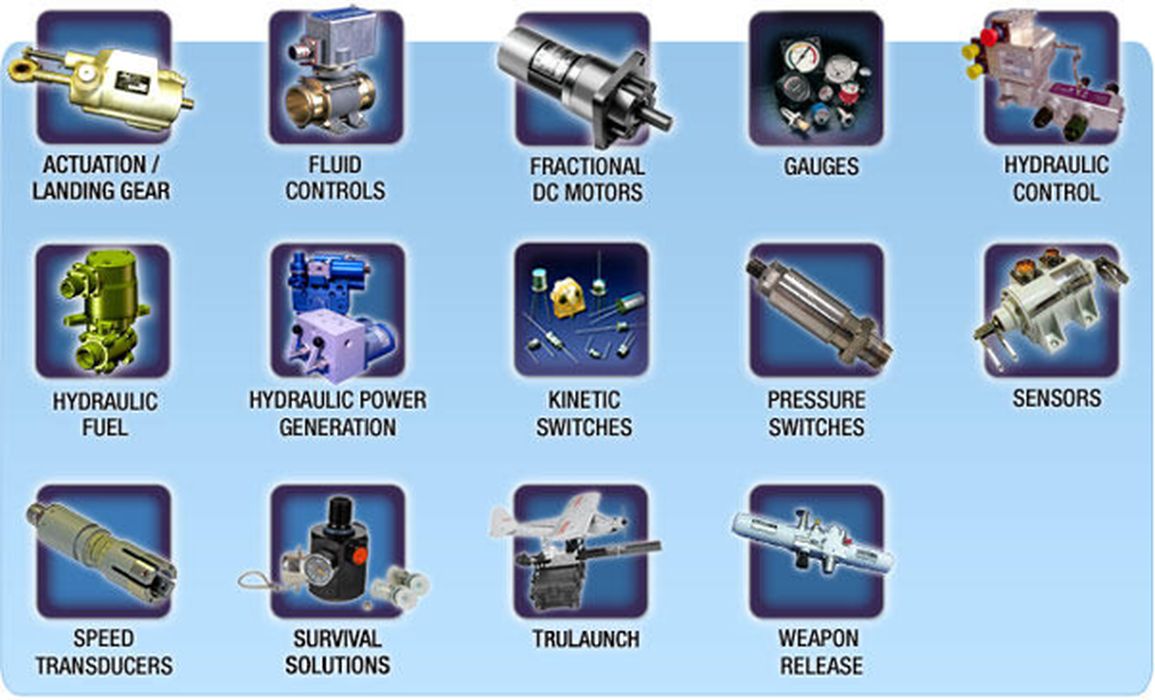
Investment firm KKR acquired all of CIRCOR for US$1.8 billion in 2023 through its North America Fund XIII. Under the current transaction, only the aerospace division transfers to Parker Hannifin, while KKR retains CIRCOR’s Naval and Industrial businesses. Drawing on more than seven decades of engineering experience, the aerospace division produces pneumatic, electromechanical, and actuation components and fluid control subsystems for aerospace and defense customers. Its brands include Hale Hamilton, Aerodyne Controls, and Circle Seal Controls, and its products serve commercial aircraft and defense platforms from production locations in the United States, Europe, the Middle East, and Africa.
According to Parker’s May 2026 press release, CIRCOR Aerospace projects calendar year 2026 revenues of approximately US$270 million. The business is approximately 80% original equipment manufacturer (OEM), split evenly between commercial and defense end markets. Parker anticipates double-digit revenue growth to continue, driven by the division’s established positions on premier aerospace and defense programs. Parker CEO Jenny Parmentier noted in the announcement that the acquisition “adds complementary capabilities and technologies, further expanding our ability to serve aerospace and defense customers.”
Parker’s 3D Printing Track Record
Parker Hannifin is a Fortune 250 company with more than a century of experience in motion and control technologies. Its product breadth spans hydraulics, pneumatics, electromechanical systems, filtration, and fluid and gas handling across both industrial and aerospace markets. Parker’s presence in aerospace is extensive: as one Parker executive observed, virtually every commercial airliner in service today flies with Parker-manufactured components.
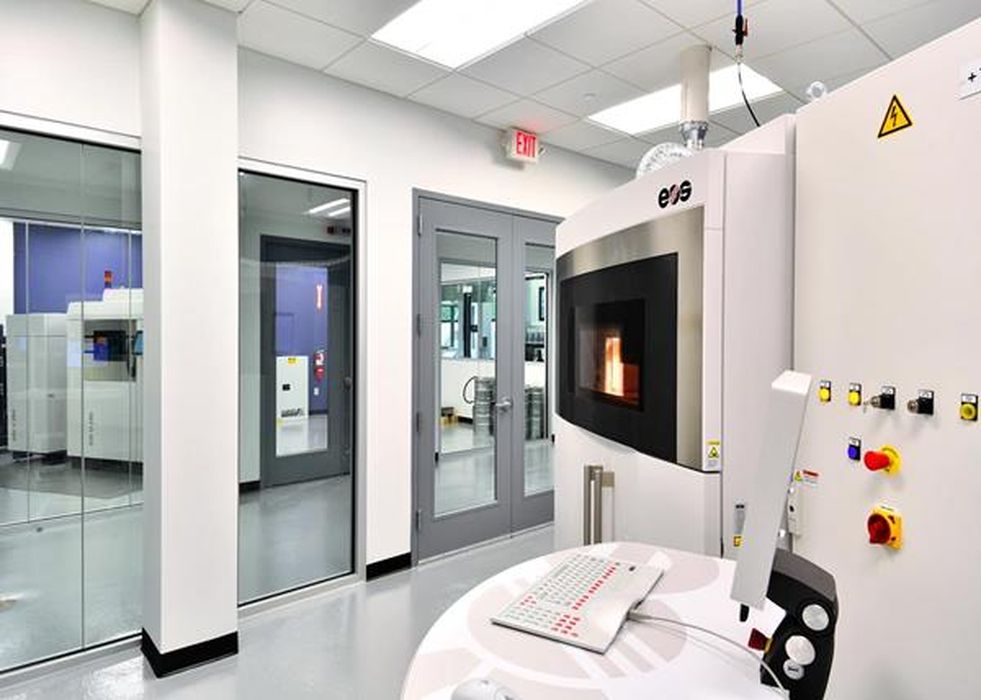
Parker has made additive manufacturing a formal strategic priority. In 2017, the company opened a dedicated AM facility at its Corporate Technology Ventures site in Macedonia, Ohio. The facility provides all of Parker’s operating groups globally with centralized access to the latest 3D printing equipment, software, and materials, enabling engineers to develop custom prototypes and iterate designs faster than conventional tooling allows.
Working through its long-standing partnership with Dassault Systèmes, Parker engineers have applied generative design on the 3DEXPERIENCE platform to let structural analysis drive part geometry, producing components with optimized weight, improved fluid flow, and reduced part counts. The company has been working toward FAA certification pathways for metal 3D printed parts in its aerospace operations, and has used additive and electron-beam manufacturing methods in fuel system components to deliver higher performance with fewer parts.
Parker’s Lead Additive Manufacturing Engineer, in a case study published through Materialise, noted that since joining the company in 2017, he has steadily expanded AM’s role from exploration into active production across Parker’s component portfolio. We previously covered Parker’s role in hydraulic and fluid control systems, an area directly adjacent to the CIRCOR Aerospace product lines now moving into its portfolio.
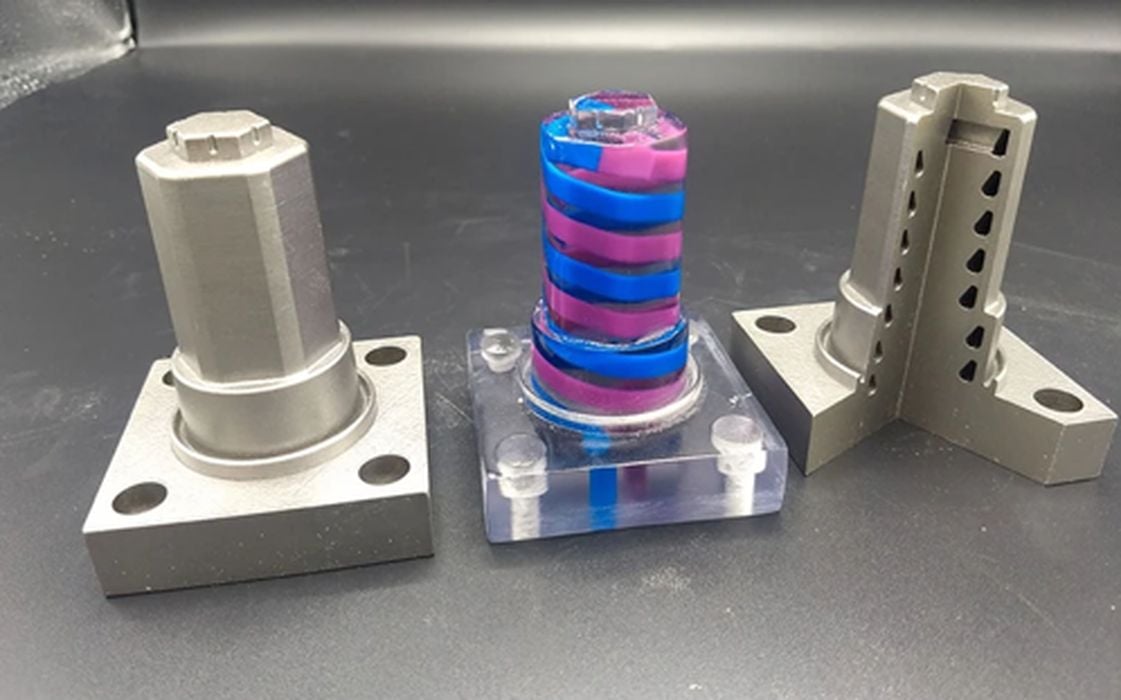
At Parker’s Commercial Flight Controls division in Ogden, Utah, Stratasys FDM technology has been integrated into daily manufacturing operations across a range of flight-critical actuator and control device applications. A case study published by Stratasys documents how the division uses 3D printing to produce protective components for actuator assemblies, custom inspection gauges, assembly tooling, and replacement parts for equipment no longer available through conventional supply chains. In one instance, a potential component misalignment on a customer’s actuator required an immediate response; the team designed and printed a custom verification gauge overnight and shipped it the following morning, compressing what would typically take days into hours. Parker’s additive manufacturing chief engineer Brian Suisse has credited the technology with reducing scrap, shortening lead times, and improving the division’s operational efficiency.
A Natural Fit for Additive Manufacturing
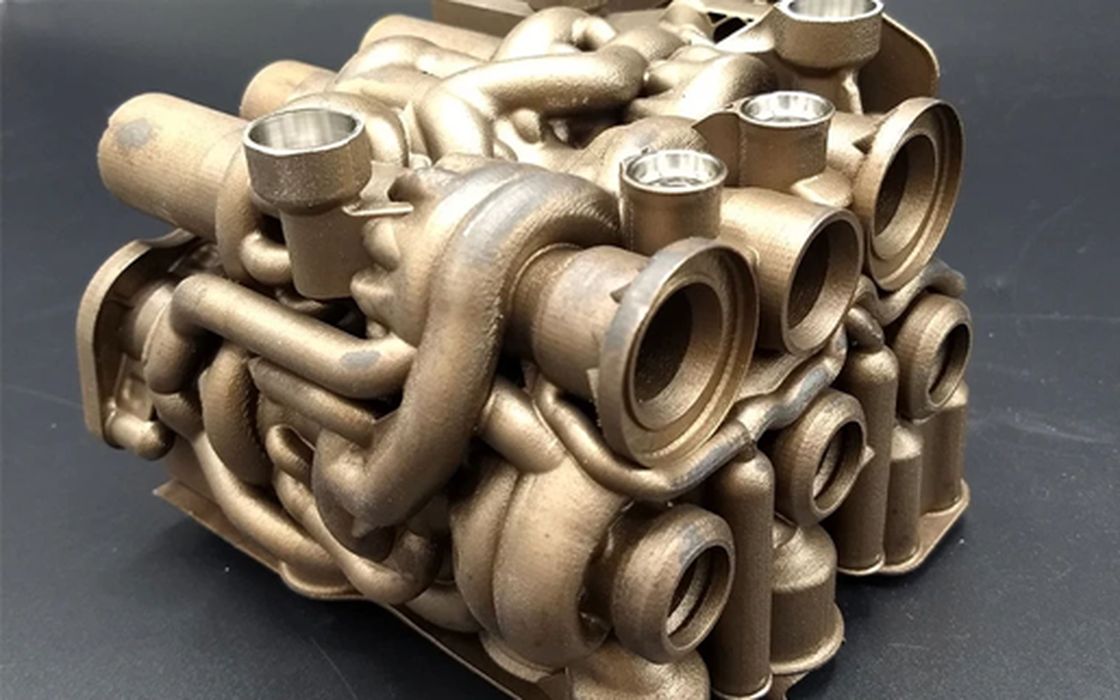
CIRCOR Aerospace’s core product categories (fluid control valves, pneumatic actuators, and electromechanical actuation subsystems) are well matched to the engineering advantages that metal additive manufacturing provides. Complex internal flow geometries, which cannot be achieved through conventional machining, are among AM’s most compelling capabilities in fluid control applications. Consolidating multiple machined parts into a single printed component reduces assembly time, potential failure points, and overall system weight, all of which matter significantly in certified aerospace applications.
The broader aerospace industry has demonstrated this repeatedly. We previously showed how additive manufacturing is transforming hydraulic servo valve design, with companies achieving dramatic reductions in component size and response time by replacing legacy machined designs with AM-optimized geometries. The same logic extends to the pneumatic and actuation product families that CIRCOR Aerospace supplies to commercial and defense platforms.
For Parker, the acquisition deepens a pattern of growth in aerospace and defense through targeted consolidation. We covered Parker’s acquisition of the Filtration Group and the implications for 3D printed filtration systems. The CIRCOR Aerospace deal extends that strategy into flow control and actuation, reinforcing Parker’s position as one of the most vertically capable aerospace and defense suppliers in the world.
Seen in that context, the Parker-CIRCOR deal is not only a portfolio expansion, but also a manufacturing integration opportunity. Parker can bring additive manufacturing practices already proven in its own aerospace and fluid-handling operations into a business that makes highly engineered motion and flow-control products. As Parker applies these tools across the acquired aerospace business, the design, testing, iteration, and process-improvement work involved may also have important R&D Tax Credit implications.
The Research and Development Tax Credit
The now permanent Research and Development (R&D) Tax Credit is available for companies developing new or improved products, processes and/or software. For an enterprise powerhouse like Parker Hannifin, integrating CIRCOR’s product baseline creates a textbook environment for Advanced Engineering Optimization (AEO) where software-driven design parameters like generative topography actively maximize system performance and cut raw material waste.
3D printing can help significantly boost a company’s R&D Tax Credits. Under the guidance of specialist consulting firms like R&D Tax Savers, companies can systematically uncover eligible expenses across their manufacturing lines:
- Qualified Wages: Wages for technical employees, materials scientists, and engineers creating, testing, and revising 3D printed prototypes can be captured based on eligible time spent.
- Process Integration: Time spent integrating advanced 3D printing hardware and design-optimization software into legacy workflows counts as an eligible activity.
- Supply Chain & Tooling Operations: Designing custom overnight inspection gauges or specialized assembly tooling via FDM technologies represents operational excellence that directly supports eligible process improvements.
- Qualified Supplies: When used for physical modeling and preproduction testing, the costs of high-grade metal powders and filaments consumed during development may be fully recovered.
Whether utilized for rapid tooling, custom manufacturing gauges, or certified final flight-ready components, 3D printing and structural optimization serve as excellent indicators that eligible R&D activities are occurring. Companies leveraging these advanced engineering protocols should work alongside R&D Tax Savers to strategically identify, document, and claim these valuable incentives.
Parker Hannifin Annual R&D Book Per Capita (2022–2025)
The following financial data highlights the scale of independent research and development investment alongside the global workforce supporting these engineering operations.
| Fiscal Year | Annual Independent R&D Expenses (USD) | Employee Count (Team Members) |
| 2025 | 240 million | Approximately 57,950 |
| 2024 | 253 million | Approximately 61,120 |
| 2023 | 258 million | Approximately 62,730 |
| 2022 | 191 million | Approximately 55,090 |
Conclusion
Parker’s acquisition of CIRCOR Aerospace brings together two businesses with a strong fit in motion and flow control. It may also give CIRCOR Aerospace access to Parker’s established additive manufacturing practices, including 3D printed tooling, protective hardware, gauges, prototypes, and functional test components. For aerospace products involving fluid control, actuation, landing gear controls, and electromechanical systems, those applications can help shorten development cycles and improve production support. As Parker integrates the acquired business, 3D printing could become one of the tools that helps create both operational value and R&D Tax Credit eligible activity.