Charles R. Goulding and Preeti Sulibhavi explore how Parker Hannifin’s US$9.25 billion Filtration Group acquisition could ignite a new wave of 3D printed filtration innovation across pharma, nuclear, and other mission-critical markets.
Parker Hannifin’s $9.25 billion acquisition of Filtration Group Corporation is not just a financial headline — for the 3D printing world, it could be a strategic signal. By combining Parker’s deep additive-manufacturing capabilities with Filtration Group’s filtration expertise (especially in high-performance areas like HEPA and biofilters), the merged company is poised to innovate in sectors such as pharma, life sciences, and even nuclear. In this article, we’ll go deeper into that acquisition, highlight emerging markets, and drill into how Parker’s recent 3D printed filter works, pointing the way forward.
Why the Filtration Group Deal Matters — Especially for High-End Markets
Filtration Group brings to Parker a broad portfolio of filtration products — air, liquid, process, and specialty filters — serving markets where purity, reliability, and performance are critical. These include the pharmaceutical/biotech world, clean-room operations, and regulated industrial segments, where filters must perform to tight specifications.
Notably, Filtration Group’s business has a strong aftermarket component (recurring sales), and Parker projects meaningful cost synergies through integration, making this more than a bolt-on: it’s a growth play.
Key Growth Areas: Pharma, Nuclear, and Beyond
Two markets stand out as especially compelling for Parker + Filtration Group:
- Pharmaceutical / Biotech
- Clean rooms require HEPA filters, biofilters, and sterile liquid filters; any contamination risks can shut down a production line or compromise drug quality.
- Filtration Group’s media and high-purity designs give Parker a strong position in these high-value, regulated segments.
- Nuclear
- In nuclear power, filtration is vital: removing particulates, managing aerosols, and ensuring safety under extreme conditions.
- Parker’s engineering scale combined with advanced filter technology could lead to more efficient, safer filters for critical systems.
By bringing these capabilities fully in-house, Parker is better positioned to address these mission-critical applications — and additive manufacturing could be the secret sauce that accelerates innovation.
Parker’s 3D Printing Strengths — A Foundation for Innovation
Parker has already invested heavily in additive manufacturing, building a mature infrastructure for prototyping, design innovation, and rapid iteration:
- It operates an AM center in Macedonia, Ohio, outfitted for both polymer and metal printing.
- Parker uses Stratasys FDM machines (e.g., Fortus series) to produce functional prototypes, tooling, and even replace legacy parts.
- It also leverages generative design (e.g., via Dassault Systèmes’ 3DEXPERIENCE) to optimize parts for AM, allowing for complex geometries, pass-through channels, and internal lattice structures.
- For quality control, Parker has invested in a CT (computed tomography) lab, enabling non-destructive inspection of printed parts.
These capabilities give Parker a powerful platform to rethink filtration components, from the inside out.
Recent 3D Printed Filter Projects from Parker
Below are some real-world, documented examples where Parker has applied additive manufacturing to filtration — a direct signal of how this merger might leverage practical AM-filter innovation:
1. High-Temperature SLA Prototypes for Fuel / Emissions Filters
One of the most concrete 3D printed filter projects from Parker comes via a collaboration with 3D Systems: Parker used high-temperature SLA resins to prototype fuel filters (specifically crankcase vapor coalescers) that must endure harsh conditions.
- The SLA prototypes are translucent, allowing engineers to visually inspect fluid flow — a huge benefit when testing filtration behavior under real-world conditions.
- The material used can withstand high temperatures and chemically aggressive fluids, letting Parker validate designs in a realistic functional environment before committing to production tooling.
- This drastically shortens the design cycle: rather than waiting weeks or months for tooling, engineers can print and test parts in days.
2. PPSF (Polyphenylsulfone) Filter Prototype on a Diesel Engine
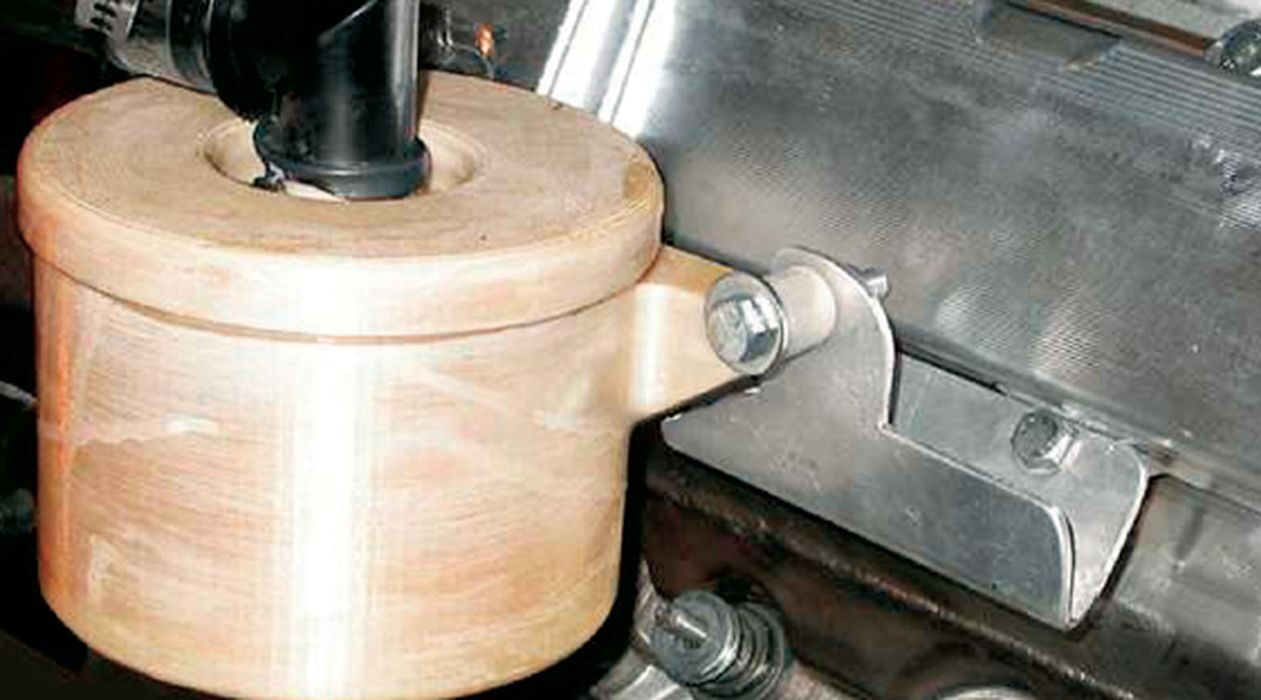
In another case study, Parker’s Racor division leveraged FDM (Fortus) 3D printing to produce a PPSF prototype of an emissions coalescing filter, which was then mounted on a V8 diesel engine for testing.
- This prototype survived 78 hours on a live engine, handling blow-by gases containing oil, soot, and fuel at elevated temperatures, without leaking.
- That proved the strength, chemical resistance, and durability of the printed filter in a demanding real-world environment — validating 3D-printed designs as viable for functional testing before scale-up.
3. Nylon Fuel Filter via Arburg Freeformer
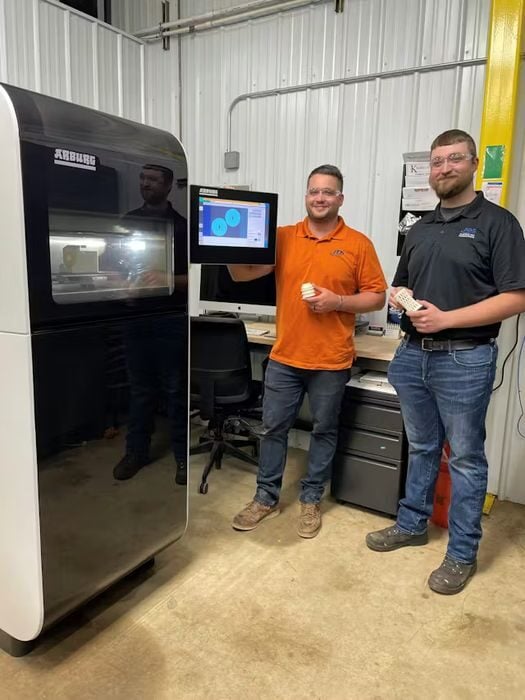
Parker also tapped PDS Plastics, leveraging an Arburg Freeformer (a 3D printer that uses Arburg’s proprietary process) to produce a fuel-filter component from nylon.
- The nylon used in the Freeformer closely matches the material used in molded production parts, meaning the prototype better reflects final performance than generic prototyping materials.
- This approach saved significant time and cost: instead of investing in tooling up-front, Parker created functional prototypes that allowed design validation, iteration, and testing — avoiding risk in early development.
How These Projects Foreshadow the Filtration Group Integration
These projects demonstrate how Parker is already applying 3D printing to filter development in several powerful ways:
- Rapid prototyping: High-temperature SLA and FDM printing let Parker validate designs quickly in harsh environments.
- Realistic material use: By using nylon and PPSF — materials close to or identical to production materials — the prototypes are more representative of final parts.
- Design flexibility: AM enables geometries that might be difficult or costly with traditional methods; Parker can experiment with internal flow paths, lattice structures, or custom housings.
- Test & iterate: Printed parts survive real-world testing, which de-risks design decisions before tooling or mass production.
When you combine these strengths with Filtration Group’s deep portfolio (HEPA, biofilters, liquid filters), there’s a huge opportunity:
- Parker could design novel filter housings with additive-optimized flow paths, improving efficiency (pressure drop, filtration performance) in HEPA or bio-filtration systems.
- For biofilters or sterile pharma filters, generative design + AM might produce scaffolds or internal architectures that enhance filtration, reduce clogging, or improve cleaning/regeneration.
- Prototyping could be much faster and more iterative, helping bring next-generation filtration products to market faster than traditional design cycles.
Risks & Realities
Of course, leveraging AM in filtration isn’t without challenges:
- Regulatory validation
In industries like pharma or nuclear, any new filter design must undergo rigorous validation: performance, integrity, sterilization, biocompatibility. AM-printed parts might require extra qualification. - Material constraints
Not all AM materials are ideal for filtration housings — they must withstand chemical exposure, pressure, temperature, and possibly sterilization. Parker must carefully choose or develop materials. - Volume economics
While AM is ideal for prototyping and low-volume production, high-volume filter manufacturing might still rely on traditional methods unless the AM design offers compelling performance advantages. - Integration across businesses
To fully realize AM-filter synergies, Parker and Filtration Group will need to align R&D, engineering, and manufacturing workflows. That’s a non-trivial integration challenge.
Why This Matters for the 3D Printing Community
For Fabbaloo’s readers — engineers, designers, innovators in AM — Parker’s acquisition of Filtration Group is more than a corporate transaction. It’s a signal:
- Major industrial players are pushing AM deeper into mission-critical applications.
- Filtration, long considered a “commodity” area, is being reimagined with advanced design, high-performance media, and additive manufacturing.
- The use of 3D printed prototypes (SLA, FDM, Freeformer) in real, harsh test environments shows that AM is already proving its value in filtration R&D.
- With the scale and resources of Parker + Filtration Group, we could see commercial 3D printed filters, or at least additive-designed housings and components, in regulated markets.
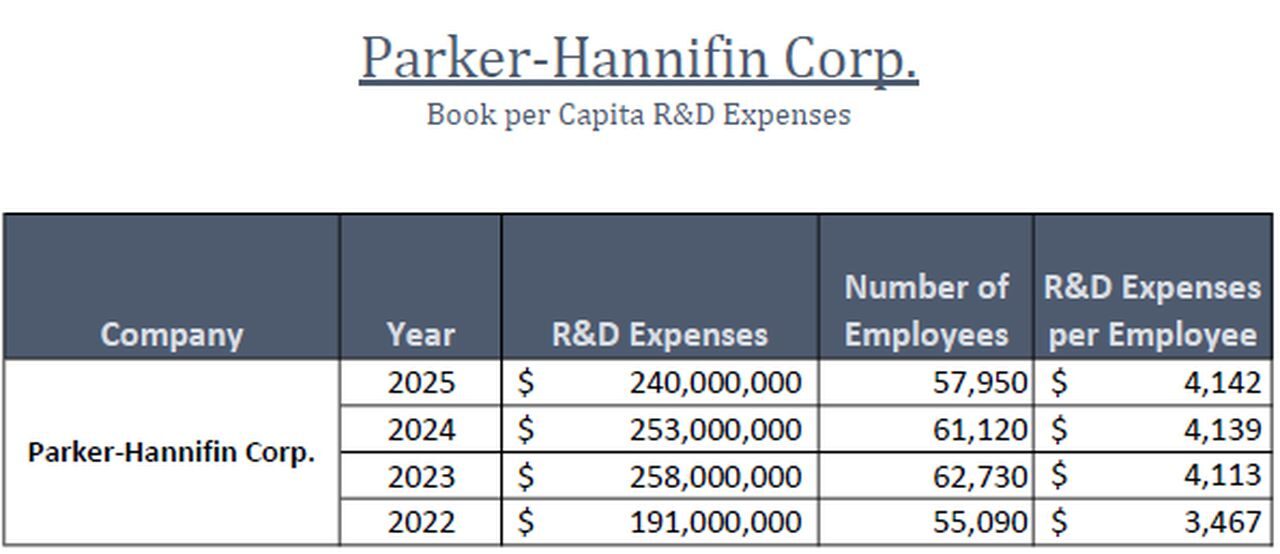
Below is a table that presents the research and development spend for Parker over the past 4 years.
The Research and Development Tax Credit
The now permanent Research and Development (R&D) Tax Credit is available for companies developing new or improved products, processes, and/or software. 3D printing can help boost a company’s R&D Tax Credits. Wages for technical employees creating, testing, and revising 3D-printed prototypes can be included as a percentage of the eligible time spent on the R&D Tax Credit. Similarly, when used as a method of improving a process, time spent integrating 3D printing hardware and software counts as an eligible activity. Lastly, when used for modeling and preproduction, the costs of filaments consumed during the development process may also be recovered.
Whether it is used for creating and testing prototypes or for final production, 3D printing is a great indicator that R&D Credit-eligible activities are taking place. Companies implementing this technology at any point should consider taking advantage of R&D Tax Credits.
Conclusion
Parker’s US$9.25 billion acquisition of Filtration Group is a strategic move into high-value filtration markets. For the world of 3D printing, this could unlock powerful new synergies: combining Parker’s well-established AM capabilities with Filtration Group’s filtration expertise could drive next-generation filters for pharma, life sciences, power generation, and beyond.
The recent 3D printed filter projects from Parker — from SLA prototypes to FDM-tested emissions filters and nylon parts via Freeformer — show they’re well on their way. If Parker channels that energy into Filtration Group’s HEPA, bio, and liquid filtration lines, we may soon see filters that are not only more efficient, but smarter, more custom, and optimized like never before — all thanks to additive manufacturing.