
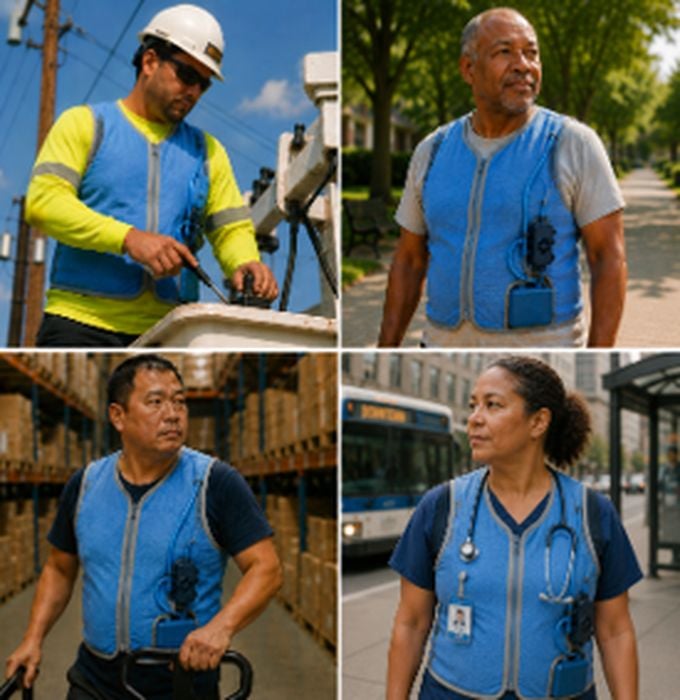
Charles G. Goulding analyzes how university breakthroughs in human heat resilience open lucrative new pathways for manufacturing and engineering firms to claim the Section 41 R&D Tax Credit.
Heat Rising
The World Meteorological Organization recently warned governments to prepare for the likely return of El Niño. The climate pattern begins with unusually warm surface waters in the equatorial Pacific Ocean. From there, the effects spread across the globe. Temperatures rise in some regions. Rainfall patterns shift in others. Heat waves often become more severe.
“We need to prepare for a potentially strong El Niño event,” WMO Secretary-General Celeste Saulo recently warned. Forecasters assign high odds to El Niño conditions through much of the year. While the strongest impacts vary by region, the broader concern is straightforward. A warmer world is being asked to absorb another source of heat.
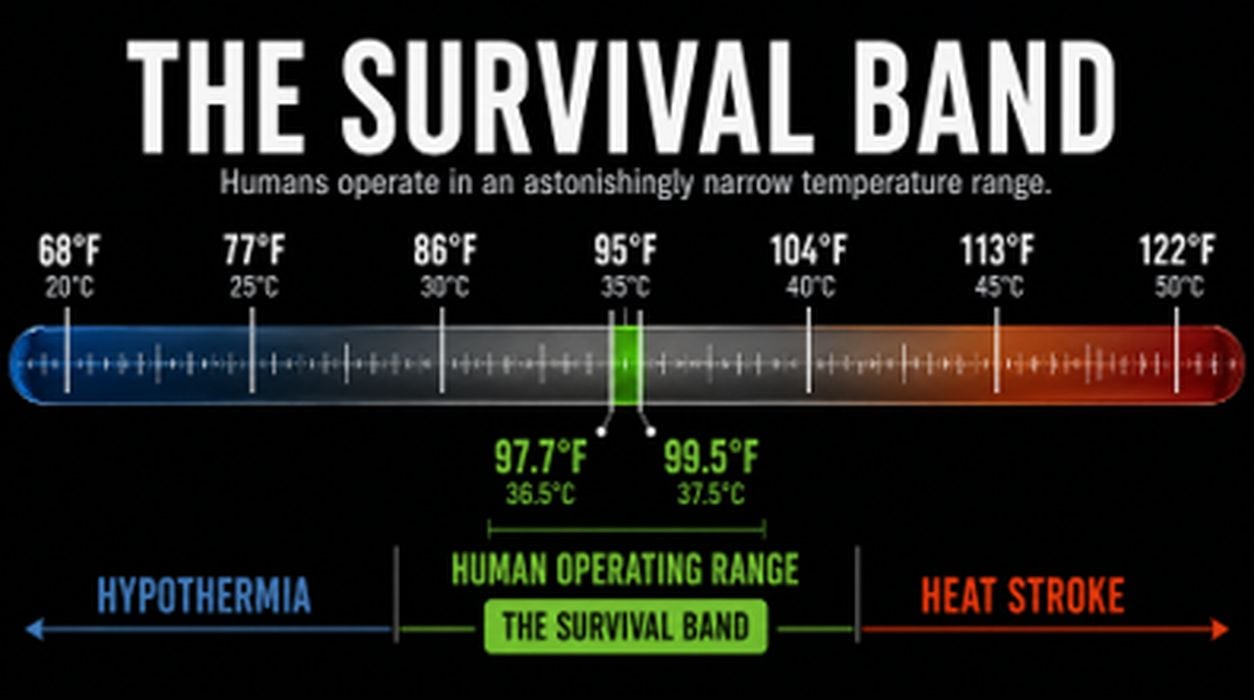
Heat becomes dangerous when the human body can no longer effectively release it. Sweat cools the body through evaporation. High heat and humidity interfere with that process. Sleep becomes more difficult. Recovery slows. Concentration declines. Physical performance suffers. An industrial worker standing beside a furnace may accumulate heat throughout a shift. An older adult living alone may struggle to cool down overnight. Several hot days can create a cumulative burden.
Universities Engineering Human Heat Resilience
Universities are exploring ways to help people tolerate heat more effectively when exposure becomes unavoidable. New research starts from a simple idea. Instead of cooling entire rooms, researchers are increasingly trying to cool the people inside them.
Materials That Manage Heat
Researchers at Stanford University have asked: What if clothing helped the body shed heat instead of trapping it?
Stanford’s Yi Cui and his collaborators developed a nanoporous polyethylene textile that allows infrared radiation from the body to escape while remaining opaque to visible light. In laboratory testing, the material reportedly kept skin nearly four degrees Fahrenheit cooler than cotton. Cui summarized the idea succinctly: “If you can cool the person rather than the building where they work or live, that will save energy.”
Researchers at the University of Maryland are pursuing a related goal through adaptive fabrics. One Maryland project developed a material that automatically changes how it handles infrared radiation depending on conditions. When the wearer becomes warmer, the fabric allows more heat to escape. When conditions become cooler, it retains more heat. Rather than acting as passive clothing, the fabric participates in thermal regulation.
Both projects treat clothing as part of the cooling system rather than a passive layer between the body and the environment.
Cooling the Individual
Other universities are bringing cooling to the user.
Researchers at the University of California, Berkeley’s Center for the Built Environment have spent years studying personal comfort systems. Their work has revealed that two people can occupy the same room and experience very different thermal conditions.
Aalto University in Finland has directed this focus on older adults, one of the populations most vulnerable to extreme heat. Researchers there examined cooling-chair systems and localized thermal microclimates that direct cooling toward the user rather than the room. Cooling one vulnerable resident may be easier than cooling an entire apartment.
Researchers at MIT, Hong Kong Polytechnic University, and City University of Hong Kong are pushing cooling systems even closer to the body. MIT-associated work helped inspire wearable devices such as the Embr Wave. Hong Kong Polytechnic University developed an air-conditioned mask that combines filtration and active cooling. City University of Hong Kong has developed advanced cooling materials designed for wearable technologies and skin-adjacent devices.
In each case, cooling moves with the person rather than remaining tied to a room.
Heat as a Workforce Problem
Researchers at Loughborough University study human thermoregulation in workplaces ranging from healthcare settings to manufacturing facilities. The University of Sydney has examined how rising temperatures affect worker productivity and health, including studies that simulate conditions faced by garment workers in Bangladesh.
A factory can remain operational while the people inside it become progressively less effective. Heat affects endurance, concentration, and judgment. In some environments, even small declines can have significant consequences.
Together, these programs treat heat as an engineering, health, and productivity problem rather than simply a comfort issue.
Universities, Human Heat Resilience, and 3D Printing
Many of the challenges these researchers are trying to solve involve shape, fit, airflow, weight, and customization. A cooling chair must direct air where it provides the greatest benefit. A wearable cooling device must conform to the body without becoming bulky or uncomfortable. An air-conditioned mask must balance filtration, airflow, cooling performance, and weight.
Those challenges are often geometric as much as they are material. Engineers are not only asking what a device is made from. They are also asking how it is shaped, how air moves through it, and how it interacts with the person using it.
The table below highlights leading university efforts in human heat resilience alongside additive-manufacturing capabilities that may help accelerate future development.
| University | Heat-Resilience Research | Key Project | Additive Manufacturing Asset | Current Connection | Opportunity |
| Stanford | Cooling textiles | Nanoporous infrared-transparent fabric | Product Realization Lab | Limited | Structured cooling surfaces and hybrid textile-manufacturing systems |
| Maryland | Adaptive fabrics | Thermally responsive textile | Advanced manufacturing programs | Limited | Customized wearable thermal-management systems |
| UC Berkeley | Personal comfort systems | Localized airflow and cooled seating | Engineering fabrication facilities | Indirect | Occupant-specific cooling devices and airflow optimization |
| Aalto University | Cooling for older adults | Cooling-chair and microclimate systems | Digital fabrication facilities | Indirect | User-specific cooling systems for elderly populations |
| MIT | Wearable cooling | Embr Wave lineage and related research | Extensive additive-manufacturing infrastructure | Active prototyping culture | Advanced body-conforming cooling devices |
| Hong Kong Polytechnic University | Air-conditioned mask | Wearable cooling and filtration system | Direct use of 3D-printed structures | Direct | Expanded wearable thermal-management platforms |
| City University of Hong Kong | Wearable cooling materials | Advanced cooling interfaces | Advanced manufacturing research | Emerging | Lightweight wearable cooling systems |
| Loughborough University | Occupational heat stress | Worker thermoregulation research | Additive Manufacturing Research Group | Indirect | Worker-specific cooling equipment |
| University of Sydney | Heat and workforce productivity | Labor productivity and heat-health research | Sydney Manufacturing Hub | Indirect | Scalable workforce cooling solutions |
Additive manufacturing allows researchers to rapidly test alternative airflow channels, lattice structures, vents, ergonomic shapes, and wearable designs without committing to expensive tooling.
The Senior Apartment Problem
Senior living is a key area where the technologies above can have significant impact. Millions of older adults live in apartments, senior housing, and aging buildings that were never designed around prolonged periods of extreme heat. This risk grows as populations age across North America, Europe, and East Asia. When a heat wave settles over a major city, temperatures can exceed 100°F during the day. The streets cool slowly after sunset. On the fifth floor of an older apartment building, an elderly resident opens a window and turns on a fan. The apartment remains warm through the night.
A cooling textile that lowers skin temperature by a few degrees may sound incremental in a laboratory. The calculation changes after three consecutive hot nights. A cooling chair may seem modest compared with central air conditioning. The comparison changes if the alternative is no cooling at all.
These solutions can break a dangerous pattern of hot days. One hot afternoon may be uncomfortable. Several hot days and nights in succession can become more serious because the body recovers during cooler periods. When overnight temperatures remain elevated, sleep suffers, fatigue accumulates, and physiological stress increases.

Factories and Other Hot Rooms
A steel furnace can operate at temperatures measured in thousands of degrees. The worker standing nearby experiences only a fraction of that heat, but the body does not care where the heat originated. A summer heat wave and a hot industrial process can accumulate on top of one another.
Many industries already operate in thermal environments that would be uncomfortable even during mild weather. Foundries, manufacturing plants, commercial kitchens, warehouses, mines, and some healthcare environments all place workers under varying degrees of heat stress. Rising temperatures add another layer.
Researchers at Loughborough University and the University of Sydney study these effects because the consequences can be life threatening. Cooling garments, wearable systems, and localized cooling devices all attempt to reduce heat accumulation.
Can universities and manufacturing partners claim the R&D Tax Credit for developing wearable cooling technologies?
Yes. Universities, private research labs, and manufacturing partners can claim the Section 41 R&D Tax Credit and deduct expenses under Section 174A for developing advanced human heat-resilience technologies. Eligible activities include engineering nanoporous textiles, fabricating adaptive thermal fabrics, and 3D printing localized personal comfort systems. To qualify, projects must satisfy the IRS Four-Part Test by demonstrating a permitted purpose, elimination of technical uncertainty, a process of experimentation, and reliance on hard sciences like materials science and mechanical engineering.
Technical Eligibility: Section 41 and Section 174A Breakdown
Developing heat-resilience systems requires substantial investment in Qualified Research Expenses (QREs). Under current IRS tax codes, these investments must be structurally categorized to optimize cash flow and compliance.
- Section 174A: All direct software, engineering, and prototyping costs related to material development can once again be fully expensed in the year incurred since the passage of the One big Beautiful Bill Act (OBBBA) regardless of whether the project achieves commercial success.
- Section 41 QRE Categories: Eligible costs that feed directly into the R&D tax credit calculation include:
- Internal Wages (Box 1 W-2): Salaries for materials scientists, mechanical engineers, and 3D printing technicians.
- Supplies: Raw materials consumed during prototyping, such as advanced polymers, experimental filaments, and active cooling pumps.
- Contract Research: Fees paid to university labs or third-party testing facilities conducting thermal regulatory testing.
Applied Innovation: Materials and Additive Manufacturing Matrix
Engineers utilize additive manufacturing to bypass expensive tooling and rapidly iterate complex internal fluid channels and airflow geometries.
| Industry Segment | Engineering Innovation | Financial & Operational Impact |
| Advanced Textiles | Developing nanoporous polyethylene textiles transparent to infrared radiation. | Achieved a 4-degree Fahrenheit (2.2-degree Celsius) reduction in skin temperature compared to standard cotton during laboratory testing. |
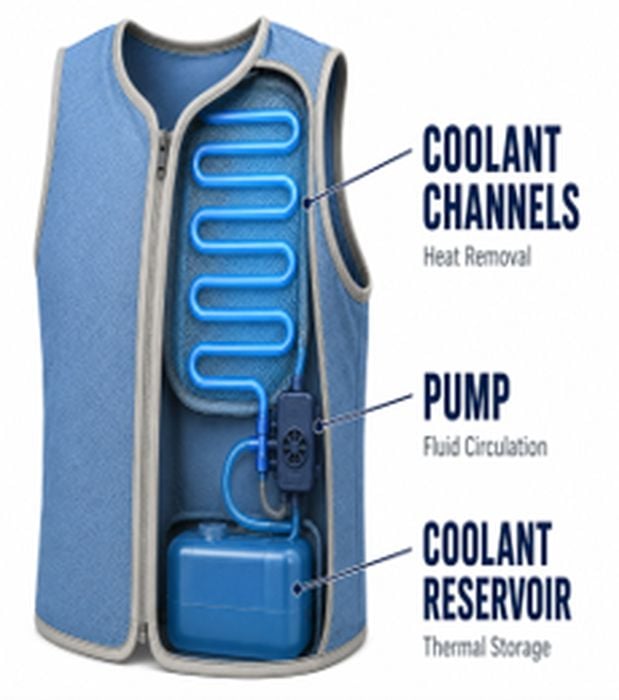
| Wearable Tech & Medical | Integrating active fluid circulation loops, miniature pumps, and coolant reservoirs into lightweight vests. | Provides localized physiological thermoregulation for high-risk workers and vulnerable senior populations without altering building-wide HVAC systems. |
| Industrial Safety Equipment | 3Dprinting custom-fit, air-conditioned masks with integrated filtration and active cooling channels. | Prevents worker heat stress and cognitive decline in high-temperature industrial environments like foundries and warehouses. |
Navigating the IRS Four-Part Test for Thermal Engineering
To successfully secure the Section 41 credit, engineering teams must document how their heat-resilience projects fulfill each quadrant of the IRS Four-Part Test:
- Permitted Purpose: The research must intend to create a new or improved product or process—such as a dynamically adaptive fabric that alters infrared retention based on skin moisture.
- Elimination of Uncertainty: The project must confront technical uncertainty regarding the optimal geometric layout, weight distribution, or airflow efficiency of the cooling mechanism.
- Process of Experimentation: Teams must evaluate alternative designs through systematic modeling, 3D printed prototyping, thermal manikin testing, or CFD (Computational Fluid Dynamics) simulations.
- Technological in Nature: The research must fundamentally rely on principles of physical science, biology, metallurgy, or engineering.
The Public Scalability Test
A cooling chair can help an apartment resident survive a heat wave. A cooling garment can help a factory worker stay safer through a long shift. The harder question is whether these technologies can move beyond individual success stories. Hundreds of thousands of apartment residents may benefit from personal cooling systems. Millions of workers may benefit from cooling garments. Tens of millions of people still need affordable protection during extreme heat events.
The question is particularly important in South Asia, Africa, Latin America, and the Middle East. Many of the regions expected to experience the greatest heat exposure are also home to populations with limited ability to pay for expensive technologies. A cooling device that remains a premium product may help some users while leaving many of the most vulnerable populations untouched.
That reality creates both a commercial challenge and a political one. Technologies marketed as protection against extreme heat will face pressure to become affordable, durable, and widely available. A product associated primarily with affluent consumers may struggle to become part of a broader public-health response.
Heat is becoming a mass challenge. The most influential solutions are likely to be the ones that are affordable, durable, and capable of reaching millions of people.
Charles G. Goulding is a practicing attorney.