Charles G. Goulding reveals why the next wave of innovation may come not from corporate studios, but from fan creators whose ideas are expanding fictional worlds in unexpected ways.
A convention attendee strides through the door carrying a six-foot Power Sword. The weapon looks as though it came directly from Eternia, where He-Man is set. Metallic paint catches the light. The blade towers over nearby displays. Most people assume Mattel made it; a fan did.
The participation economy emerged when fans stopped acting solely as consumers and began acting as creators. What started with customized action figures, fan fiction, and convention costumes has expanded into game modifications, digital sculpture, 3D printing, online communities, and creator businesses with audiences measured in the millions. In some cases, fan creations have crossed into official canon, influenced product development, or evolved into successful franchises of their own.
As fabrication tools, digital platforms, and creator communities continue to mature, intellectual property owners have an opportunity to move beyond simply tolerating fan activity. By creating structured pathways for fans to build, modify, share, and even commercially develop limited creations, companies can tap into a global network of engaged creators whose ideas keep fictional worlds vibrant, relevant, and growing.
The Early Participation Economy
The Custom Action Figure
In the early days of figurines, fans were already “kitbashing”: changing the products they brought home from stores. He-Man collectors repainted, swapped weapons between characters, and combined parts from multiple toy lines to create figures that never appeared on store shelves.
Collectors eventually gave the practice the name kitbashing. Kitbashing allowed fans to create their own versions of familiar characters instead of accepting only the versions produced by manufacturers.
The modifications were usually small. A new paint scheme. A different weapon. Parts borrowed from another figure. The figure became a starting point rather than a finished product.
Cosplay and Comic-Con
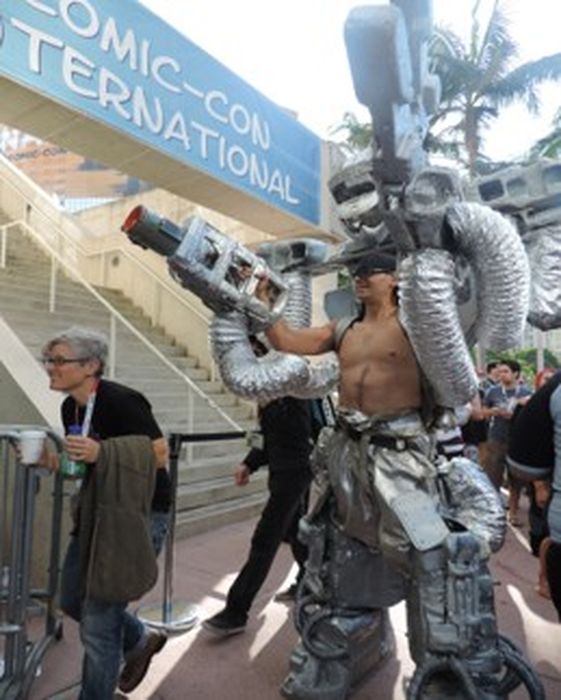
Costumes and conventions have offered a different form of participation. The 501st Legion is one of the best-known early examples. Founded in 1997, the organization grew around fans building and wearing screen-accurate Star Wars costumes. Stormtrooper armor became more than a replica, it became a way to participate in a world.
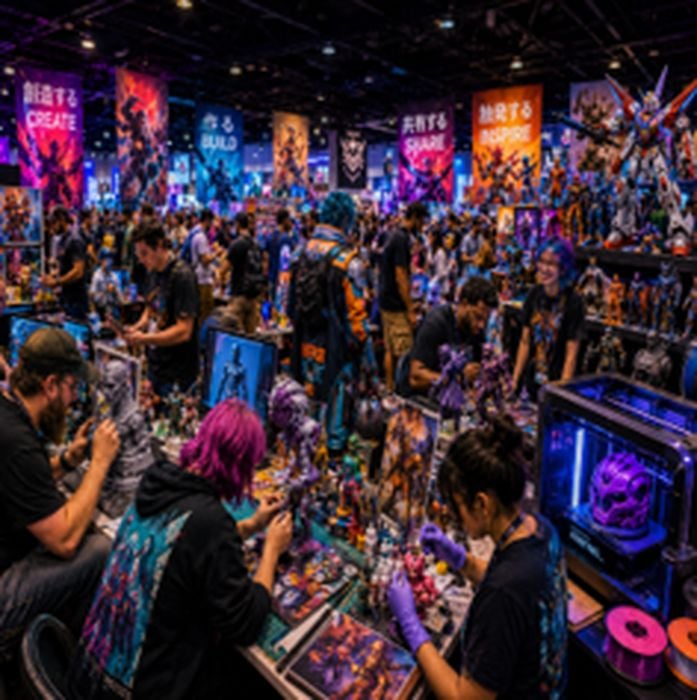
Comic conventions transformed that impulse into a global phenomenon. What began as gatherings of comic book enthusiasts has evolved into sprawling events that bring together entertainment companies, game developers, actors, writers, artists, toy manufacturers, prop builders, publishers, and fans.
| Convention | Approximate Attendance | Major Franchises and Communities |
| San Diego Comic-Con | 130,000+ | Marvel, Star Wars, DC, gaming, anime |
| New York Comic Con | 200,000+ | Comics, television, gaming, anime |
| Dragon Con | 70,000+ | Science fiction, fantasy, cosplay |
| Anime Expo | 100,000+ | Anime, manga, Japanese games |
These expos function as a marketplace for ideas as much as merchandise. At these conventions:
- Fans line up to play unreleased video games.
- Developers gather feedback from players before launch.
- Writers discuss future storylines.
- Artists demonstrate techniques.
- Independent creators display work beside major publishers.
- Actors answer questions about the characters they portray.
- Toy companies unveil prototypes.
- Builders compare fabrication methods.
- Cosplayers trade advice about materials, electronics, painting, and construction.
among many other interactions. A fan who arrives wearing armor may leave with design ideas, software recommendations, fabrication techniques, industry contacts, and a notebook full of future projects
From Participation to Canon
The participation economy sometimes produces official characters and other canonical parts of an IP universe. An example emerged from My Little Pony: Friendship is Magic. During production, a background pony briefly appeared on screen with crossed eyes. The unusual appearance was reportedly the result of an animation mistake. Most viewers would have forgotten the character immediately.
Some fans did the opposite, however. They gave the pony a name: Derpy Hooves. They created artwork, stories, personalities, jokes, and backstories, all based on Derpy Hooves. The character then spread across forums, fan fiction sites, conventions, and social media.
A pony that had originally appeared for only a few seconds accumulated enough attention that the show’s creators eventually acknowledged the character in official material.
Below is a table highlighting when fan participation has led to new or expanded IP.
| What Crossed the Boundary | Example | Fan Origin |
| Character | Derpy Hooves | Animation mistake amplified by fan fiction, artwork, discussion, and conventions |
| Game | Counter-Strike | Fan-made Half-Life modification adopted by Valve |
| Game Mode | DotA | Warcraft III community map became Dota 2 |
| Creator | IceFrog | Community developer hired to lead development of Dota 2 |
| Costume Standards | 501st Legion | Fan-built Star Wars costumes became globally recognized representations of the franchise |
| Physical Objects | He-Man STL ecosystem | Independent sculptors create printable objects that expand how fans experience Eternia |
Two More Examples
Counter-Strike
In the late 1990s, Half-Life was one of the most successful video games in the world. Players controlled a scientist named Gordon Freeman as he fought his way through a disastrous research facility overrun by aliens and military forces.
Valve, the company behind the game, also gave players the ability to modify it. Two fans decided to build something entirely different. Minh Le and Jess Cliffe used Half-Life as the foundation for a new game called Counter-Strike.
Instead of battling aliens, players joined teams of terrorists and counterterrorist forces in short, tense multiplayer matches. The project began as a fan-made modification. It was not commissioned by Valve. It was not part of Valve’s product roadmap. It was something fans wanted to create.
What began as a modification became one of the most popular multiplayer games in the world. Counter-Strike spread rapidly through internet cafés, college dormitories, and gaming communities. Valve eventually acquired the project and hired its creators. A fan-made experiment became an official franchise.
Dota 2
Likewise, Blizzard’s fantasy strategy game Warcraft III included tools that allowed players to create custom maps and game modes. One of those creations became Defense of the Ancients, better known as DotA.
Over time, multiple fan developers expanded and refined the project. New heroes appeared. New mechanics emerged. Strategies evolved. One of the most influential community developers, known as IceFrog, eventually joined Valve.
The result became Dota 2. Today, Dota 2 stands among the most successful competitive games ever created. International tournaments award millions of dollars in prize money. Professional teams compete before global audiences. An idea that began as a fan-created map evolved into one of the most important properties in esports.
3D Printing for Fans
Digital sculptors now create Masters of the Universe files specifically for home 3D printers. Studios such as LA Figures design detailed He-Man models intended to be downloaded, printed, assembled, painted, and displayed by fans. Other creators produce statues, accessories, alternate character interpretations, custom armor, display pieces, and entirely new takes on familiar characters.
A sculptor begins with digital modeling software. He-Man’s face, armor, weapons, and musculature are recreated digitally. The completed design is exported as an STL file, the standard format used by most consumer 3D printers. The file is uploaded to marketplaces and repositories such as MakerWorld, Creality Cloud, CGTrader, and other platforms where fans can purchase, download, print, and modify the design.
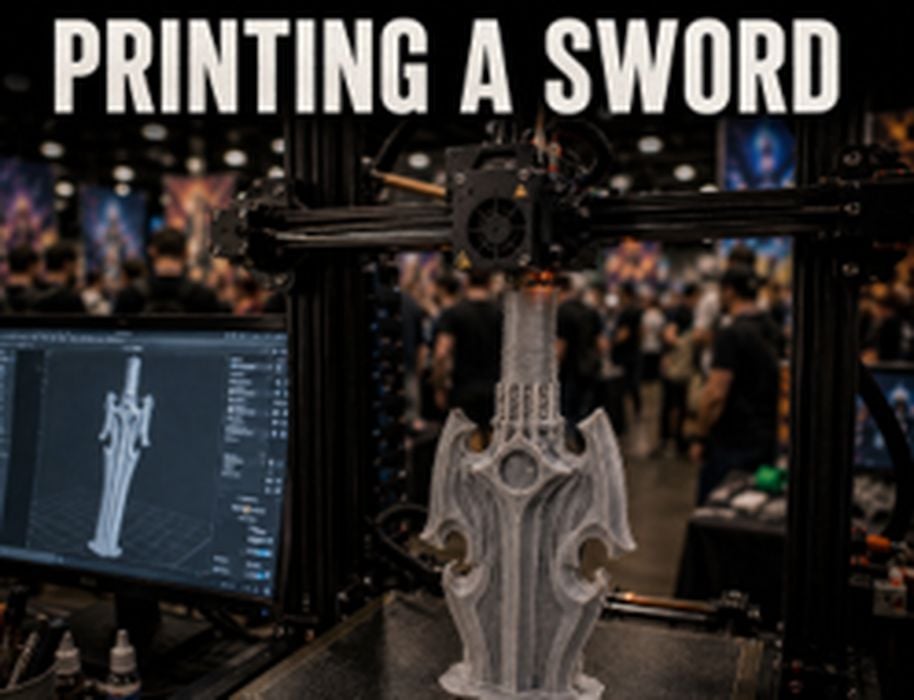
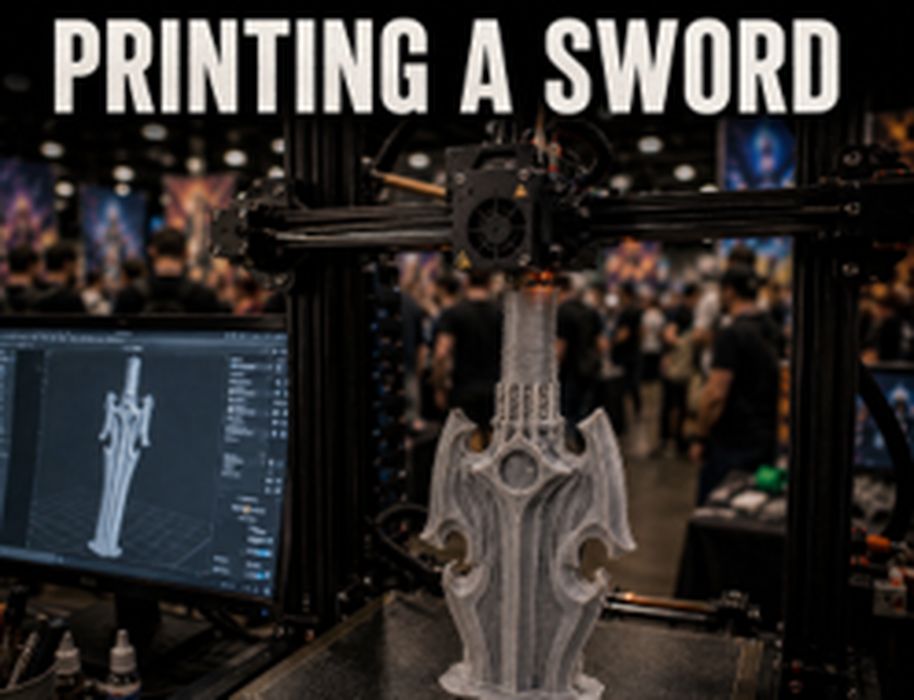
With respect to the Power Sword, the prop exceeds the dimensions of most consumer printers, forcing builders to divide the blade into sections before printing begins. The project then moves through a sequence familiar to model makers. Parts are assembled. Seams disappear beneath filler. Primer reveals imperfections. Paint transforms printed plastic into something that appears cast or machined.
Further, the same tools increasingly appear beyond fandom. In 2024, Disney used 3D printing to bring Scooter back to Rock ‘n’ Roller Coaster after years of absence. Digital models became printed components. Printed components became a finished character. The workflow would look familiar to many hobbyists printing props at home.
Famous Participants
Frankly Built
An Iron Man helmet snaps shut under motor power. Lights illuminate inside the mask. Printed parts, electronic components, and fabricated assemblies disappear beneath metallic paint until the finished suit looks ready for a Marvel film.
Known online as Frankly Built, Frank Pillar has one of the largest audiences in the fabrication community by documenting wearable superhero armor. By day he worked as a jet-engine mechanic. Outside work, he has designed, printed, assembled, wired, painted, and tested increasingly ambitious projects inspired by Iron Man and other science-fiction franchises.
One early Iron Man project reportedly involved more than seventy printed parts and over one thousand hours of work. Individual pieces were assembled, trimmed, reinforced, painted, wired, and adjusted until they became a wearable suit.
In a profile of his work, one interviewer noted that only “a few select people” have managed to recreate Iron Man suits with the level of articulation and detail found in Frank Pillar’s builds and described him as “one of the coolest people you can meet online or in-person.” Millions of viewers don’t just admire the finished products but actually tune in live to follow the build.
Mikomi Hokina
Mikomi Hokina studied architecture before moving into 3D animation and fabrication. Without money for expensive materials, she taught herself by building with cardboard and whatever supplies she could find. Those early experiments evolved into elaborate armor builds, creature-inspired costumes, and large-scale fabrication projects.
One of Mikomi Hokina’s most recognizable projects is a towering No-Face costume inspired by Spirited Away. The build transformed the quiet Studio Ghibli character into a convention-scale fabrication project. The finished costume stood well above normal human height and combined structural engineering, lightweight materials, sculpted surfaces, and costume design to create the illusion of a giant animated figure moving through the real world. Photos and videos of the project spread widely online because the effect was instantly recognizable even to casual fans.
The project reflected the path Hokina followed throughout her career. Trained in architecture and largely self-taught as a fabricator, she began by building with cardboard and inexpensive materials before moving into increasingly ambitious creations. Her work demonstrates how skills developed inside fandom can grow into professional design, fabrication, and content creation careers.
Today, more than 1.8 million people follow her work across social media platforms. Her commissions can reach five figures. Neither Frankly Built nor Hokina works for the companies that own the characters they build. Yet both have become influential figures within those fictional worlds.
How Do Entertainment and Toy Manufacturers Claim the Section 41 R&D Tax Credit for Fandom-Driven Additive Manufacturing?
Consumer product companies, toy manufacturers, and entertainment enterprises qualify for the Section 41 Credit for Increasing Research Activities (R&D Tax Credit) by dedicating Qualified Research Expenses (QREs) toward developing advanced fabrication processes, high-fidelity prototypes, and interoperable digital asset frameworks. Crucially, following the passage of the One Big Beautiful Bill Act (OBBBA), the restrictive Section 174 amortization mandates have been repealed, allowing companies to fully deduct their domestic research and experimental expenditures, once again, in the tax year they are incurred. This legislative shift drastically enhances the immediate cash-flow value of claiming the Section 41 credit for companies pioneering new manufacturing workflows.
The Participation Economy: Technical R&D Framework
| IP Sector / Platform | Innovation & Technical Objective | Qualified QRE Activities & Prototyping Protocols |
| Toy & Action Figure Fabrication | Engineering standardized digital asset ecosystems (e.g., He-Man STL structures) that scale across multi-brand hardware lines. | Developing custom slicing algorithms, establishing scalable dimensional tolerances, and executing multi-stage structural assembly testing. |
| Interactive Software & Gaming | Developing modular user-generated engines and community map modification tools (e.g., Half-Life and Warcraft III base architectures). | Writing open APIs, establishing client-to-server synchronization frameworks, and running automated regression testing for community mods. |
| High-Scale Prop Design | Scaling consumer-grade additive manufacturing systems to build load-bearing, large-format cinematic structures (e.g., Iron Man or No-Face assemblies). | Conducting mechanical stress analysis on multi-segmented prints, developing custom electronic integration nodes, and testing lightweight composite material matrices. |
The Future of the Participation Economy
The participation economy has matured beyond isolated hobby projects. Entire platforms now exist to support it. MakerWorld, Creality Cloud, Printables, Thingiverse, CGTrader, Patreon, Discord communities, YouTube channels, and fabrication-focused social media networks connect creators with audiences, collaborators, and builders.
Ideas move rapidly between digital sculptors, prop makers, fan fiction writers, artists, and collectors. Downloadable He-Man files, for instance, now sit alongside action figures, comics, and collectibles as part of the fan experience.
Most intellectual property owners permit some of this activity for personal use. A more forward-thinking approach could allow fans to move beyond personal use while preserving the rights of the intellectual property owner. Under a structured licensing framework, creators could design, print, modify, display, and even sell limited quantities of approved fan-made objects and toys in exchange for attribution, platform compliance, or modest royalty payments.
The arrangement would give sculptors, builders, and makers the freedom to experiment without fear of infringement claims while giving companies visibility into emerging ideas, popular designs, and talented creators. Instead of treating fan fabrication as a legal obstacle, IP owners could treat it as a research and development network that continuously expands the universe around their brands.
Imagine a Masters of the Universe program that explicitly encourages fan-designed props, statues, accessories, and environments. Imagine official partnerships with MakerWorld, Creality Cloud, or other 3D printing platforms. Imagine design contests, creator spotlights, digital asset libraries, and pathways that allow exceptional fan creations to influence future stories, characters, products, and media.
IP owners stand to gain more new ideas, stronger engagement, and a larger ecosystem of builders. Fans, in turn, would enjoy greater freedom to create, share, and collaborate. 3D printing platforms would gain access to some of the most passionate communities in entertainment. And, importantly, the communities themselves would continue to grow and evolve.
Charles G. Goulding is a practicing attorney.