
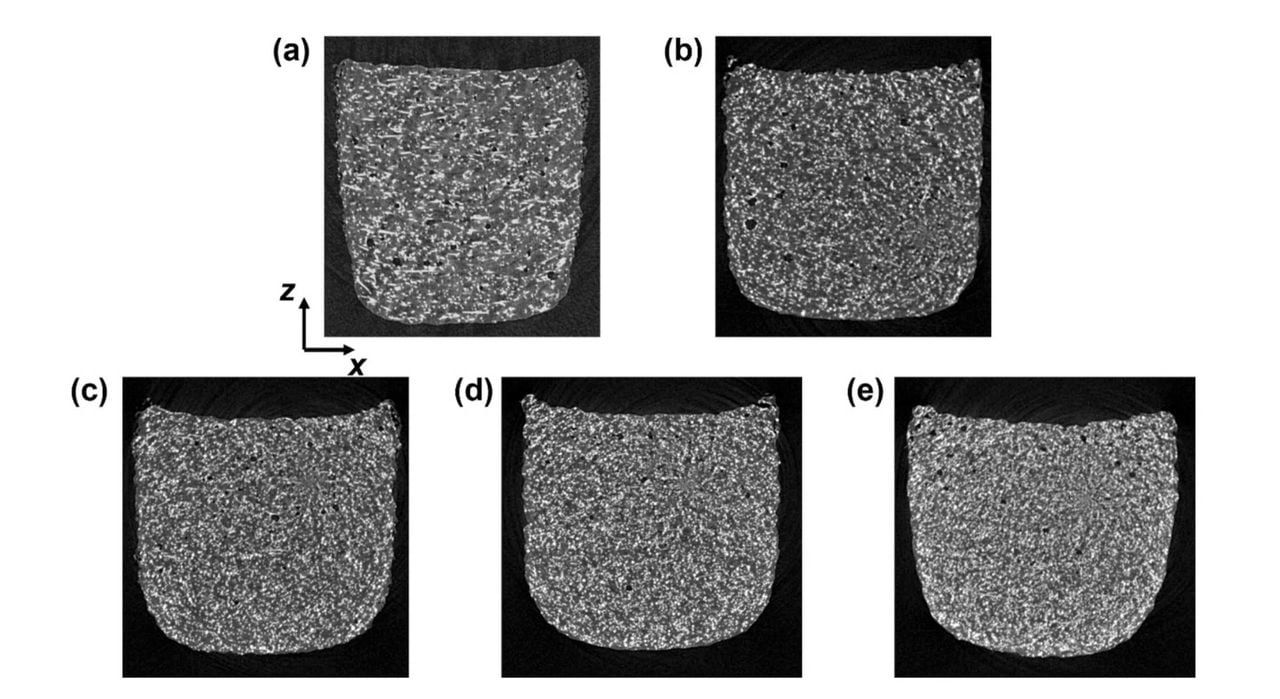
A new research paper proposes a hybrid glass bead and glass fiber PA12 material specifically for the Multi Jet Fusion (MJF) process.
In MJF, PA12 is the main material used by many operators for functional parts, fixtures, and housings. Today’s options include plain PA12 for balanced strength and ductility, and glass bead filled PA12 for higher stiffness and tighter dimensional control. Beads, however, reduce elongation and impact performance. On the other side, chopped glass fiber additives are known in Selective Laser Sintering (SLS) powders for strong, heat-stable parts, but fibers can wreck powder flow, abrade recoaters, and leave a rough surface.
This study tries to use both at the same time: spherical glass beads for improved flow and shrink control, but also short glass fibers for strength. In other words, the paper explores whether a hybrid filler system can deliver a stiffer, more dimensionally stable PA12 with usable surface finish and manageable processing on production MJF platforms.
Why Mix Beads And Fibers For MJF?
Mechanically, beads act like rigid inclusions that stabilize the polymer matrix and limit warping, while fibers provide anisotropic reinforcement that raises strength and heat resistance. Powder-wise, beads improve packing density and flowability, which can counteract the draggy, hook-like behavior of glass fiber powders during recoating. The hybrid concept tries to use beads to keep the bed flowing, and fibers to carry more loads once fused.
The devil is in the details, however. MJF depends on precision deposition and energy absorption. Fillers change thermal conduction and absorption, so a usable material must fuse cleanly at standard lamp settings and depositions, or else it risks incomplete fusion, “orange peel” surfaces, and porosity.
Production Implications And Open Questions
If this hybrid material delivers, service bureaus and OEMs could get stiffer jigs, fixtures, and casings with less warp than fiber-only fills and better strength than bead-only PA12, potentially reducing post-process machining and scrapped prints. Automotive, industrial equipment, and electronics housings are the most obvious applications, especially where heat deflection and bolt-load retention matter.
This is a very interesting development because hybrid microstructures are one of the few things left that can enable MJF to produce tougher, hotter-duty parts without overhauling the exsting hardware platform.
Via OpenAlex
