
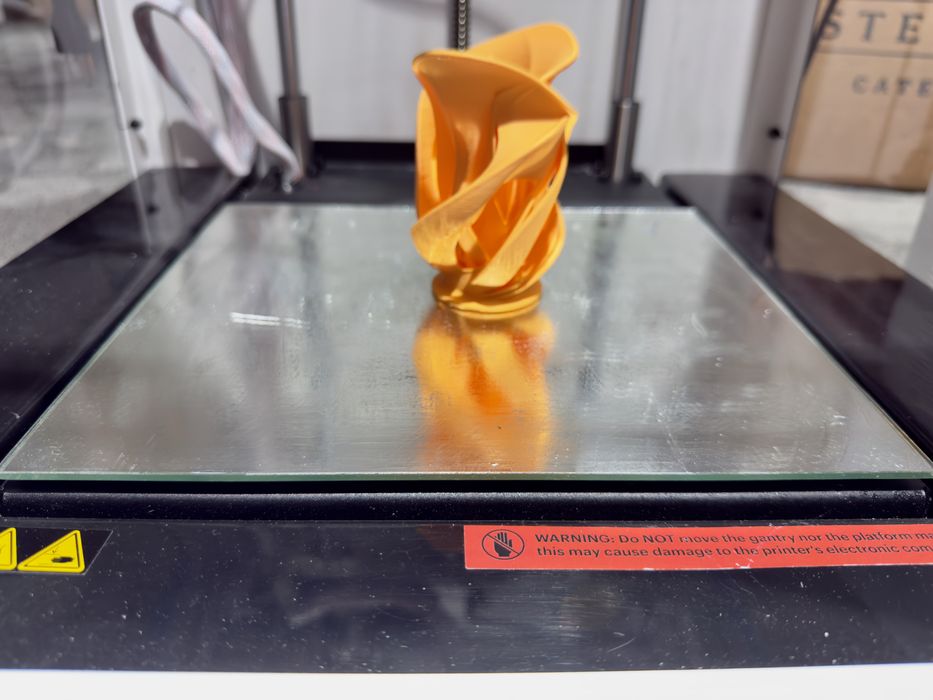
Whatever happened to glass 3D printing plates?
I was minding my own business this week when I received an email from a Chinese manufacturer looking for Fabbaloo to buy supplies and parts for our own manufacturing business.
Of course, we don’t have a manufacturing business; we write news, we don’t build 3D printers. However, the research done by many who contact us seems to be rather slim, and they don’t realize they’ve wasted an email. We also receive at least one or two RFP requests per week asking us to bid to supply 3D printers to a company — typically from African countries or US government contractors, for some unexplainable reason.
This week’s email was from a glass manufacturing company, and they wrote:
“We are a glass deep processing producer and expect to build cooperation with you.
Material: borosilicate glass, quartz glass, soda-lime glass, Thickness: 2mm-80mm”
We don’t require any of that, but 3D printers used to need this material.
For a time, borosilicate glass was the state-of-the-art for print plates. Believe it or not, glass plates were clamped down, and printing took place on them.
There were a couple of advantages in using glass plates:
- They are always perfectly flat. Once manually levelled, extrusions were perfect, no need for mesh bed leveling.
- They worked better than previous acrylic plates.
And that’s about it. While better than previous plate tech, they had a number of problems, including:
- Clamps would often intrude into the build area.
- Glass offers basically no adhesive capability, so you always had to use glue or spray.
- Toolhead crashes were … interesting.
- Breakage was dramatic, never drop a glass plate.
- They were heavy, and bedslinger-style motion systems were basically incompatible.
The main problem was, of course, adhesion. Some years later, someone (I’m not sure who) introduced the flexible spring steel plate coated with PEI, which worked so well it rapidly became the standard approach for FFF devices. Basically, every FFF system on the market today uses that method, except for a few specialized devices.
And then I received the friendly message from the glass manufacturer. I won’t be buying any glass plates from them, and they may be wondering why their 3D print market collapsed.
