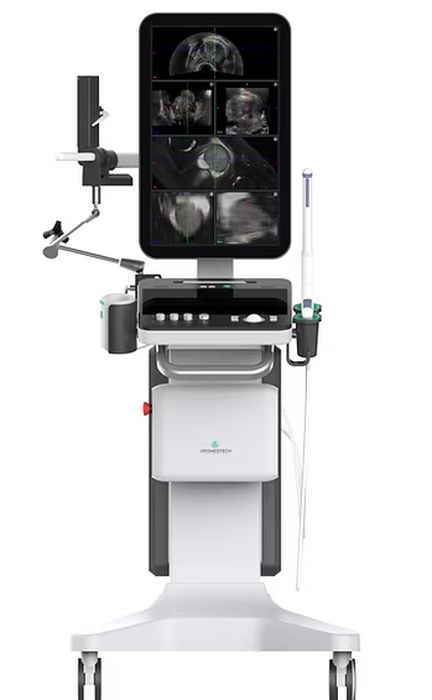
Charles Goulding and Ari Willick analyze how Boustead Singapore’s acquisition of UroMedTech reflects the growing convergence of robotics, 3D printing, and precision healthcare in Singapore.
Boustead Expands Its Healthcare Technology Portfolio
Boustead Singapore Ltd. has long been recognized as one of Southeast Asia’s leading engineering and infrastructure companies. Through its operations in energy engineering, real estate solutions, and geospatial technologies, the company has built a reputation for investing in businesses driven by technological innovation. Its latest acquisition demonstrates that healthcare technology has become another strategic area for long-term growth.
On July 3, 2026, Boustead announced that it had acquired a 60% majority stake in Singapore-based UroMedTech Pte. Ltd., a developer of robotic technologies for urological procedures. According to the company’s announcement, the investment will provide the capital and commercial support needed to accelerate UroMedTech’s product development while expanding its international reach. For Boustead, the transaction adds a high-growth medical robotics company to its technology portfolio while opening the door to one of healthcare’s fastest-growing markets.
The acquisition reflects a broader shift occurring across advanced manufacturing. Companies with expertise in precision engineering are increasingly applying those capabilities to healthcare, where robotics, artificial intelligence, and digital manufacturing are reshaping how medical devices are designed and produced.
UroMedTech Illustrates How 3D Printing Supports Medical Robotics
While considerably smaller than Boustead, UroMedTech occupies an attractive niche within the rapidly expanding medical robotics industry. Its flagship technology, UroMaster, is a robotic platform designed to improve prostate cancer diagnosis through greater procedural precision and consistency. Boustead is entering this market at a time of significant need. In 2022, nearly 1.5 million people worldwide were diagnosed with prostate cancer, and diagnoses have continued to rise, with estimates suggesting that one in eight men will be diagnosed during their lifetime. At the same time, mortality rates have begun to decline, largely because of earlier detection. UroMedTech’s technology supports this trend by helping physicians diagnose prostate cancer earlier and more consistently.
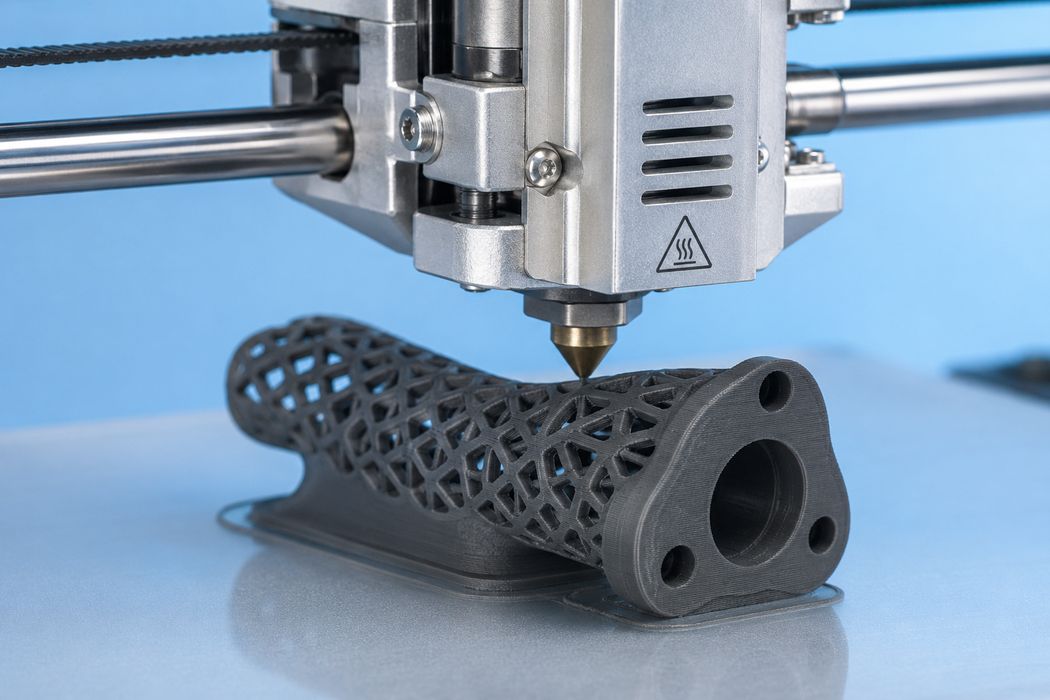
Although UroMaster itself is a robotic diagnostic platform, its development reflects trends shaping the broader medical robotics industry. As discussed in our previous article, 3D Printing Our Way to Robotic Surgeries, additive manufacturing has become an important enabling technology throughout medical robotics. Engineers use 3D printing to rapidly prototype robotic components, refine instrument designs, manufacture lightweight parts, and create patient-specific anatomical models for physician training. By reducing development time and allowing rapid design iterations, additive manufacturing helps innovative companies bring sophisticated robotic technologies to market more efficiently.
The commercial opportunity continues to grow. In 2024, we examined the FDA clearance of Intuitive Surgical’s latest da Vinci platform, highlighting how robotic-assisted medicine continues to gain regulatory acceptance while becoming increasingly sophisticated. As the field expands, companies like UroMedTech are demonstrating that specialized robotic platforms targeting specific medical disciplines can successfully complement larger, general-purpose surgical systems. Boustead’s investment positions the company to participate in this next generation of precision medical robotics.
Singapore Continues to Strengthen Its Position in Advanced Manufacturing
Boustead’s acquisition is also another example of Singapore’s emergence as a global center for advanced manufacturing. Over the past decade, the country has invested heavily in robotics and 3D printing, creating an ecosystem where manufacturers work together to commercialize new technologies. Rather than simply adopting automation, Singapore has become a developer of advanced manufacturing solutions for global markets.
Potential R&D Tax Credit Opportunity Under IRC § 41
The activities may present a strong opportunity to evaluate R&D tax credits under IRC § 41. In simple terms, the credit is aimed at encouraging companies to solve technical problems through experimentation while developing or improving products, processes, or software. To qualify, activities generally must satisfy four requirements: the work must involve eligible domestic research expenses, rely on hard sciences or engineering, be intended to develop or improve a business component, and include a process of experimentation.
Here, UroMedTech’s work appears to align with those concepts. The company as developing “robotic technologies for urological procedures,” including the UroMaster platform, which is designed to improve prostate cancer diagnosis through greater procedural precision and consistency. That type of work may satisfy the “business component” test because it is focused on developing or improving a product. It also appears technological in nature because it involves robotics, precision engineering, and medical-device functionality.
Investment support is expected to accelerate UroMedTech’s product development, and that the company is pursuing a specialized solution for urological care. Activities such as designing, testing, and refining robotic instruments may involve technical uncertainty—such as how to achieve the desired precision, reliability, usability, or manufacturability. Section 41 generally looks for uncertainty about capability, method, or appropriate design, and activities intended to eliminate that uncertainty.
The 3D printing activities are also relevant. Engineers use additive manufacturing to rapidly prototype robotic components, refine instrument designs, manufacture lightweight parts, and create patient-specific anatomical models for physician training. The article further highlights rapid design iterations, which is often a practical indicator of experimentation.
Important caveats apply. The credit is limited to qualifying U.S.-based research, and excludes certain activities such as post-commercial-production work, mere adaptation or duplication, market research, foreign research, and funded research. Commercialization, marketing, or expansion efforts alone generally are not enough. The strongest credit position would come from documenting technical challenges, alternatives tested, design iterations, prototypes, test results, and the U.S.-based wages, supplies, or contract research tied to that experimentation.
Conclusion
Boustead’s investment in UroMedTech reflects the continued maturation of this innovation ecosystem. As robotics, precision engineering, and 3D printing become increasingly interconnected, Singapore is well positioned to remain an important contributor to the future of healthcare technology. The acquisition represents more than the purchase of a promising startup — it illustrates how advanced manufacturing capabilities are helping create the next generation of medical robotics.