
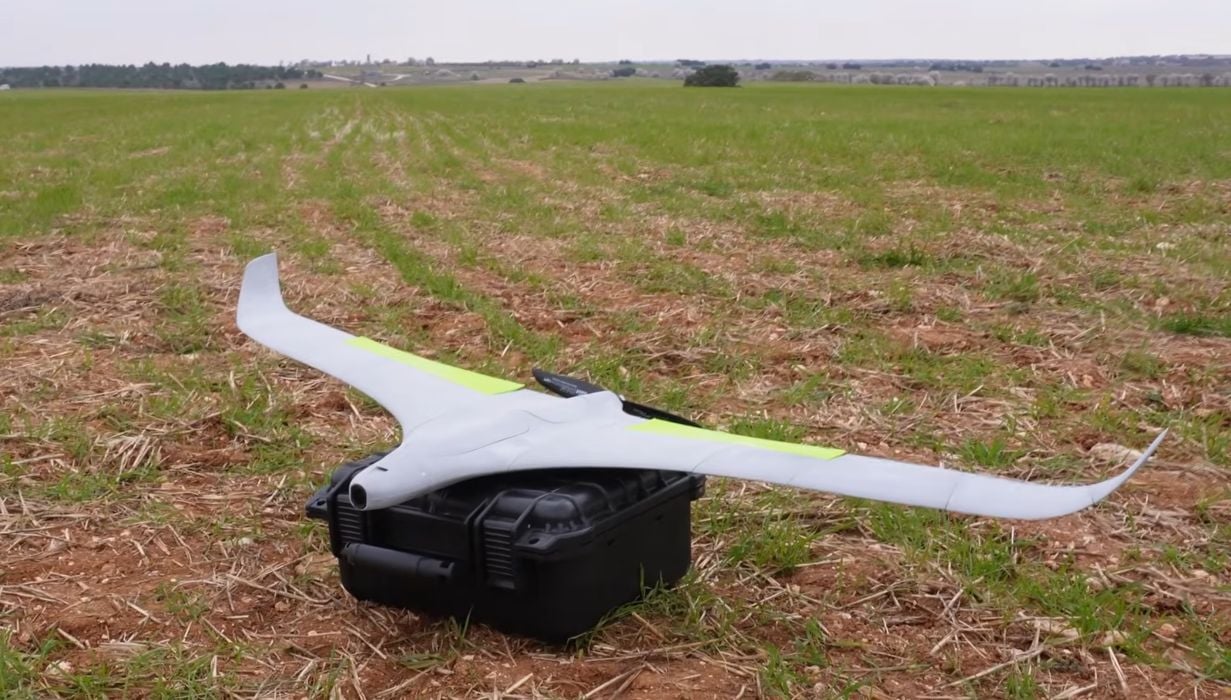
This week’s selection is the NX2 Long Range Flying Wing by YouTuber Neuroautics.
3D print technology is often used to build parts for model aircraft, and this is one of those stories. However, the story here is so detailed and powerful that it needs to be told.
Neuronautics is a YouTube channel that has been around for several years but has published only a few videos. The channel’s most recent project is designing 3D printed flying wings — using AI to do some of the design steps.
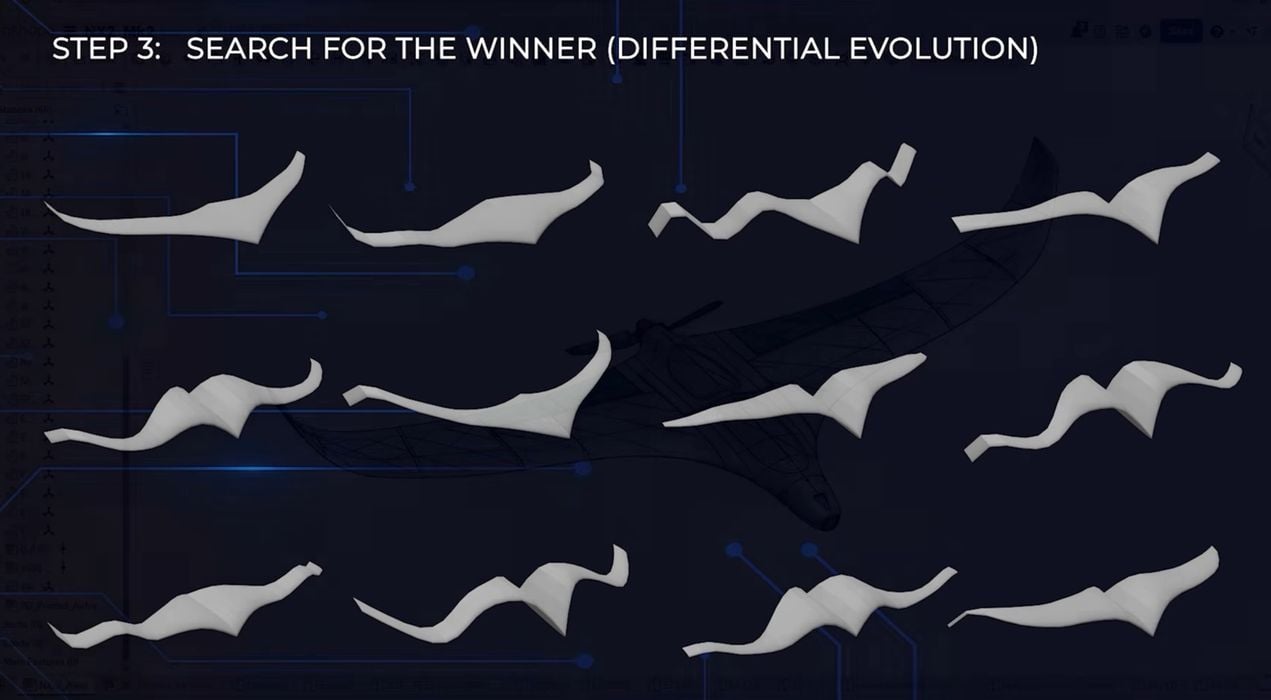
The curiously shaped NX2 flying wing’s shape is, in fact, evolved using AI tools, as you can see here. The goal was to develop the most efficient flying wing possible.
That was accomplished through a long series of real-world experiments with a variety of AI designs that were 3D printed.
Printing was initially done using stock FFF systems and materials, specifically PLA. However, Neuronautics eventually realized that PLA material, although easy and cheap to print, is quite brittle.
This is a problem during the iterative testing: NX2 prototypes would often crash, and the PLA material would shatter. That meant re-printing parts before the next test could be done.
Eventually, they switched over to using a completely different 3D printing system: the Formlabs Form 4L, a larger format resin system. The material was Formlabs’ Tough 2000 Resin V2, which has a reputation for being, well, “tough”.
Experiments using parts printed in this material were more successful and survived crashes far better than PLA. This sped up the iteration process and led to the final design.
Amazingly, the AI tools used in the project predict that the NX2 could theoretically fly an astonishing 246km (153 miles). They did not actually do that test, as it would be a bit challenging to do — and likely break all kinds of aircraft rules.
You can try it yourself, however, as they’ve posted the 3D model on Cults for anyone to download.
Nevertheless, what we’re seeing in this project is something quite amazing: an individual equipped with AI tools and a quality 3D printer was able to produce an aerospace system that can fly over 200km.
That is something unimaginable only a few years ago.
