Charles Goulding and Ari Willick examine how the SeaRush project demonstrates the potential of large-scale 3D printing to accelerate maritime design through rapid prototyping, robotic manufacturing, and iterative testing.
Additive manufacturing has expanded beyond prototyping into increasingly complex industrial applications, with maritime engineering becoming one area where large-scale printing is being explored. The SeaRush project does not simply demonstrate that a boat hull can be printed; it explores how additive manufacturing could change the way uncrewed surface vessels are designed, produced, and refined.
SeaRush Accelerates Maritime Design
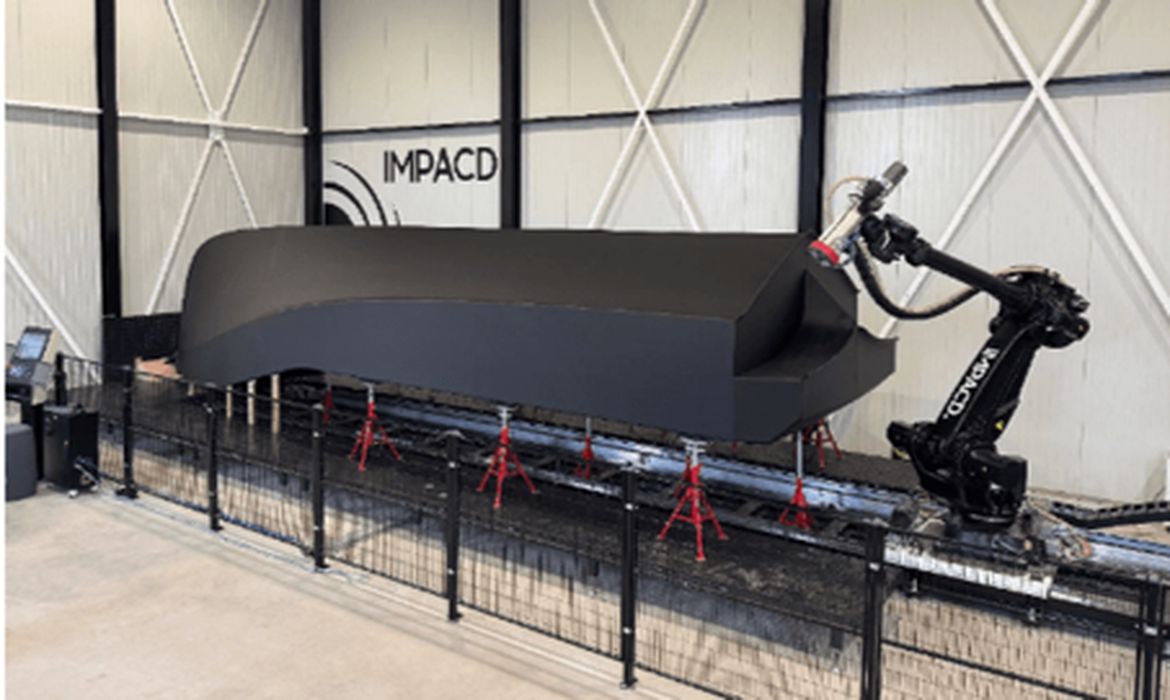
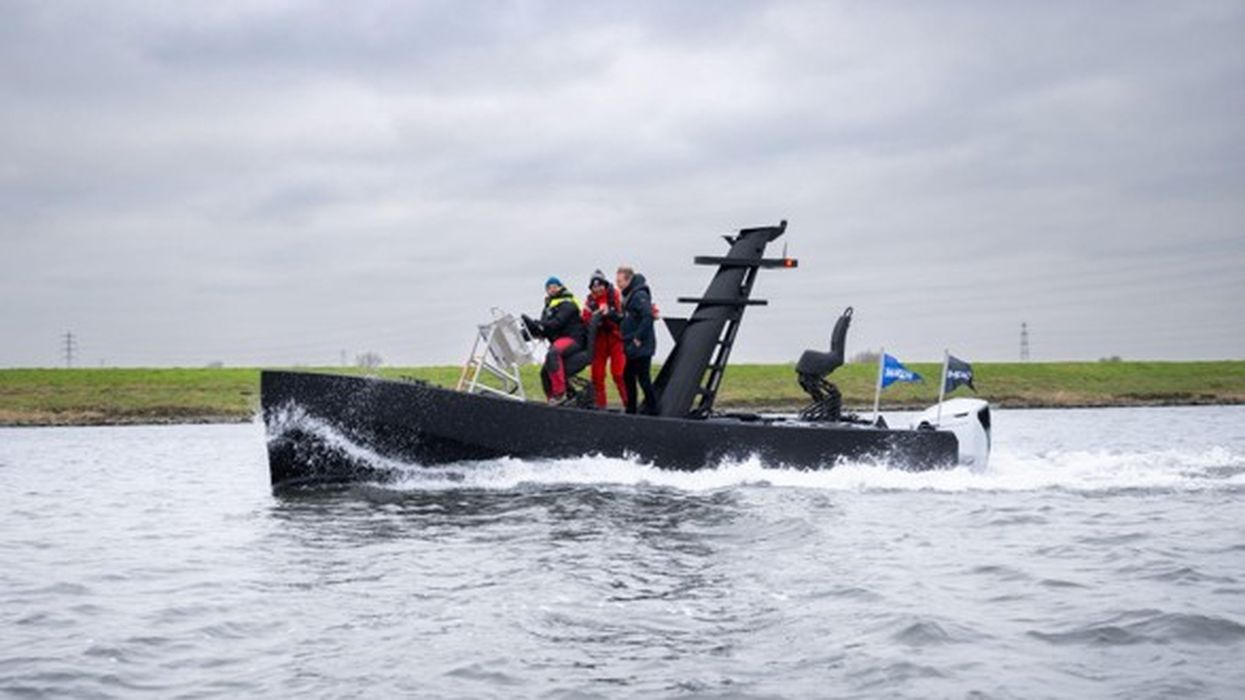
SeaRush is a European initiative led by the Maritime Research Institute Netherlands (MARIN) that combines digital design, robotic fabrication, and composite materials to let engineers rapidly print, test, and refine uncrewed vessel designs without traditional tooling. The project features a fully 3D printed hull designed specifically for autonomous maritime operations. By optimizing hull geometry for additive methods instead of conventional molding techniques, SeaRush shows how designers can test forms that would be too difficult, too slow, or too expensive to explore using traditional fiberglass tooling.
The project went from an idea to floating on the water in less than five months.
That accelerated timeline was made possible by combining digital hull design with large-format additive manufacturing. Instead of producing molds, patterns, and tooling before construction could begin, the SeaRush team moved directly from a digital model to a physical hull. The hull was translated into a 3D printable design by IMPACD Boats, with CEAD supporting preparation of the printing process, before the hull was printed at the Dutch Boat Factory in Delft, Netherlands in less than a week. The printed structure was then integrated with conventional marine systems, creating a functional uncrewed surface vessel that could be tested. This approach demonstrates how additive manufacturing can compress multiple stages of vessel development into a single iterative process, allowing designers to explore new concepts with far less time and upfront investment.
How Earlier Projects Made SeaRush Possible
SeaRush builds on more than a decade of advances in large-scale maritime additive manufacturing. Historical precedent was established by the University of Maine’s Advanced Structures and Composites Center, whose large-scale additive manufacturing program demonstrated that boats could be printed at dimensions previously considered impractical. The university’s record-setting 3Dirigo project produced a 25-foot, 5,000-pound patrol boat in only 72 hours. That achievement established Guinness World Records not only for the largest 3D printed boat but also for the largest solid 3D printed object, proving that additive manufacturing could move beyond laboratory-scale demonstrations into practical marine construction.
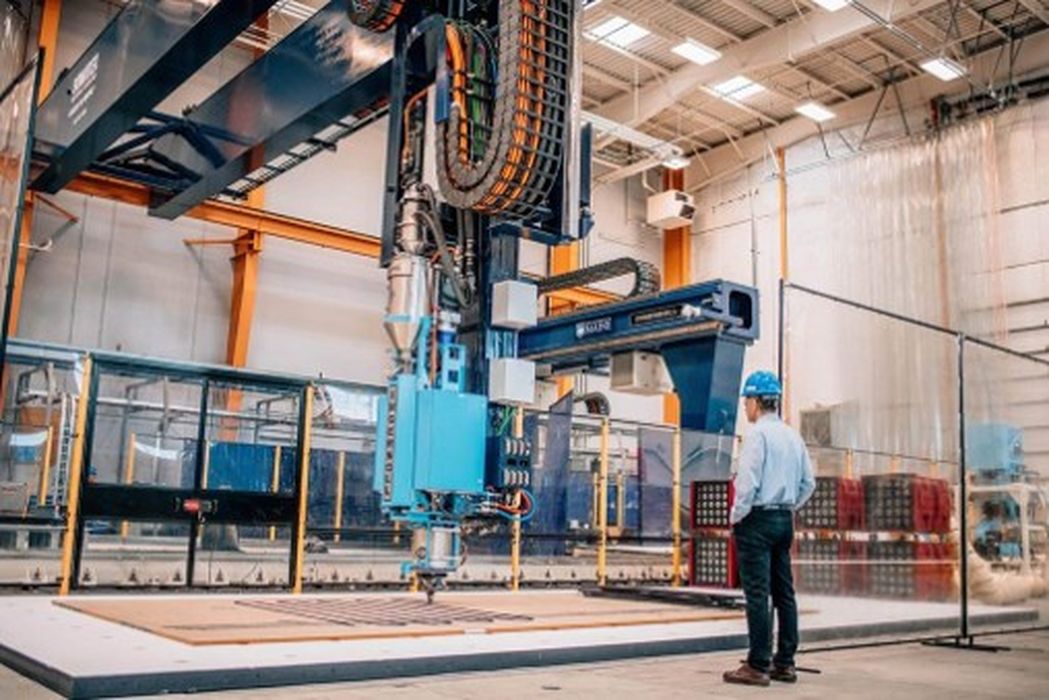
Building on that achievement, UMaine has continued pushing the boundaries of 3D printing. In 2024, the university unveiled its Factory of the Future 1.0, a next-generation printer roughly four times larger than its previous system. Capable of producing components measuring up to 96 feet long while printing as much as 500 pounds of material per hour, the new platform is specifically intended to support applications including large marine vessels, defense structures, housing, and renewable energy infrastructure. Researchers have already announced plans to manufacture vessels approximately 50 feet in length, demonstrating that large-scale boat printing continues to evolve from proof-of-concept into production-ready technology.
Why SeaRush Represents the Next Step
Earlier projects demonstrated that large boats could be successfully 3D printed. SeaRush advances the concept by showing how additive manufacturing can accelerate the entire vessel development process, eliminating traditional tooling and enabling faster design revisions after testing. Instead of simply producing larger objects, the technology allows engineers to evaluate more concepts in less time and at lower cost.
SeaRush also reflects broader changes taking place across the maritime industry. As manufacturers, operators, and repair facilities seek greater flexibility and faster product development, additive manufacturing is becoming increasingly attractive for applications that extend well beyond autonomous vessels.
Maritime Industry Trends Continue to Strengthen the Case for 3D Printing
Recent developments throughout the marine sector suggest that SeaRush is part of a broader shift toward digital manufacturing. Earlier this year, marine retail giant West Marine filed for bankruptcy, which we covered in our article titled “West Marine’s Bankruptcy Could Accelerate 3D Printing Adoption Across the Marine Industry.” As supply chains become less predictable and replacement parts become harder to source, digital manufacturing offers an alternative approach in which components can be produced closer to the point of need rather than relying entirely on centralized inventories. For many marinas, boatyards, and repair facilities, additive manufacturing could become an increasingly practical way to maintain fleets while reducing inventory costs.
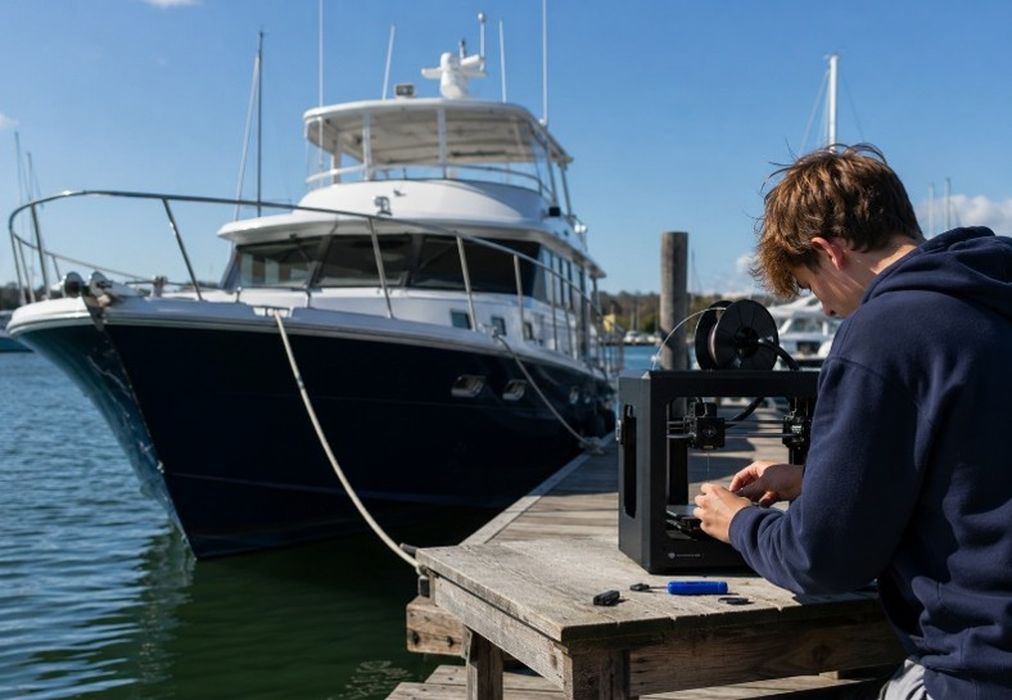
We also discussed marina consolidation and boat rentals in 2020 in our article titled “Marina Consolidation, Boat Rentals & 3D Printing: Smooth Sailing,” both of which reinforce the growing role of 3D printing in the marine industry. As marina ownership becomes more concentrated, operators are looking for ways to streamline operations, speed up maintenance, and keep vessels in service. Digital manufacturing helps meet that need by enabling specialized components to be produced when needed, reducing inventory requirements and downtime.
The Research and Development (R&D) Tax Credit
The federal research credit under IRC § 41 is a credit for increasing research activities, measured by qualified research expenses (QREs) paid or incurred in carrying on the taxpayer’s trade or business. QREs generally include wages for employees performing, directly supervising, or directly supporting qualified research; supplies used in qualified research; certain computer-use costs; and 65% of eligible contract research payments under IRC § 41(b). To qualify under IRC § 41(d), the research must satisfy the four-part test: the expenditures must qualify as domestic R&E expenditures under IRC § 174A, the research must be technological in nature, the information must be intended for use in developing a new or improved business component, and substantially all of the activities must constitute a process of experimentation. Research may qualify where the taxpayer is uncertain about capability, method, or appropriate design and undertakes activities to eliminate that uncertainty; design testing is not treated as excluded quality-control testing when it evaluates whether the design is appropriate.
SeaRush may be engaging in activities that could support Sec. 41 qualification for the marine-industry when performed in the United States and not otherwise excluded or funded. The project involved rapid prototyping, robotic manufacturing, iterative testing, digital design, composite materials, and large-format additive manufacturing to print, test, and refine uncrewed vessel designs without traditional tooling. Those activities may align with IRC § 41 where engineers are experimenting with hull geometry, print preparation, materials, structural performance, and integration with conventional marine systems to resolve design or manufacturing uncertainties for a new or improved vessel or component. Potential QREs could include qualifying engineer wages, prototype materials consumed in testing, and eligible third-party research costs, while companies should exclude post-commercial-production work, routine quality control, duplication or adaptation of existing components, foreign research, and funded research under IRC § 41(d)(4).
Conclusion
SeaRush demonstrates that the future of maritime 3D printing is no longer measured simply by the size of the boats that can be printed. The larger opportunity is the ability to create vessels that evolve through rapid digital design, manufacturing, and testing cycles. As marine operators seek greater adaptability, additive manufacturing may become an important tool for developing and maintaining the next generation of vessels.