
Charles R. Goulding and Preeti Sulibhavi explain why a new White House order aimed at strengthening defense supply chains may create significant growth opportunities for the U.S. 3D printing industry.
The White House’s latest Executive Order on securing America’s defense supply chains may not mention 3D printing once, yet it could become one of the most consequential policy developments for the additive manufacturing industry in years.
Signed on July 20, 2026, the Executive Order, Securing America’s Defense Supply Chains and Ensuring Domestic Acquisition of Critical Materials, directs the Department of Defense to significantly reduce reliance on foreign suppliers for materials and components used in military systems. The order tightens waiver rules, requires comprehensive supply chain mapping, accelerates qualification of domestic suppliers, and encourages the use of U.S. and allied sources for critical materials and components.¹
At first glance, the announcement appears to focus primarily on mining, rare earth elements, and critical minerals. However, the broader implications extend well beyond raw materials. The order effectively creates incentives for manufacturers that can produce qualified parts domestically, quickly, and with transparent supply chains. Those are precisely the areas where additive manufacturing has steadily matured over the past decade.
In fact, as of the writing of this article, the White House went even further on July 29, 2026, and has banned imports of new Chinese humanoid and quadruped robots. Executed by the Federal Communications Commission (FCC), the measure aims to eliminate national security and cybersecurity risks to U.S. critical infrastructure. More about humanoid robots can be found in our companion piece to this article titled, “Japan’s Renewed Investment in Humanoid Robotics Underscores the Strategic Importance of US Domestic Manufacturing.”

The Real Motivation
The Executive Order addresses a strategic problem that has been building for years.
Many advanced defense systems rely on materials that originate in countries considered strategic competitors, particularly China. Rare earth magnets, specialty alloys, titanium products, tungsten, tantalum, electronic components, and high-performance forgings often pass through complex international supply chains before reaching American manufacturers.
Although existing law already restricts sourcing certain materials from “covered nations,” waivers have frequently been granted when domestic alternatives were unavailable. The new order seeks to end that practice beginning January 1, 2027. Contractors requesting exceptions must now submit formal mitigation plans demonstrating how they intend to transition toward domestic or allied suppliers.
Equally important is the requirement that defense contractors map their supply chains from raw materials through finished products. Rather than simply knowing who supplied a component, contractors must increasingly understand where every material originated and how it entered the manufacturing process.
For traditional manufacturing, that represents a substantial administrative and logistical challenge.
For additive manufacturing, it may represent a competitive advantage.
Why Additive Manufacturing Fits This Strategy
Unlike conventional manufacturing, additive manufacturing often produces complex parts using fewer production steps.
Instead of machining a billet through multiple suppliers or assembling numerous subcomponents, a qualified metal additive manufacturing process can produce a near-net-shape component directly from certified powder stock.
This simplification naturally reduces supplier complexity.
If the feedstock powder originates from a qualified domestic producer and the printing occurs at a certified U.S. facility, documenting material provenance becomes considerably easier than tracing dozens of suppliers across multiple countries.
The Executive Order also calls for faster qualifications of new suppliers and materials while directing the Department of Defense to remove regulatory barriers that unnecessarily delay approval of qualified sources.
That provision could prove especially significant for additive manufacturing.
Historically, one of the largest obstacles facing AM in defense has not been technical capability but qualification. New printing processes, machines, powders, and post-processing methods often require years of testing before being approved for flight-critical or mission-critical applications.
If qualification timelines shorten, adoption of additive manufacturing could accelerate considerably.
Components Most Likely to Benefit
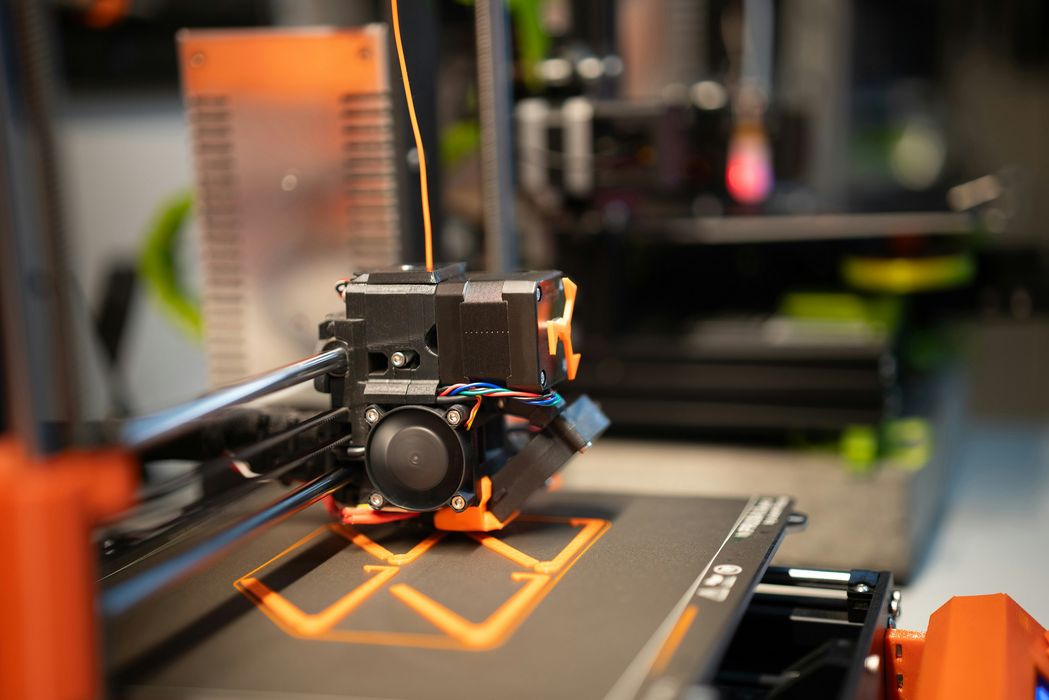
The policy does not target any specific weapon system, but several categories of defense hardware appear especially well positioned for expanded additive manufacturing.
Aircraft engines already contain numerous 3D printed components, including fuel nozzles, heat exchangers, brackets, and increasingly sophisticated structural elements. Producing these domestically from qualified American powders aligns directly with the administration’s objectives.
Missile systems also present significant opportunities. Internal cooling structures, lightweight guidance housings, combustion components, and thermal management hardware frequently require geometries that conventional manufacturing struggles to produce efficiently.
Naval systems offer another promising application. The U.S. Navy has spent years evaluating additive manufacturing for replacement parts aboard deployed vessels, reducing inventory requirements while improving operational readiness.
Space systems may benefit even more. Satellites, launch vehicles, propulsion systems, and military spacecraft increasingly incorporate additively manufactured titanium and nickel superalloy components because of their weight savings and design flexibility.
Ground vehicles should not be overlooked either. Armored vehicles contain numerous castings, brackets, tooling fixtures, and replacement components that could transition to qualified additive manufacturing, particularly where low production volumes make conventional tooling expensive.
Perhaps most importantly, spare parts across all military branches represent one of additive manufacturing’s strongest use cases. Rather than maintaining decades of inventory for aging equipment, digital inventories combined with certified domestic production could dramatically improve supply resilience.
Beyond Parts: Supply Chain Visibility
One overlooked aspect of the Executive Order is its emphasis on supply chain mapping.
The order requires contractors to illuminate supply chains down to raw materials, creating what amounts to an extensive digital record of component origins.
Interestingly, additive manufacturing workflows are already highly digital.
Every printed part generates machine logs, build parameters, powder lot tracking, inspection records, and digital process histories. Many aerospace and defense manufacturers already maintain digital threads connecting design files, material certifications, machine parameters, and final inspection data.
As defense procurement increasingly prioritizes traceability, these existing digital manufacturing practices may become valuable assets rather than regulatory burdens.
Challenges Remain
None of this guarantees rapid adoption.
Domestic production capacity for many metal powders remains limited, particularly for specialty alloys and certain rare earth materials. Even if printing capacity exists, feedstock availability could become a bottleneck.
Industry analysts also caution that eliminating foreign sourcing by 2027 may prove unrealistic given China’s continued dominance in refining and processing many critical minerals. Expanding U.S. mining is only one piece of the equation; refining capacity, powder production, and downstream manufacturing must also scale substantially.
Certification remains another challenge. Defense customers rightly demand rigorous qualification, particularly for flight-critical hardware. While the Executive Order encourages faster qualification processes, technical validation cannot simply be skipped.
Finally, additive manufacturing is not a universal replacement for conventional production. High-volume commodity components will often remain less expensive using casting, forging, or machining.
The Research and Development (R&D) Tax Credit
IRC § 41(d)(1) (The R&D Tax Credit) requires qualified research to involve domestic research or experimental expenditures, technological information, intended development of a new or improved business component, and substantially all activities constituting a process of experimentation. The test applies separately to each business component, including a product, process, technique, formula, or invention. Qualified research expenses include qualifying wages, supplies, computer-use costs, and certain contract research expenses.
The announcement may drive domestic sourcing and qualification efforts that satisfy IRC § 41 when companies use additive manufacturing to resolve technological uncertainty in qualifying new domestic (or allied) supply of defense components. The Executive Order directs DoD to reduce reliance on foreign suppliers, tightens waiver practices beginning January 1, 2027, requires formal mitigation plans to transition to domestic or allied sources, and mandates supply-chain mapping from raw materials through finished products. It also encourages faster qualifications of new suppliers and materials, a key barrier for additive manufacturing in flight-critical and mission-critical applications.
Under IRC § 41(d), qualification turns on whether a specific business component is being developed or improved through domestic §174A R&E, discovery of technological information, and a process of experimentation to improve function, performance, reliability, or quality. This is why additive manufacturing can align with the Order’s traceability and domestic sourcing goals: fewer production steps, near-net-shape components produced directly from certified powder stock, and easier provenance when powder is sourced from a qualified domestic producer and printing occurs at a certified U.S. facility.
Additive workflows also naturally create digital traceability (machine logs, build parameters, powder lot tracking, inspection records, and digital process histories), supporting supply-chain mapping requirements. The strongest credit profile arises where engineers run iterative design/build/test cycles to qualify parts for aircraft engines (e.g., fuel nozzles, heat exchangers, brackets, and structural elements) and other defense applications (missile, naval, space, ground vehicles, and spares).
Domestic 3D printing initiatives launched in response to the White House supply chain focus may support IRC § 41 credits if they involve technological uncertainty, experimentation, and new or improved domestic business components. Companies should document hypotheses, alternatives tested, technical results, personnel time, supply costs, contracts, funding terms, and the point at which activities transition from experimentation to routine production. R&D Tax Savers has helped hundreds of companies avail themselves of these tax benefits for decades.
The Bigger Picture
The Executive Order signals something larger than a procurement change.
For years, additive manufacturing advocates have argued that distributed, digital, domestic production improves supply chain resilience. That argument has often been framed in terms of flexibility, sustainability, or reduced inventory.
The federal government is now emphasizing another benefit: national security.
As defense procurement increasingly rewards manufacturers capable of demonstrating domestic sourcing, digital traceability, rapid qualification, and resilient production capacity, additive manufacturing becomes more than an alternative production technology. It becomes a strategic manufacturing capability.
Whether individual 3D printing companies ultimately benefit will depend on their certifications, material supply chains, and ability to meet demanding defense requirements.
But one conclusion appears increasingly clear: policies designed to rebuild domestic defense manufacturing are creating an environment in which additive manufacturing is no longer simply an innovation initiative. It is becoming part of America’s industrial strategy.