
A new research paper examines how 3D printed carbon nylon composites absorb impact energy and fail under load.
The work, titled Multi-factor optimization of impact energy absorption and failure mechanisms in additively manufactured carbon-nylon composites, is a timely investigation as CF reinforced thermoplastics are being increasingly used, and now even for production end use parts.
Carbon nylon is already a pretty familiar material FFF operators. Chopped carbon fiber reinforcement can substantially increase stiffness, improve dimensional stability, and reduce warping compared with natural nylon. That makes it very attractive for 3D printing jigs, tooling, robot end effectors, automotive prototypes, and certain low volume production components.
But stiffness is definitely not the same as toughness. A part that performs very well in a tensile or bending test can behave quite differently when struck, dropped, or loaded suddenly: these parts can crack and even shatter much more easily. For designers considering CF nylon in an impact heavy application, the impact failure potential is quite important.
Impact Performance Is A Process Problem
The paper’s focus on multi factor optimization is interesting because composite material results are rarely controlled by a single setting. Layer thickness, nozzle temperature, chamber conditions, raster direction, infill strategy, fiber loading ratio, drying process, and the geometry of the printed part can all influence the final result.
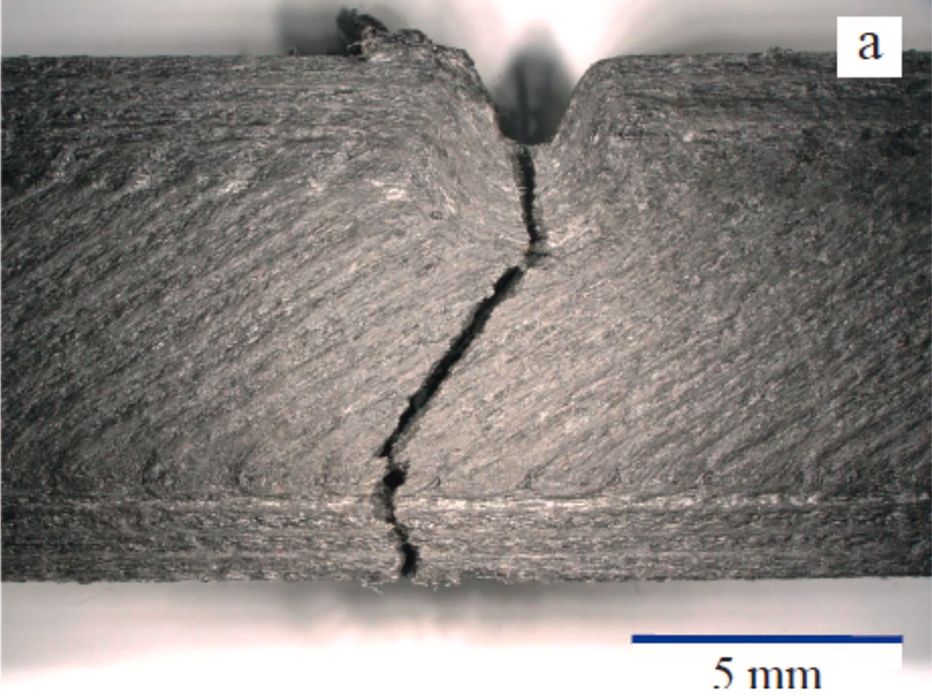
In a fiber filled polymer, the print process also creates a directional structure. Fibers tend to align with extrusion flow, while interfaces between extrusion lines and layers can become the source of cracking. An impact may therefore produce fiber breakage, matrix cracking, interlayer separation, or a mixture of all three mechanisms.
Many material datasheets report results from carefully defined test specimens printed in one orientation. Real parts have changing toolpaths, variable wall thicknesses, corners, holes, and local stress concentrations. The best print parameters for one part may not provide the best energy absorption in a more complex component.
Failure analysis can be more useful than a single impact number. If a part fails through brittle interlayer delamination, a change in build orientation or thermal management may help. If the matrix itself fractures too readily, the material formulation or moisture condition may be the bigger issue. If fiber pullout absorbs energy, there may be an opportunity to tune the balance between stiffness and damage tolerance.
This is where optimization becomes difficult. Parameters that maximize strength or modulus can reduce ductility, while a highly reinforced filament may be harder to process consistently. Nylon adds another complication: moisture handling. Poorly dried filament can create voids and inconsistent extrusion, both of which can contribute to impact failures.
Manufacturers increasingly need defensible process settings instead of advertising claims that a composite material is “strong.” A true, repeatable relationship between process variables, impact response, and observed fracture behavior could help support application specific design rules and eventually more better qualification processes.
Carbon nylon will not replace every metal part simply because it contains fiber, but understanding how it breaks is one of the fastest ways to improve part performance.
Via OpenAlex
