
New research explores digital fringe projection as a way to find and correct additive manufacturing defects during a build.
The work, titled Additive Manufacturing Process Monitoring for Defect Detection and Correction Using Digital Fringe Projection, focuses on a very common production problem. AM systems can produce highly complex parts, but discovering the defect after a lengthy build is usually expensive.
Most industrial machine suppliers already know that process monitoring is no longer an option. Laser Powder Bed Fusion (LPBF) systems commonly use cameras, photodiodes, thermal sensors, and increasingly sophisticated software to observe the melt pool, powder bed, or completed layer, in an attempt to detect defects.
However, many monitoring tools see only a very small part of the entire process. A melt pool sensor may flag unusual energy behavior, while a layer imaging system may find streaks, recoater damage, or missing powder. Neither necessarily provides a detailed three dimensional measurement of the surface being built.
Using Light Patterns To Measure Build Surfaces
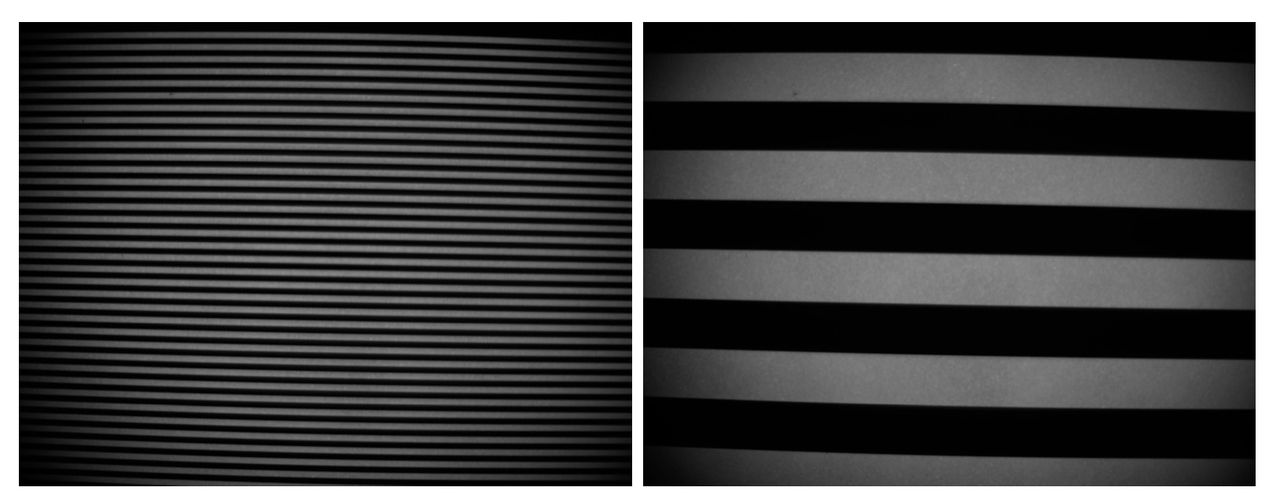
Digital fringe projection takes a different approach: optical. A projector casts a known pattern of light and dark fringes onto a surface, while a camera observes how the pattern deforms. Software can then calculate surface height and shape from those distortions.
In other words, it is a completely non-contact, real time metrology technique that could inspect the actual geometry of a newly formed layer or feature. It might detect raised material, depressions, warping, incomplete deposition, or other deviations before they become buried inside subsequent layers.
That is particularly interesting for processes where a surface defect can quickly compound layer by layer. In metal powder bed systems, a protruding feature could interfere with a recoater on the next pass, messing up the job entirely. In directed energy deposition, a height error can alter the standoff distance and destabilize the deposition process. Similar concepts could also apply to material extrusion and resin systems.
The word “correction” in the paper’s title is important. Detection alone can create a large collection of alarming images for 3D printer operators. A production system must determine whether a deviation is truly going to cause problems, decide what response is recommended, and document that decision for quality control afterwards.
Detection Is Easier Than Closed Loop Correction
Possible responses range from pausing a build for inspection to modifying subsequent toolpaths, deposition parameters, or exposure settings. A machine might also classify a part as unsuitable for a critical application while allowing an otherwise usable build to continue. The best course of action depends entirely on the process, material, part geometry, and qualification requirements.
This sounds good, but optical monitoring inside an AM machine is not a simple camera installation. Projected fringes must remain visible to the cameras despite changing surface reflectivity, loose powder, fumes, spatter, resin, and intense process illumination. Metallic surfaces are especially tricky because they can reflect light in unpredictable ways.
Speed is another issue. A monitoring method has to capture, process, and interpret measurements fast enough to fit between layers or within a deposition pass. If analysis takes longer than the build cycle, it may still be useful for post build inspection, but it is not going to work for truly closed loop control.
Over the past few years we’ve seen increasing capabilities in quality monitoring for LBPF systems, and this research seems to point to additional future improvements.
