
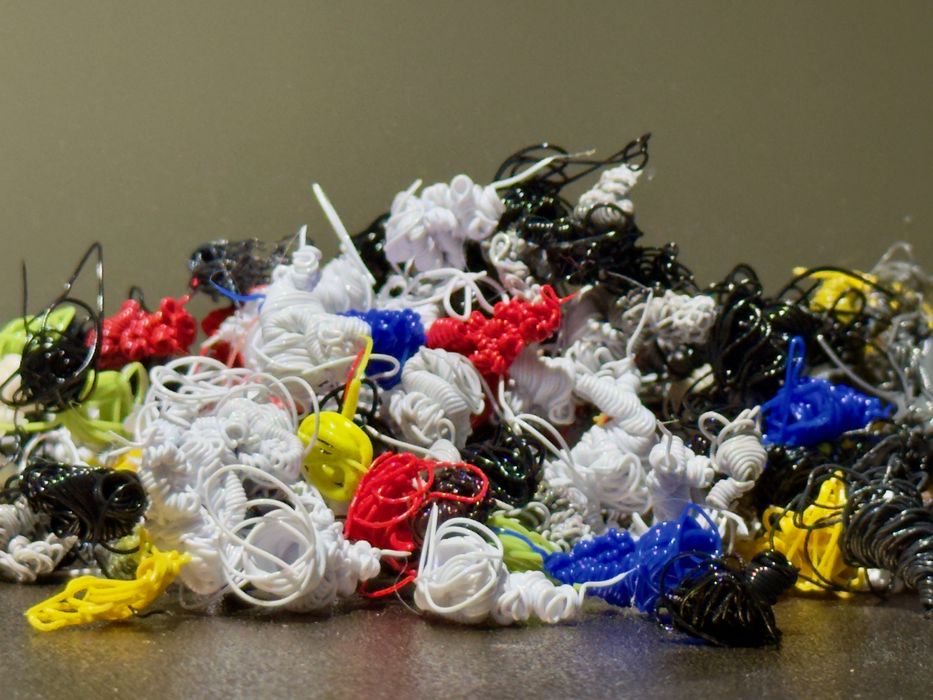
A new research paper takes a look at turning waste plastic into filament that can produce useful 3D printed parts.
The paper, Experimental Investigation of Mechanical Properties of 3D Printed Components Fabricated from Waste Plastic Extruded Filaments, examines the mechanical performance of parts made from recycled plastic filament.
We’ve seen plenty of projects over the years that turn plastic waste into filament. The basic idea is straightforward enough. Plastic is shredded, melted, extruded into filament and then fed into an FFF 3D printer. That’s what you do with thermoplastics.
But making filament is only half the problem: are the resulting 3D printed parts any good?
Making Filament Is The Easy Part
A spool of recycled filament might visibly appear perfectly acceptable. It may even run through a FFF 3D printer without much trouble, and produce some parts. But that doesn’t necessarily mean the parts coming off the machine will have predictable strength.
That’s where things get complicated. The mechanical properties of an FFF part depend on quite a few things: print temperature, layer adhesion, cooling, moisture, extrusion consistency and, of course, the material itself.
With recycled plastic there are even more variables.
Where did the plastic come from? Was it all the same polymer? Was it contaminated? How many times had it already been melted? Was it properly dried before extrusion? What is the state of the polymer molecules?
All of these things can significantly affect the final print. It changes the question from “Can we print this recycled plastic?” to “What can we safely use this recycled plastic for?” Those are two very different questions.
A Two-Step Manufacturing Problem
There are really two processes that have to work properly.
First, the waste material has to be turned into reasonably consistent filament. Diameter, moisture and melt behaviour all have to stay within tolerances.
Then the 3D printer has to turn that filament into a part with repeatable layer bonding and density.
If either step varies too much, so will the finished parts.
This becomes particularly important when the starting material is unknown or mixed. Virgin PLA or PETG already requires reasonably controlled print conditions. Plastic taken from discarded products or assorted waste streams can introduce pigments, additives and completely different polymers.
That can quickly turn recycling into something of a materials experiment. Results from carefully sorted recycled PLA, for example, is not at all comparable to throwing random household plastics into a shredder and using the resulting filament.
Where This Could Actually Work
The most interesting opportunity may be in controlled waste streams.
A print farm could accumulate a surprising amount of scrap from failed prints, supports and obsolete prototypes. If all of that material came from the same known filament, it could potentially be sorted, dried, re-extruded and reused. That is in fact how most of today’s recycled filament is produced.
That is considerably more realistic than the fantasy idea of feeding miscellaneous plastic waste into a magic recycling machine.
Diameter monitoring, drying, filtration, batch tracking and occasional mechanical testing all add time and cost. For decorative prints, that may not matter. For fixtures, jigs, tools and other low-risk parts, it could make sense.
For critical parts, the bar is much higher.
That’s really the interesting part of this research. Recycling plastic into filament has already been demonstrated many times. The harder challenge is figuring out when that recycled filament can become a material you can actually depend on.
Via Zenodo
