
3D Systems has patented an unusual resin 3D printing method that could point toward a larger high speed photopolymer architecture.
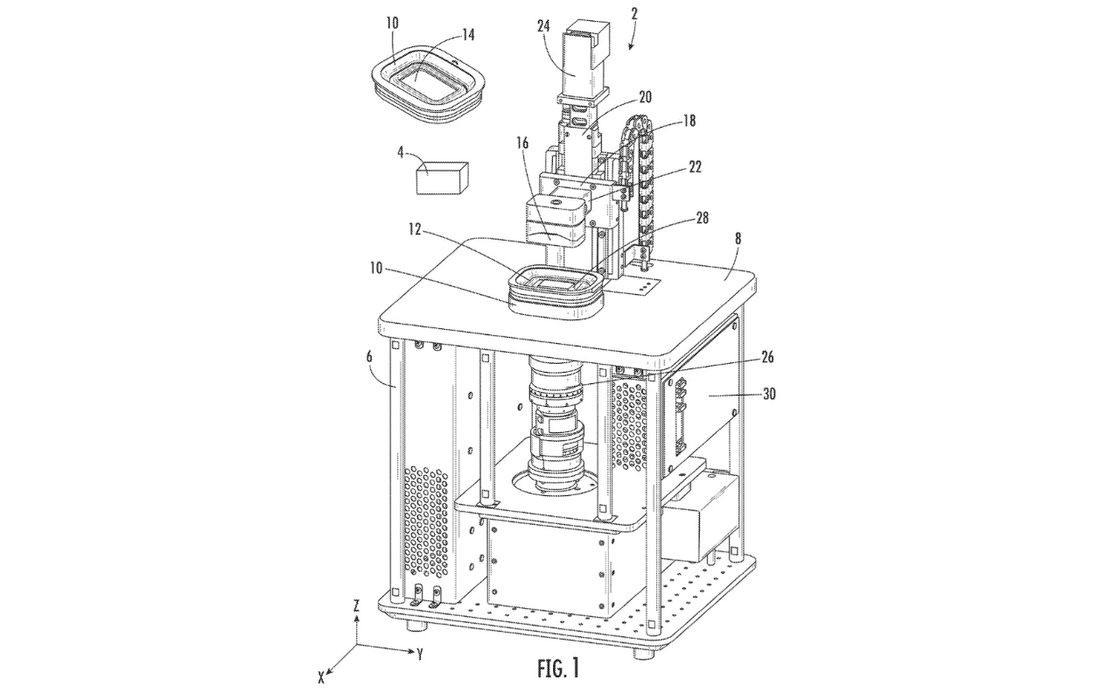
US20260233459A1, published on August 13, describes a system that looks somewhat like an inverted SLA or DLP machine. There is a transparent sheet beneath the resin, a build platform above it, and a light engine projecting through the transparent window.
The interesting bit is what happens while each layer is being exposed.
Instead of stopping the build platform, projecting an entire conventional horizontal layer, separating it from the transparent window and then repositioning everything for the next exposure as is usually done, 3D Systems proposes printing deliberately sloped layers.
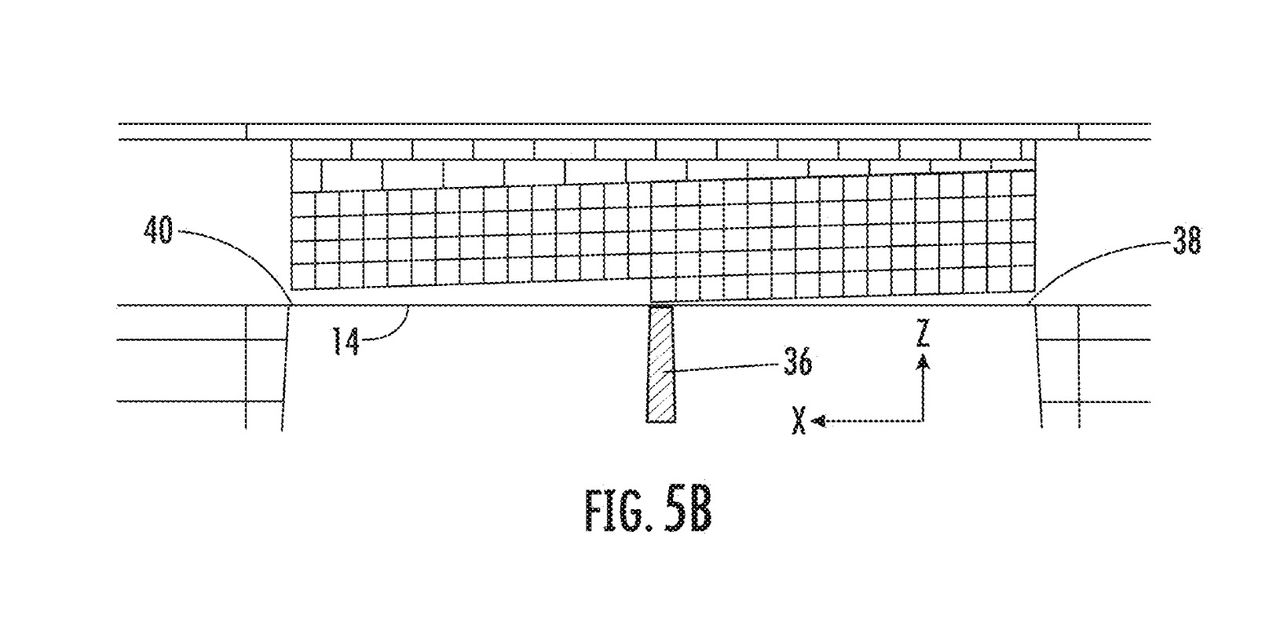
The underside of the growing part is angled relative to the normal horizontal build plane. A narrow column of pixels is projected through the window and scanned across the part while the build platen simultaneously rises.
In other words, exposure and Z motion happen at the same time!
Why Print Sloped Layers?
The patent identifies resin replenishment as one of the problems with conventional bottom up resin systems. That’s very true: today’s resin systems often have to wait for resin to reflow into position for subsequent layers. That slows down jobs considerably.
After curing a layer close to the transparent window, the machine normally has to create enough space for fresh resin to flow beneath the part. Depending on the printer architecture, that can involve peeling, lifting, pumping or other mechanical steps.
Those steps take up a lot of time and can generate considerable mechanical forces on the freshly printed part.
The sloped geometry changes that situation. As the illuminated column sweeps across the build area and the platform rises, the cured material progressively creates a gap behind the exposure zone. Fresh photopolymer resin can flow into that space without requiring a separate large repositioning movement.
3D Systems specifically says this can eliminate a separate pumping action or repeated horizontal surface lifting between layers. The company also suggests the approach could form layers more rapidly while reducing vertical forces between the part and transparent sheet.
Resin printing speed is most often limited by mechanics and resin movement instead of how quickly photons can cure material.
The light source described in the patent can use a digital micromirror device with an array containing at least one million controllable mirrors. However, only a narrow column or group of columns needs to be illuminated during the scan.
The patent even proposes using several separated columnar beams simultaneously. If three beams were used, for example, each would travel only about one third of the build width, potentially shortening exposure time considerably.
Part Of Something Bigger?
There is another interesting aspect here: the patent reads more like a piece of a printer architecture than a specific printer feature.
The patent covers the resin container, transparent membrane, moving build platform, projection light engine, controller and synchronized exposure motion. It also describes methods for initially creating the required sloped build surface before normal printing begins.
That suggests 3D Systems may be exploring a resin platform built around continuous or near continuous synchronized motion, rather than merely adding a new exposure strategy to an existing machine.
The filing also claims priority to two 2025 provisional applications carrying the same “fabricate sloped layers” concept, suggesting the company has been developing the idea for some time.
There are plenty of unanswered questions here, of course. But the objective seems clear: remove some of the mechanical waiting that slows bottom up resin printing.
If 3D Systems is assembling several patents around this general architecture, this one could eventually make considerably more sense as one component of a future resin platform.
Via Espacenet
https://worldwide.espacenet.com/
