
Charles Goulding and Lia Palumbo explore how increasing wildfire smoke and air quality concerns are driving innovation in filtration technologies. As demand for high-performance filtration grows, companies are investing in advanced materials, additive manufacturing, and research and development to improve advanced filtration systems.
Why Filtration Matters Now
Recent Canadian wildfires have significantly affected air quality across major cities in the United Stated, raising concerns about prolonged exposure to PM2.5 particulate matter. Prolonged hot, dry weather has contributed to increasingly severe wildfire seasons across eastern Canada, allowing smoke to travel hundreds and even thousands of miles into the United States. As a result, smoke events are no longer geographically isolated, with changing wind patterns transporting pollution for hundreds and thousands of miles.
Wildfire smoke contains large concentrations of PM2.5, microscopic particles measuring 2.5 micrometers or smaller that remain suspended in the air for extended periods. Because of their size, these particles can penetrate our respiratory system and even enter the bloodstream, increasing the risk of local damage and systematic harm. Unlike traditional dust collection systems, which are designed to capture larger airborne particles, wildfire smoke requires filtration technologies capable of removing extremely fine particulate matter while maintaining airflow and energy efficiency.
These frequent smoke events have also shifted attention toward indoor air quality. Public health agencies now recommend staying indoors and using air filtration during periods of poor air quality. As a result, homeowners, commercial building operators, and manufacturers are reevaluating the performance of their ventilation and filtration systems. This growing awareness is driving demand for advanced filtration technologies capable of addressing both everyday airborne contaminants and prolonged smoke exposure.
Specialized Filtration
The growing demand for filtration is also increasing the complexity of filtration system design. Different industries require filters engineered for unique operating environments, creating opportunities for specialized materials, advanced manufacturing methods, and application-specific designs.
| Industry | Filtration Need |
| Healthcare | Infection control and sterile environments |
| Pharmaceuticals | Ultra-clean manufacturing conditions |
| Data centers | Particle control and equipment protection |
| Nuclear | Extreme reliability and hazardous particle capture |
| Residential | PM2.5 and allergen removal |
| Industrial | Chemical and emissions control |
As filtration requirements become more specialized, manufacturers are investing in new materials, improved filter media, and innovative manufacturing techniques. Filtration is increasingly becoming a critical technology sector, driving research and development in materials science, airflow optimization, and additive manufacturing.
Parker + Filtration Group: A New Filtration Innovation Platform
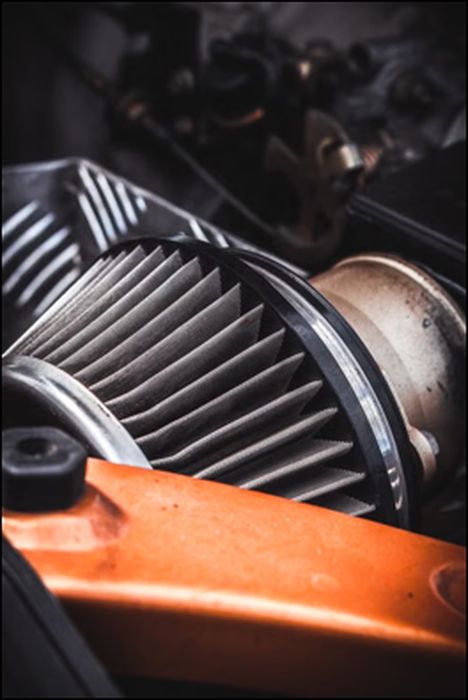
In our previous article, we explored how Parker Hannifin’s acquisition of Filtration Group positioned the company to combine its additive manufacturing expertise with one of the industry’s largest filtration ranges. As demand for advanced filtration continues to grow, that acquisition is becoming increasingly relevant.
Parker Hannifin has long specialized in pumps, valves, hoses, hydraulic systems, and aerospace components. In 2017, the company opened its Additive Manufacturing and Collaborative Robotics Center, demonstrating a long-term commitment to advanced manufacturing and product development. During the same year, Parker acquired CLARCOR Inc. for approximately US$4.3 billion, doubling the size of its filtration business while expanding into industrial, engine, hydraulic, and air filtration markets. The acquisition also strengthened Parker’s recurring aftermarket business through replacement filters, creating a stable source of long-term revenue.
Building on that success, Parker announced its $9.25 billion acquisition of Filtration Group Corporation in 2025, further establishing filtration as one of the company’s primary growth platforms.
Filtration Group operates several specialized filtration brands that serve industries where air quality, contamination control, and reliability are critical. For example, Chemco manufactures filtration systems for spray booths used throughout the aerospace, automotive, and industrial sectors, helping improve air quality while protecting employees and finished products. The company’s Indoor Air Quality division supplies filtration solutions for hospitals, pharmaceutical manufacturing, clean rooms, laboratories, and microelectronics facilities where maintaining sterile environments is essential.
The acquisition also provides strategic advantages beyond expanding Parker’s product portfolio. The combined business is expected to generate approximately US$2 billion in additional annual revenue, increase Parker’s exposure to high-growth markets such as life sciences, HVAC, and industrial filtration, deriving nearly 85% of filtration revenue from recurring aftermarket products. Parker also anticipates about US$220 million in annual cost synergies as the two organizations become integrated. The acquisition highlights the increasing importance of filtration technologies across industries where performance, reliability, and innovation are essential. This focus on advancement is also reflected in the industry’s continued investment in research and development.
| Filtration Companies | ||||
| Book per Capita R&D Expenses | ||||
| Company | Year | R&D Expenses | Number of Employees | R&D Expenses per Employee |
| Danaher | 2025 | 1,598,000,000 | 60,000 | $ 26,633 |
| 2024 | 1,584,000,000 | 63,000 | $ 25,143 | |
| 2023 | 1,503,000,000 | 63,000 | $ 23,857 | |
| 2022 | 1,745,000,000 | 81,000 | $ 21,543 | |
| Parker-Hannifin Corp. | 2025 | 240,000,000 | 57,950 | $ 4,142 |
| 2024 | 253,000,000 | 61,120 | $ 4,139 | |
| 2023 | 258,000,000 | 62,730 | $ 4,113 | |
| 2022 | 191,000,000 | 55,090 | $ 3,467 | |
| Pentair PLC | 2025 | 95,900,000 | 9,000 | $ 10,656 |
| 2024 | 94,000,000 | 9,750 | $ 9,641 | |
| 2023 | 100,000,000 | 10,500 | $ 9,524 | |
| 2022 | 92,000,000 | 11,250 | $ 8,178 | |
| Curtiss Wright Corp. | 2025 | 95,000,000 | 8,600 | $ 11,047 |
| 2024 | 92,000,000 | 9,100 | $ 10,110 | |
| 2023 | 86,000,000 | 8,600 | $ 10,000 | |
| 2022 | 81,000,000 | 8,100 | $ 10,000 | |
R&D investment among leading filtration companies demonstrates the industry’s focus on developing more advanced filtration solutions. As air quality challenges become more complex, manufacturers are allocating resources toward materials, product testing, and engineering improvements that can enhance filtration performance.
Today’s Air Quality and Filtration Demands
Wildfire smoke is changing how filtration systems are designed and evaluated. In the past, many HVAC and industrial filtration systems were engineered primarily to remove dust, pollen, or manufacturing byproducts. Today, they must also perform during prolonged smoke events, where fine particulate matter can remain suspended in the atmosphere for days and infiltrate buildings hundreds of miles from the source.
For manufacturers, the challenge extends beyond simply meeting existing filtration standards. Modern filtration systems are expected to capture increasingly smaller particles while maintaining airflow, minimizing pressure drop, reducing energy consumption, and extending filter service life. At the same time, industries such as healthcare, pharmaceuticals, biotechnology, nuclear power, and advanced manufacturing each require application-specific filtration systems designed to meet different operating conditions.
These evolving requirements are placing greater emphasis on rapid product development and engineering innovation. Manufacturers must be able to evaluate new designs quickly, optimize airflow, and improve filtration performance while minimizing development costs and time to market.
The Role of Additive Manufacturing in Filtration
As filtration requirements become more demanding, manufacturers are increasingly adopting additive manufacturing to accelerate product development and create more specialized filtration solutions. Unlike conventional manufacturing processes that require dedicated tooling and long lead times, additive manufacturing enables engineers to rapidly prototype, test, and refine complex filtration components directly from digital models.
This design flexibility allows engineers to optimize airflow, reduce pressure drop, increase structural performance, and develop application-specific filtration systems that would be difficult or impractical to manufacture using traditional methods. Faster design iterations also reduce material waste and shorten development cycles, allowing manufacturers to respond more quickly to evolving environmental challenges such as prolonged wildfire smoke exposure. For filtration manufacturers, additive manufacturing is not replacing conventional production methods. Instead, it is becoming an important research and development tool, allowing engineers to evaluate multiple design concepts before committing to production tooling.
Parker’s Additive Manufacturing Approach
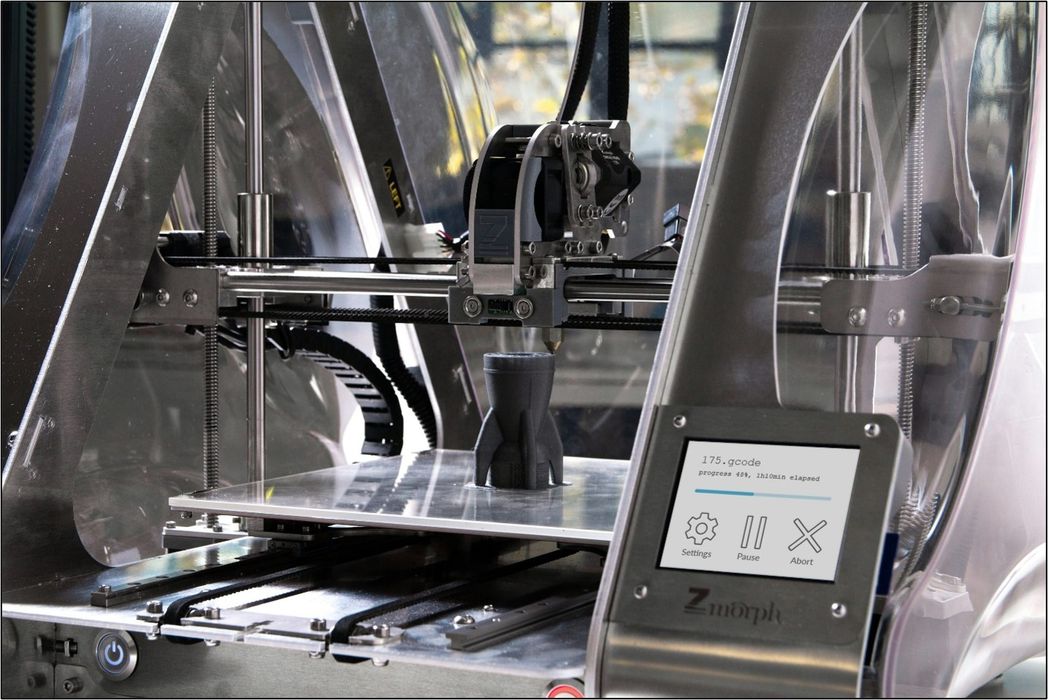
Parker has already invested in the infrastructure needed to rapidly develop and evaluate new products, including filtration technologies. At the company’s Additive Manufacturing and Collaborative Robotics Center, engineers can modify CAD models, print functional prototypes, evaluate airflow characteristics, and refine designs in a matter of days rather than weeks.
One example is Parker’s use of stereolithography (SLA) 3D printing with high-temperature resins to develop filtration components capable of operating under demanding conditions. Rather than machining aluminum prototypes for every design revision, engineers can produce functional polymer prototypes overnight, evaluate their performance, modify the CAD model, and begin testing an improved design the following day.
Traditional product development often follows a lengthy process:
CAD Model → Machine Aluminum Prototype → Wait Several Weeks → Test → Redesign → Machine Another Prototype
Each iteration requires new material, CNC programming, machining time, and engineering resources.
With SLA additive manufacturing, the process becomes:
CAD Model → Print Overnight → Test → Revise CAD → Print Again → Retest
By eliminating tooling and significantly reducing prototype costs, engineers can evaluate far more design iterations before production begins, leading to better-performing products while reducing overall development time.
Optimizing the Entire Filtration System
Although the filter media captures airborne contaminants, the surrounding housing plays an equally important role in overall filtration performance. The housing determines how air enters and exits the system, how pressure develops across the filter, and how evenly airflow is distributed over the filtration media.
Poorly designed housings can create uneven airflow, dead zones, localized filter loading, and higher-pressure losses. These conditions reduce filtration efficiency, increase energy consumption, and shorten filter service life.
This challenge becomes even more significant during wildfire smoke events. Because smoke contains extremely high concentrations of PM2.5 particles, uneven airflow can cause portions of a filter to load much faster than others, reducing overall system performance long before the entire filter has reached its capacity.
Rapid SLA prototyping allows engineers to evaluate multiple housing geometries in a short period of time, improving airflow distribution before investing in production tooling. Instead of testing only one or two concepts because of machining costs, engineering teams can evaluate numerous design iterations, identifying configurations that maximize filtration efficiency while extending filter life.
As wildfire smoke and other airborne contaminants continue to place greater demands on filtration systems, this ability to rapidly design, test, and refine products will become valuable through residential, commercial, healthcare, and industrial applications.
The Future of Additive Manufacturing in Filtration
While additive manufacturing is already improving how filtration components are designed and tested, future advancements could enable intelligent filtration systems capable of monitoring their own performance. As filters capture airborne particles, airflow resistance increases and filtration efficiency gradually declines. During wildfire smoke events, elevated PM2.5 concentrations can accelerate this process, making it more difficult to predict when a filter has reached the end of its service life.
One potential application of additive manufacturing is the integration of sensing technologies directly into filtration components. Instead of relying on predetermined maintenance schedules, embedded sensors could continuously monitor pressure differential, airflow resistance, particulate loading, and environmental conditions to evaluate filter performance. As particulate matter accumulates, the pressure difference across the filter increases, indicating that the filter is becoming loaded. At the same time, increased airflow resistance can reduce HVAC performance and increase energy consumption, while particulate loading measurements provide insight into how quickly contaminants are accumulating. Sensors measuring temperature, humidity, and airborne particle concentrations could provide additional context for predicting filter performance and remaining service life.
These capabilities could support condition-based maintenance, allowing filters to be replaced according to their actual operating condition rather than a fixed schedule. During periods of prolonged wildfire smoke exposure, intelligent filtration systems could alert facility operators when filtration efficiency begins to decline, helping maintain indoor air quality while avoiding unnecessary filter replacements.
Challenges
Although additive manufacturing offers significant advantages during product development, scaling those designs for widespread production presents challenges. Many filtration products are manufactured in large quantities, where conventional production methods remain more economical. In highly regulated industries such as healthcare, pharmaceuticals, and nuclear power, new filtration systems must undergo extensive testing before they can be implemented. As manufacturers continue investing in advanced filtration technologies, balancing innovation with production efficiency and regulatory requirements will remain an important part of manufacturing new designs.
The Research and Development Tax Credit
The Research and Development Tax Credit under IRC § 41 supports companies developing new or improved products, processes, and technologies through technical experimentation. Qualifying activities generally involve addressing technological uncertainty and improving a product’s function, performance, reliability, or quality.
For filtration manufacturers, activities such as developing new filter designs, testing materials, optimizing airflow, and validating prototype performance may represent potential R&D activities. Additive manufacturing is especially relevant because it allows engineers to quickly test complex geometries, evaluate alternative designs, and refine components before investing in production tooling.
Companies must still separate qualifying R&D from excluded activities, such as routine production, cosmetic changes, duplication of existing designs, or post-production modifications. However, as filtration technologies continue to advance, the engineering work required to design, test, and improve intelligent systems may create opportunities for R&D Tax Credit eligibility.
Conclusion
As wildfire smoke and changing air quality concerns continue to increase demand for higher-performing filtration systems, manufacturers are being pushed to reevaluate the filtration development process. The combination of advanced filtration technologies, additive manufacturing, and increased investment provides a pathway toward more efficient and specialized solutions. While challenges remain in scaling these innovations, companies investing in next-generation filtration systems may be better positioned to address the growing demands of industries where clean air and reliable performance are critical.