
Charles R. Goulding and Preeti Sulibhavi take a closer look at how Hawaii is turning its geographic challenges into technological opportunities as entrepreneurs pursue ambitious startups, advanced manufacturing and the elusive billion-dollar unicorn valuation.
Hawaii is famous for beaches, tourism and its strategic military position, but a different kind of activity is beginning to reshape the islands: startups. A recent Wall Street Journal article by Owen Tucker-Smith described a growing group of engineers and entrepreneurs attempting to build new technology and manufacturing businesses in Hawaii, with the goal of creating higher-paying jobs and giving young residents a reason to stay.
The trend is particularly interesting for the 3D printing industry because several of these companies are developing physical products rather than purely digital businesses. Hawaii’s emerging startup economy is beginning to connect advanced manufacturing, aerospace, ocean technology, defense and climate technology, creating an environment where additive manufacturing can become a practical production tool.
Hawaii’s Traditional Economy Versus Its Emerging Startup Economy
Hawaii’s economy remains heavily concentrated in several established industries. The state’s latest detailed industry employment data shows that government was the largest employment sector in 2022, with approximately 120,800 jobs, followed by health care and social assistance with 72,400 and retail trade with 64,900. Food services and drinking places accounted for another 63,500 jobs, demonstrating the enormous employment footprint of tourism-related activity.
The sales figures tell a similar story. According to the U.S. Census Bureau’s 2022 Economic Census, Hawaii’s retail sector generated approximately US$30.7 billion in sales, while accommodation and food services generated US$12.8 billion and health care and social assistance generated approximately US$12.1 billion in receipts and revenue.
These figures provide a useful baseline for understanding what Hawaii is trying to change. The state does not need to eliminate tourism, retail or health care. Instead, policymakers and entrepreneurs are attempting to add a higher-wage technology layer to the economy.
Normal Shows What a Hawaii Technology Startup Can Look Like
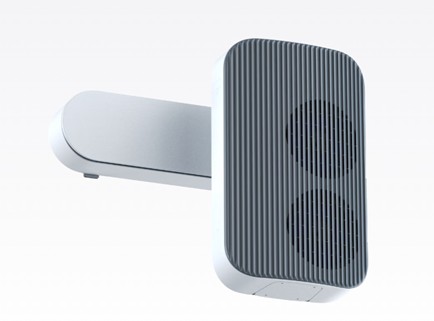
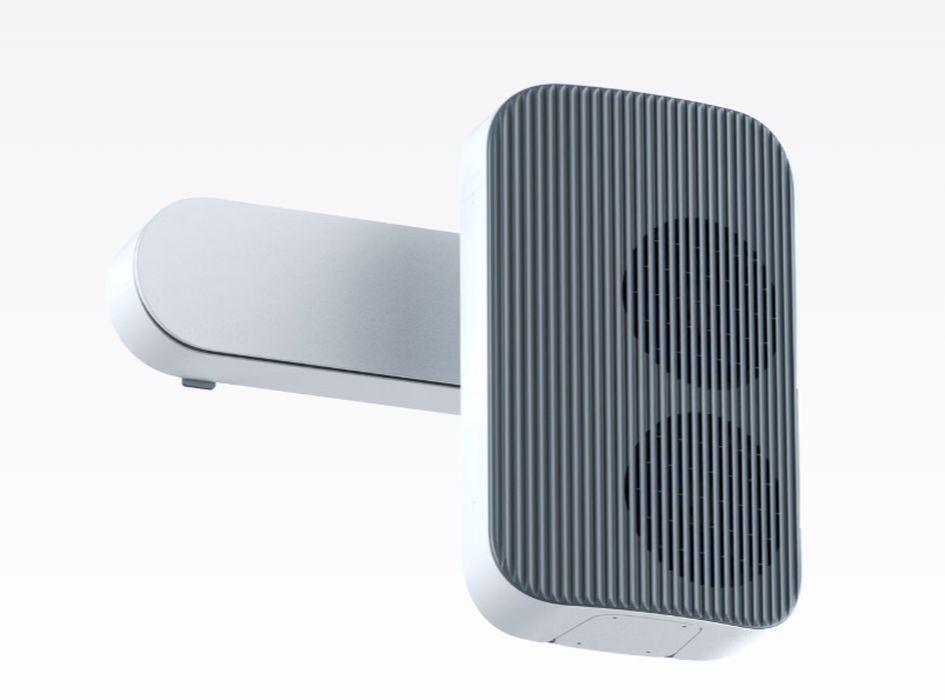
One of the most interesting companies highlighted by Tucker-Smith is Normal Corp., an engineering startup developing the Airform, a new approach to heating and cooling.
Normal is working on a particularly relevant problem. Hawaii has high electricity costs, a warm climate and a strong need for efficient cooling. Rather than simply making another conventional air conditioner, Normal is attempting to rethink the architecture of the heat pump in common HVAC systems.
Its Airform system moves heat between indoor and outdoor units using water rather than refrigerant lines. The company describes the system as designed specifically for difficult environments such as Hawaii, where humidity, salt, sunlight and expensive electricity create demanding operating conditions.
The company reportedly has about 20 employees, an unusually concentrated group of engineers for such a young company. It is also venture-backed, with approximately US$12 million raised.
Normal’s story (now called Airform One) connects directly with a long-running theme in the current climate change environment. You can never have enough HVAC.
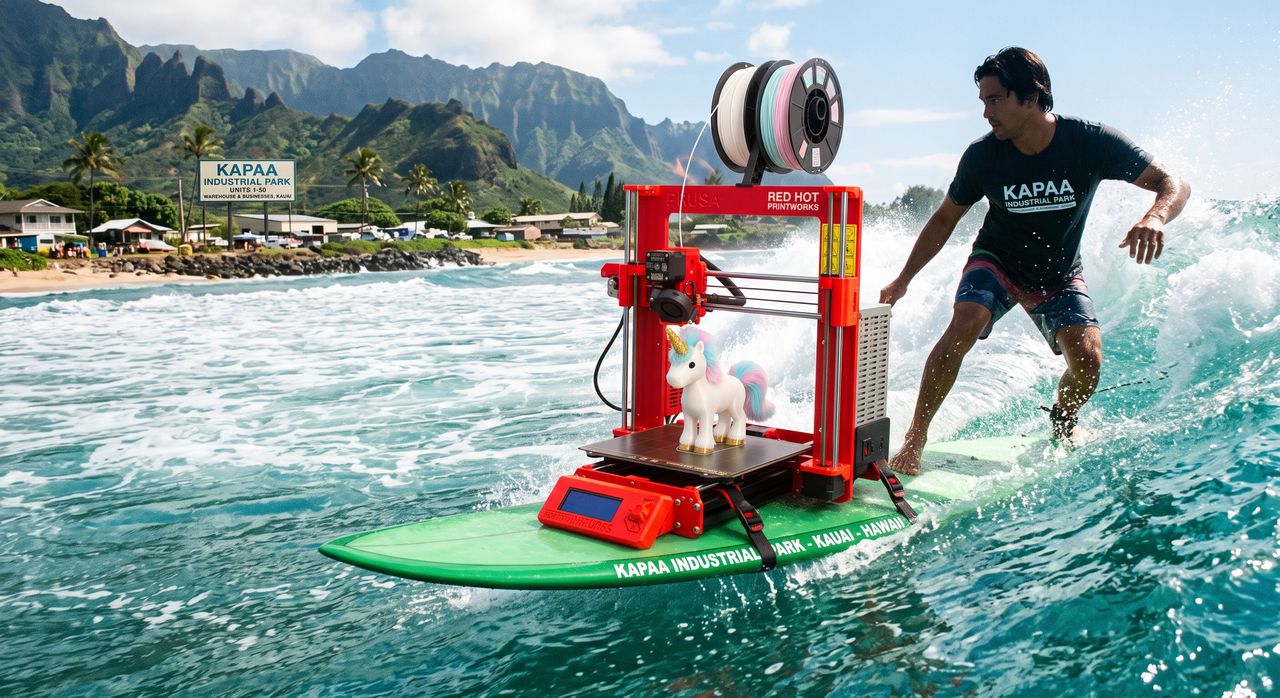
Kapā’a Industrial Park Becomes a Manufacturing Testbed
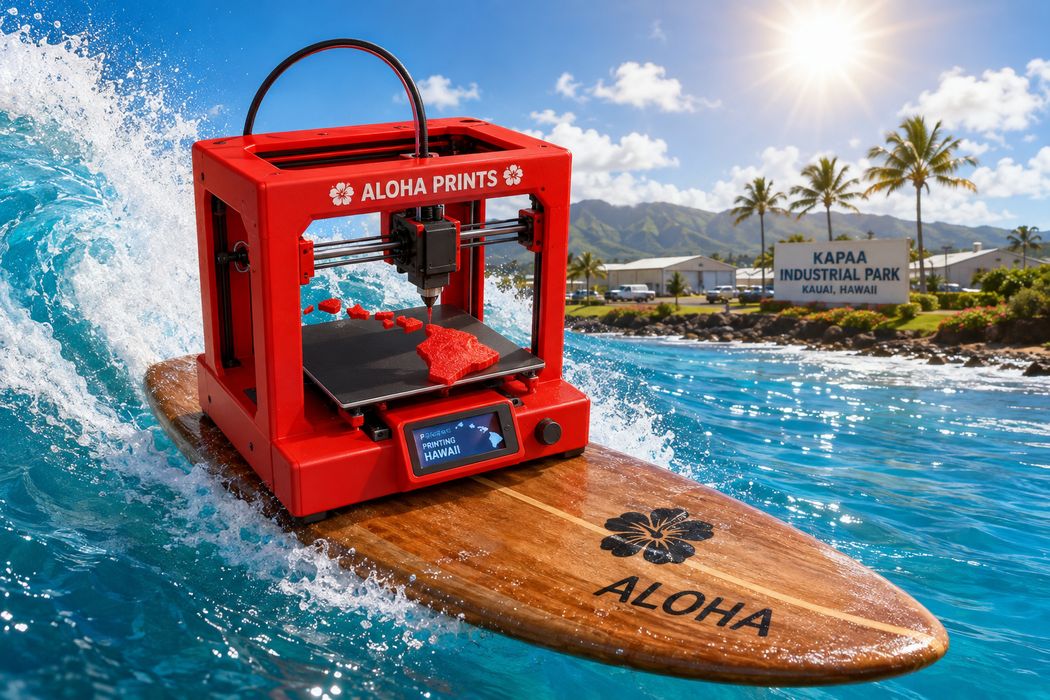
The physical infrastructure required to support these companies is just as important as the technology itself. Hawaii has a severe shortage of industrial space. HTDC’s 2026 Kapā’a Industrial Pilot Project identified a 1.3% light-industrial vacancy rate, making conventional commercial leases particularly difficult for early-stage companies.
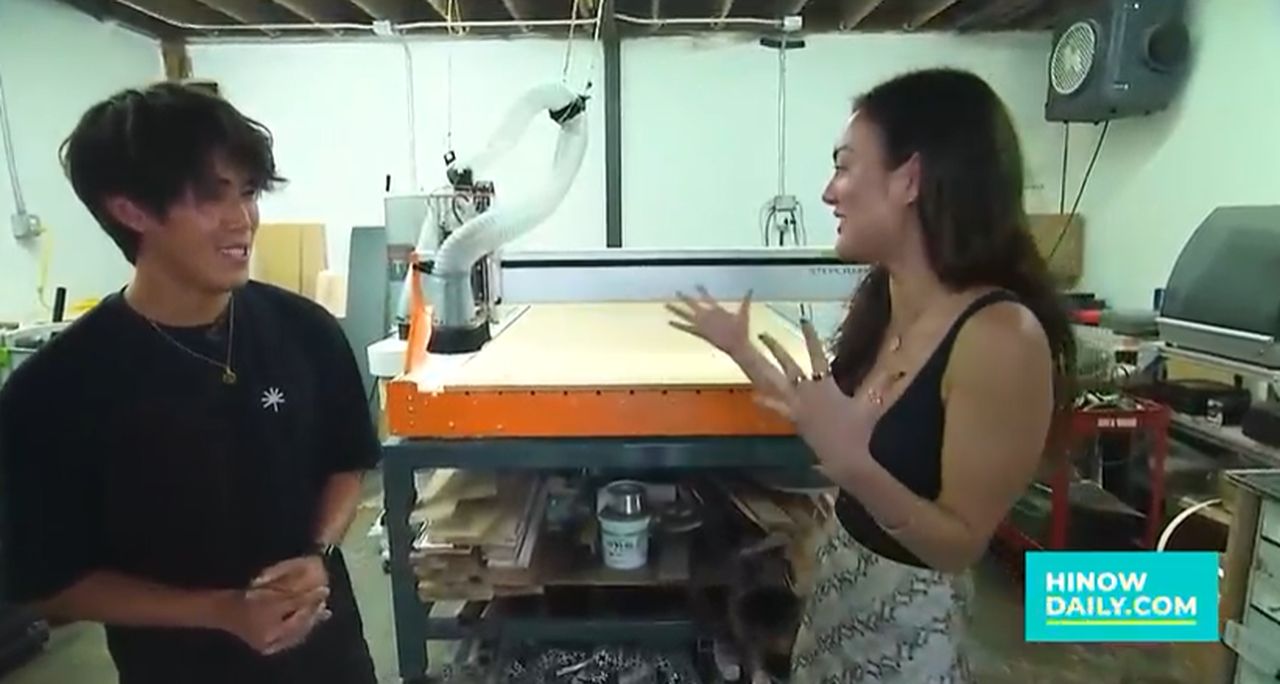
HTDC proposed leasing approximately 9,000 to 10,000 square feet at Kapā’a Quarry in Kailua and subleasing the space to emerging technology companies. The planned facility includes approximately 2,000 square feet dedicated to 3D printing and additive manufacturing, along with assembly areas, electronics space, storage and offices. The proposed lease commitment is approximately US$1.12 million over three years.
The planned tenants illustrate the diversity of Hawaii’s new technology economy. Hawaii Ocean Power Systems, or HOPS, needs manufacturing space for buoy production associated with its Coastal Trident pilot. Pacific Impact Zone is focused on connecting technology companies with Indo-Pacific defense opportunities. Other participants include companies working on advanced manufacturing, coral settlement modules and large-format 3D printing. Four anchor companies were expected to represent approximately 30 to 50 jobs.
Makai Ocean Engineering is another important example of Hawaii’s ocean technology capabilities. Founded in 1973, the company develops ocean engineering systems involving renewable energy, seawater air conditioning, submarine cables, pipelines, robotics, sensors and marine structures.
Florida has been experiencing a similar industrial park trend. We previously covered The St. Pete Innovation District (SPID), which was established in 2016. At that time, membership exceeded 30 organizations within the Life Science, Marine Science, Education, Data Analytics, Art and Technology sectors. Many of these institutions are within a designated boundary of the District, while others are engaged from throughout the region and nation. Specifically, we covered ARK’s move to the district in 2021.
The Unicorn Dream
There is another reason Hawaii’s startup activity matters beyond the number of jobs created today. Entrepreneurs and state officials are hoping that one of these companies eventually becomes a unicorn.
A unicorn is a privately held, venture-backed startup with a valuation of at least US$1 billion. The term was coined because such companies were once extraordinarily rare. Today, more than 1,300 unicorns exist globally, although reaching the US$1 billion threshold remains a major milestone.
Silicon Valley provides the classic examples. Companies such as Airbnb, Facebook and Google passed through the unicorn stage before becoming public companies or otherwise graduating from the category.
The same phenomenon has occurred in 3D printing. We previously examined companies including Formlabs, Carbon and Desktop Metal in “3D Printing Unicorns: International Business and Tax Planning.” At the time, Carbon was pursuing a valuation of approximately US$2.5 billion, while Desktop Metal had reached approximately US$1.5 billion.
The Research and Development (R&D) Tax Credit
Our discussion of Kapā’a Industrial Park highlights a practical opportunity for Hawaii-based hardware and manufacturing startups. The planned facility is expected to include approximately 2,000 square feet dedicated to 3D printing and additive manufacturing, along with assembly, electronics, storage, and office space. That matters because several Hawaii startups are developing physical products, not just software, including companies working on advanced manufacturing, coral settlement modules, large-format 3D printing, and buoy production for Hawaii Ocean Power Systems.
These activities may create strong fact patterns for the IRC §41 R&D tax credit. Qualifying work generally must involve technological uncertainty, development of a new or improved product or process, and a process of experimentation aimed at improving function, performance, reliability, or quality. In a 3D printing environment, that can include prototyping, testing alternative designs, experimenting with materials, adjusting print parameters, refining production processes, and iterating products to meet technical performance goals. Potential qualified research expenses may include employee wages for qualified research, supplies used in the research, computer-use costs, and certain contract research costs.
This is especially valuable for startups because eligible qualified small businesses can elect to use the credit against employer payroll taxes instead of waiting until they owe income tax. For tax years beginning after 2022, the payroll R&D credit can be as much as US$500,000 per year for up to five years, subject to IRC §41(h) eligibility limits and election rules. That amounts to up to US$2,500,000 in payroll cash rebates.
R&D Tax Savers has been helping companies navigate the complexities of the R&D tax credit since it was introduced into law in 1981.
From Island Isolation to Innovation
Hawaii’s geography will always be both an advantage and a limitation. The islands are thousands of miles from the mainland, making shipping, manufacturing, recruiting and access to capital more difficult than in California or other established technology centers.
But geography also gives Hawaii unusual assets. Its position in the Pacific creates advantages for ocean research, defense, aerospace testing and space-related activity. The challenge is converting those advantages into scalable companies.
Singapore is the leading example of an island-state that metamorphosized into a top global economy.
The startup wave now emerging across Hawaii suggests that process may finally be underway. Normal is rethinking HVAC. Ocean technology companies are building equipment for the sea. Defense startups are positioning themselves near the Indo-Pacific’s largest concentration of military activity. And Kapā’a Industrial Park is creating something Hawaii has historically lacked: affordable, shared advanced-manufacturing space with dedicated capacity for 3D printing.
Hawaii does not need to become another Silicon Valley. It needs to develop its own version of the innovation ecosystem, one that takes advantage of its geography while using technology to overcome its isolation. If Hawaii can combine its growing pool of engineering talent with advanced manufacturing, additive manufacturing, ocean technology, aerospace and defense, the islands may be able to create the high-paying technology jobs that have been missing from the traditional economy.
The distance from the mainland is real. But increasingly, Hawaii’s technological ambitions are steadily closing that gap.