


Charles R. Goulding and Ari Willick examine the growing competition for Spirit Airlines’ business data and what it may tell us about the value of additive manufacturing datasets.
When a company shuts down, we normally think about the value of its buildings, equipment, inventory, intellectual property and other assets. Spirit Airlines’ bankruptcy is providing an interesting reminder that there may be another valuable asset sitting on its servers: data.
Google won an August bankruptcy auction with a US$10 million bid for a large collection of Spirit Airlines’ internal business data and software code. Google has said the enterprise dataset could help improve its products and AI models. The transaction, however, has become considerably more complicated since the auction.
AI training startup Micro1 subsequently sent Spirit’s legal team a US$12.5 million late offer, despite missing the original auction deadline. Whether the bankruptcy court will consider the higher offer remains uncertain. Spirit technology provider Springshot has also objected, claiming that some information included in the proposed sale contains intellectual property belonging to Springshot rather than Spirit. Meanwhile, the Association of Flight Attendants-CWA continues to challenge the treatment of employee data. A court hearing on the sale that was originally scheduled for August 19 has been postponed until September 9, 2026.
The growing interest raises an interesting question for the 3D printing industry. If decades of operational data from an airline can attract competing multimillion-dollar offers, what might years of additive manufacturing data be worth?
What Is Google Trying to Buy?
This is not simply an archive of old emails. Spirit accumulated a remarkably detailed digital record of how an airline operates.
The proposed package includes data such as:
- Approximately 100 million emails across about 80,000 accounts
- Approximately 500 million Microsoft Teams records
- 516 source-code repositories containing roughly 30 million lines of code, plus pull requests, commit histories and software testing information
- More than 763,000 flight records and approximately five million crew pairings
- Approximately 7.25 billion competitor-flight pricing observations
- More than 7.5 billion passenger transactions
- Millions of payroll records along with employee training and workplace information
Most customer-facing personal information is excluded. That includes approximately 97.5 million passenger profiles and an estimated 50.2 million Free Spirit loyalty records. Google has said that the information it receives will first be rigorously stripped of personally identifiable information by a third party.
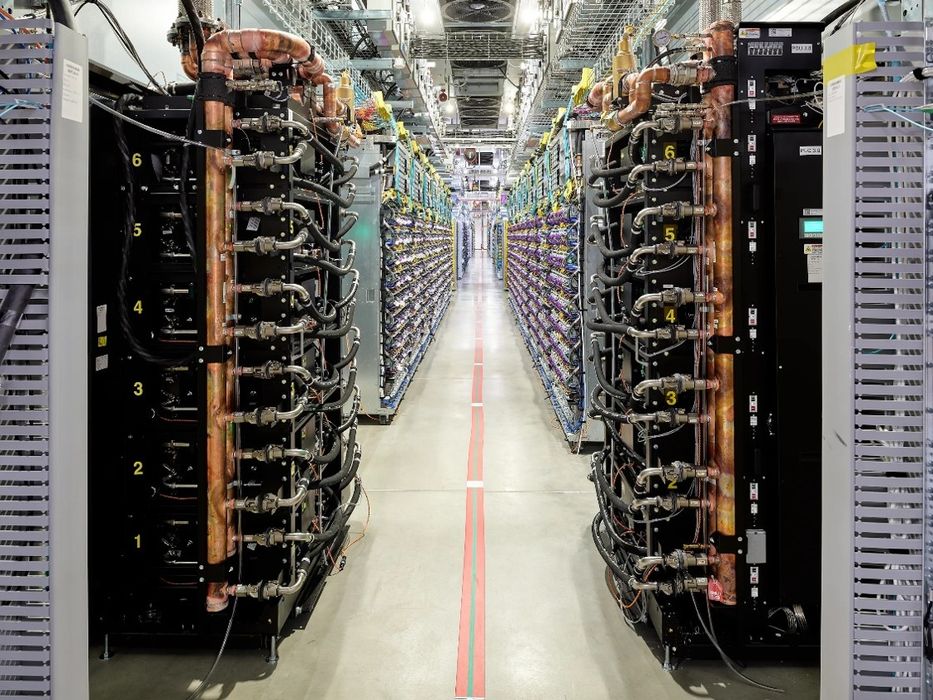
The real value may be in the combination of these records. Together, they can document how a real organization communicated, developed software, scheduled employees, priced services, handled disruptions, maintained equipment and made business decisions.
That information can be difficult to reproduce artificially.
Recent reporting from TIME helps explain the value. Unlike software code, much of the information showing how employees collaborate, solve problems and move work through a business remains inside private corporate systems. Enterprise records can therefore provide AI developers with real-world examples that synthetic environments may not fully reproduce.
We have previously discussed the increasing importance of databases to additive manufacturing. Trade information, supply-chain analytics, digital twins and other databases can help 3D printing companies identify opportunities and improve operations. The Spirit transaction takes that concept a step further. The accumulated data itself can become a corporate asset.
The Privacy Problem: Employee Data
The Association of Flight Attendants-CWA, which represented Spirit cabin crew, has objected to the treatment of employee information.
The union argues that removing names and other obvious identifiers does not necessarily remove the confidential nature of disciplinary records, training deficiencies, payroll information, accommodation requests and internal communications. It is particularly concerned because relationships between records can remain intact after deidentification. That makes the dataset more useful analytically, but may also make employees easier to infer from context.
Those same relationships help explain why the information could be useful. Airlines operate in a regulated, unionized environment where employee scheduling, training, safety requirements, labor agreements and operational disruptions frequently intersect. Data showing how a real organization navigated those constraints could potentially help companies develop workforce-management, scheduling, compliance and decision-support systems for other regulated businesses. Google has not said it intends to use the Spirit data for these specific purposes, but the example illustrates why operational records can retain substantial analytical value.
Recent interviews with former Spirit employees make this issue more concrete. Former flight attendants told WIRED magazine that work emails and Microsoft files could contain highly sensitive personal and medical information provided during the ordinary course of employment. The union wants either flight-attendant information removed from the sale or employee information given additional protections.
The issue illustrates a fundamental tension in valuable enterprise data. Connecting records can make a dataset more useful, but those same connections can complicate efforts to make the information truly anonymous.
The Ownership Problem: Third-Party Data
Springshot, a digital logistics and aviation operations technology company that worked with Spirit, filed a limited objection on August 21. Springshot contends that parts of the proposed data package include proprietary intellectual property it owns pursuant to its software relationship with Spirit.
That introduces a different question from employee privacy: who actually owns all of the information that a company accumulates?
Modern additive manufacturing can involve printer manufacturers, software providers, material suppliers, inspection systems and the company producing the part. If the resulting data becomes valuable, determining who owns it may become increasingly important.
3D Printing Generates Valuable Data Too
Additive manufacturing produces exactly the type of rich, interconnected data that could become increasingly useful for AI.
A sophisticated metal 3D printing operation may accumulate CAD files, material properties, machine parameters, scan paths, sensor readings, layer images, machine-health information, CT scans, mechanical testing results, defect records and post-processing information. Over thousands of builds, that information can connect an input, such as a material or machine setting, with what happened during production and how the finished part ultimately performed.
Oak Ridge National Laboratory (ORNL) provides an excellent example.
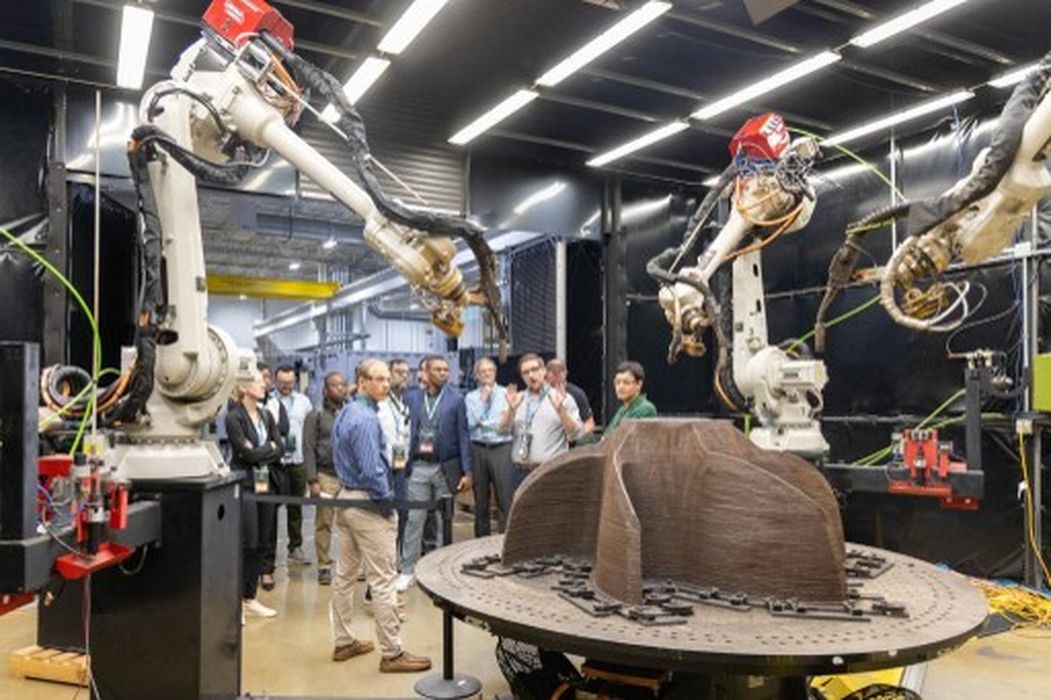
We have followed ORNL’s extensive additive manufacturing work for years. In our article, “Powering Tomorrow: How TVA and ORNL Are Rewriting the Rules of Nuclear Energy,” we examined how the laboratory has developed repeatable additive manufacturing processes and generated the qualification data needed to move 3D printed components toward demanding applications such as nuclear energy.
That accumulated experience also illustrates just how valuable a comprehensive manufacturing dataset can become.
ORNL’s Manufacturing Demonstration Facility has accumulated extensive additive manufacturing information and makes several datasets publicly available. One 230-gigabyte dataset covers the design, printing and testing of five sets of laser powder bed fusion parts. Researchers can access machine-health sensor data, laser scan paths, approximately 30,000 powder-bed images and 6,300 tensile-strength tests. ORNL specifically says these datasets can be used to train machine-learning models that improve part-quality assessment.
ORNL’s Peregrine AI system demonstrates how that information can become useful. Peregrine analyzes additive manufacturing data to detect anomalies and help evaluate part quality and performance. ORNL describes Peregrine as its most licensed AI software, and a 2025 ORNL report indicates that it had been licensed 43 times by the end of that year.
Siemens Energy Has Already Commercialized AM Data
Siemens Energy developed extensive additive manufacturing databases for its own internal purposes and later decided to make some of that information commercially available through Senvol.
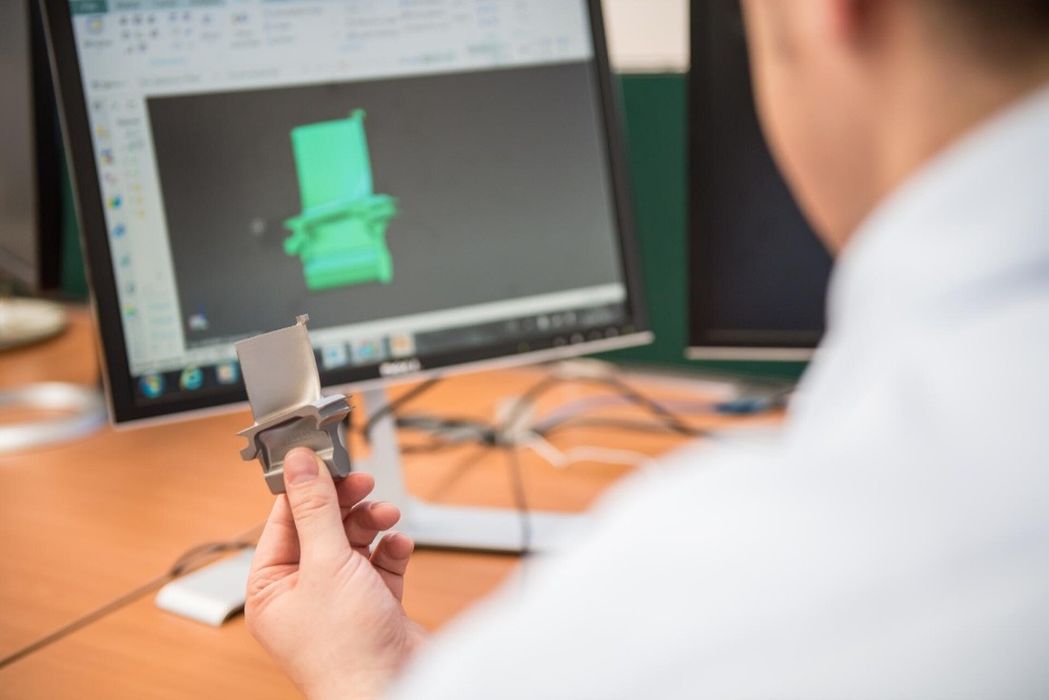
The initial databases cover Ti64, Inconel 625 and Inconel 718 generated using Siemens Energy laser powder bed fusion machines. They contain information from hundreds of specimens across dozens of tests, including tensile testing, low-cycle fatigue, high-cycle fatigue and creep testing, often under multiple temperature conditions. Senvol makes each dataset separately available through its Senvol Indexes product line. Senvol noted that datasets of this size and pedigree are normally treated as proprietary and that comparable information could take months for another organization to develop.
Siemens Energy produced this information because it needed to understand and qualify its own manufacturing processes. Only later did some of that accumulated knowledge become a product available to other organizations.
Qualification data is particularly valuable in metal additive manufacturing. In our interview “3D Printing for the Metals Industry: A Conversation with Sarah Jordan,” Jordan identified having enough qualification data to demonstrate safe, reliable and consistent material properties as a key challenge for broader metal AM adoption. Generating that evidence requires printers, materials, engineering labor, testing equipment and, importantly, time.
3DEO Brings the Data Question Back to Asset Sales
A recent development at metal additive manufacturing company 3DEO provides an even closer comparison to Spirit.
3DEO entered an Assignment for the Benefit of Creditors under California law. Its remaining Torrance factory equipment was auctioned separately, while substantially all of its intellectual property, together with certain machinery and equipment, was subject to a US$3,426,507 stalking-horse bid. That package includes software, trade secrets, manufacturing knowledge and materials data, including information about printing and sintering conditions, part shrinkage and finished properties for several metals.
That information was developed through years of operating 3DEO’s proprietary Intelligent Layering process at production scale. 3DEO itself has described collecting data across its manufacturing processes and products to monitor and control production.
It is not possible to separate the value of the data from the machinery and other intellectual property included in the US$3.426 million bid. Still, its inclusion is significant. A buyer would not simply be acquiring a printing technology. It could also receive years of accumulated knowledge about how to make that technology work consistently.
The Data May Be Worth More Than Companies Realize
Spirit’s bankruptcy should cause manufacturers to think differently about the information accumulating inside their organizations.
A company that has operated additive manufacturing equipment for ten years may possess thousands of build records connecting geometry, materials, machine settings, sensor measurements, defects, inspection results and final performance. Another company could reproduce much of that information, but doing so could require years of printing and testing. That difficulty helps make the data potentially valuable.
Spirit Airlines accumulated its records because it was operating an airline, not because it expected AI companies to compete for them someday. Additive manufacturing companies may be accumulating a similarly valuable asset one build at a time.
The Research & Development Tax Credit
Companies using these datasets to develop new or improved AI or additive manufacturing technologies may also qualify for the federal Research & Development Tax Credit. To qualify, the underlying research must satisfy the four-part test.
- Permitted Purpose: An AI company could use enterprise data to improve model performance or reliability, while an additive manufacturing company could use build data to improve part quality, process reliability or defect-detection software.
- Technological in Nature: Developing AI models from large datasets can rely on computer science and mathematics, while analyzing additive manufacturing data may rely on engineering, materials science and computer science.
- Eliminate Technological Uncertainty: Companies may initially be uncertain which model architecture, training method, data inputs or manufacturing parameters will achieve the desired result.
- Process of Experimentation: This could include training and comparing alternative models, changing feature sets and algorithms, testing different printing parameters, or comparing predicted defects with inspection and mechanical testing results.
When these requirements are met, qualifying expenses may include wages for employees performing or directly supporting the research, certain supplies and eligible contract research expenses. Simply buying or analyzing an existing dataset does not by itself qualify. The credit relates to the technological experimentation performed using that information. Software developed primarily for internal use can also be subject to additional requirements under Section 41.
R&D Tax Savers has been helping companies navigate the complexities of the R&D tax credit since it was introduced into law in 1981.
Conclusion
Operational data can have value independent of the business activity that originally created it.
For 3D printing companies, that value may be particularly significant because years of machine, material and qualification data can be expensive and time-consuming to reproduce. ORNL demonstrates the technical usefulness of comprehensive additive manufacturing datasets, Siemens Energy and Senvol show that manufacturing data can be packaged and commercialized, and 3DEO illustrates how accumulated process knowledge and materials data can retain value even when a manufacturing business is broken apart.
The next valuable product from a 3D printing company may not necessarily come out of the printer. It may already be sitting in the database.