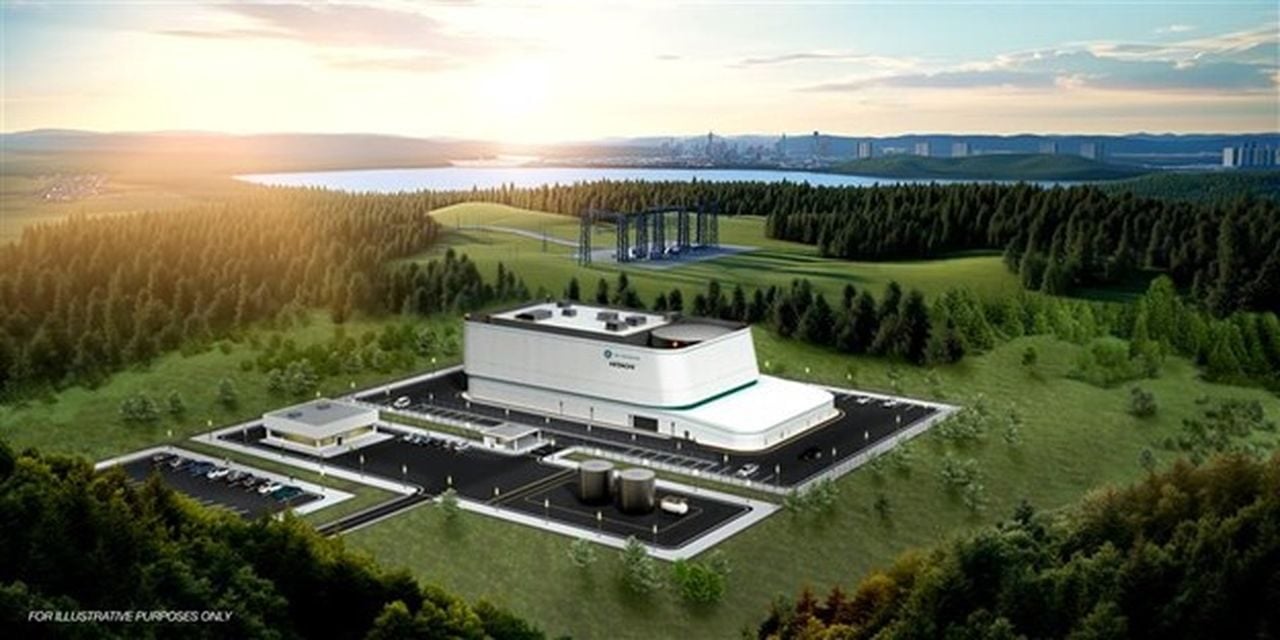
Charles R. Goulding and Nimra Shakoor explain how from the Manhattan Project to molten-salt reactors, TVA and ORNL are redefining what nuclear innovation looks like in the 21st century.
Tennessee Valley Authority (TVA) is making bold moves in nuclear energy, embracing small modular and advanced reactors. Its long-standing partnership with Oak Ridge National Laboratory (ORNL), which has pioneered 3D printing for nuclear components, positions TVA to leverage additive manufacturing expertise to accelerate the production of complex reactor parts. TVA has signed agreements to deploy NuScale SMRs through ENTRA1 Energy and to purchase power from Kairos Power’s advanced molten-salt reactors, positioning the utility to meet growing electricity demand from data centers, industrial electrification, and decarbonization efforts—building on the region’s long-standing legacy of nuclear expertise.
From Manhattan Project to Modern SMRs
Tennessee’s nuclear roots stretch back to the Manhattan Project, which relied on three primary sites: Oak Ridge for uranium enrichment, Hanford in Washington for plutonium production, and Los Alamos in New Mexico for weapons design (Los Alamos National Laboratory). Oak Ridge required massive industrial infrastructure and a concentrated technical workforce, which later became anchored by what became Oak Ridge National Laboratory (ORNL). That early investment established a long-standing regional expertise in nuclear engineering—a foundation that TVA’s current push for SMRs builds upon.
TVA and ORNL: A Powerhouse Partnership
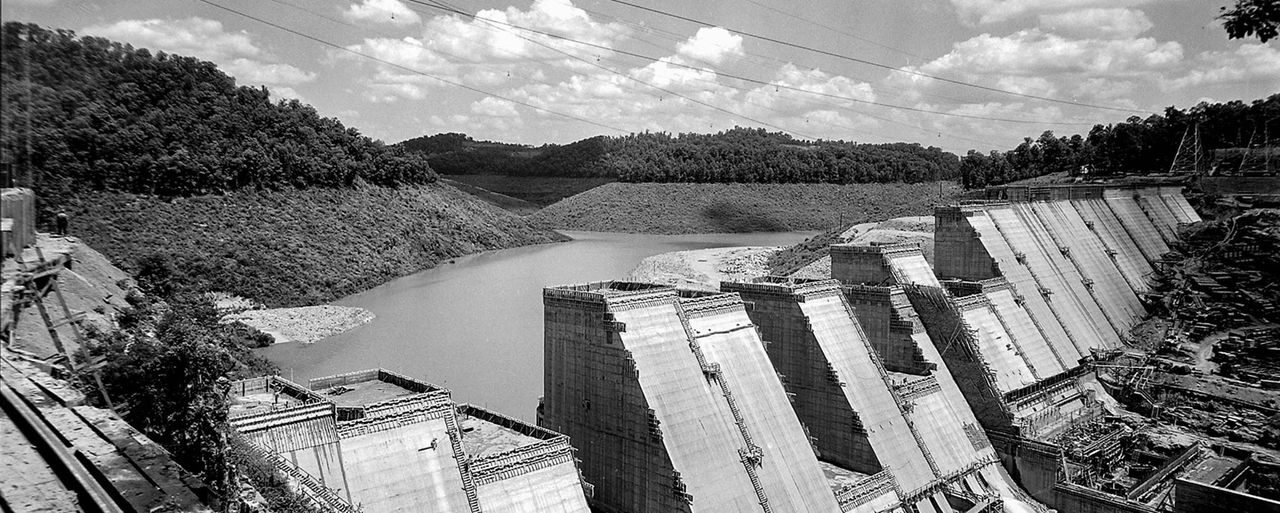
Created in 1933, TVA supplied the massive, reliable electricity that Oak Ridge’s Manhattan Project facilities and later ORNL required for uranium enrichment and pilot reactor operations (Tennessee Valley Authority). This wartime coupling of power and research laid the groundwork for a modern R&D and manufacturing partnership.
In February 2020, ORNL and TVA formalized a collaboration to evaluate advanced reactor technologies, including SMRs, and to accelerate deployment through shared research, testing, and economic studies (Oak Ridge National Laboratory). The partnership leverages ORNL’s High Flux Isotope Reactor, leadership computing, and advanced manufacturing capabilities. TVA has since targeted the Clinch River Nuclear Site for SMR deployment and, in 2025, submitted advanced licensing filings, becoming one of the first U.S. utilities to seek a commercial SMR construction permit.
Scaling Up with 3D Printing
Additive manufacturing in nuclear has evolved in three stages. Early work at ORNL focused on metal-powder control and heat-treatment paths for reactor-grade alloys. By the 2010s, researchers had developed repeatable laser and electron-beam processes and generated the data required for ASME code cases. TVA and ORNL later validated and installed some of the first 3D-printed reactor components in commercial reactors after full post-processing, nondestructive evaluation, and irradiation testing.
Current research at ORNL targets large wire-arc parts, repair of obsolete hardware, embedded sensing, and near-net-shape geometries for both advanced and small modular reactors. These techniques reduce lead times and costs for complex components, while enabling rapid prototyping and code-qualified production. Although TVA has not publicly confirmed 3D printing for its upcoming SMR projects, its experience with ORNL demonstrates that additive manufacturing could play a critical role in future SMR deployment, supporting design innovation, faster prototyping, and potentially lower-cost production of complex reactor parts.
Building the Future: TVA’s SMR Push
In September 2025, TVA signed an agreement with ENTRA1 to deploy up to 6 GW of SMRs across its service region (Utility Dive). The month before, TVA partnered with Kairos Power to purchase up to ~50 MW from a molten-salt SMR, supporting Google data centers (AP News). These agreements reflect TVA’s strategy to diversify nuclear technologies while meeting regional growth in electricity demand, decarbonization goals, and industrial electrification needs.
The Clinch River Nuclear Site remains a central focus for TVA’s SMR planning. The site has received early‑site permits, and TVA has integrated SMR development into its broader portfolio strategy. The utility is also part of a coalition seeking roughly US$800 million in federal funding through the Department of Energy to accelerate SMR deployment (Reuters).
SMRs offer several advantages over traditional large reactors. Their compact, modular design allows many components to be manufactured in factories and shipped to sites, reducing construction time and risk. Utilities can deploy capacity incrementally, matching demand growth without committing to a single, massive plant, while smaller reactors require less upfront capital, lowering financial exposure. Many SMRs incorporate passive safety systems and smaller inventories of radioactive material, enhancing operational safety. They can also support remote or regional grids and industrial facilities where large reactors would be impractical. Importantly, their smaller, more uniform components are particularly well suited to additive manufacturing, enabling rapid prototyping, complex geometries, and faster code-qualified production. By producing low-carbon baseload electricity, SMRs complement intermittent renewables, helping TVA and the region meet decarbonization goals.
These initiatives demonstrate the value of ongoing R&D in design, prototyping, and process development, setting the stage for TVA’s broader innovation strategy, including applications of 3D printing in nuclear component development.
The Research and Development Tax Credit
The now-permanent Research and Development (R&D) Tax Credit is available for companies developing new or improved products, processes, and/or software. 3D printing can help boost a company’s R&D Tax Credits. Wages for technical employees creating, testing, and revising 3D-printed prototypes can be included as a percentage of the eligible time spent on the R&D Tax Credit. Similarly, when used as a method of improving a process, time spent integrating 3D printing hardware and software counts as an eligible activity. Lastly, when used for modeling and preproduction, the costs of filaments consumed during the development process may also be recovered.
Whether it is used for creating and testing prototypes or for final production, 3D printing is a great indicator that R&D Credit-eligible activities are taking place. Companies implementing this technology at any point should consider taking advantage of R&D Tax Credits.
Pioneering the Next Generation
By combining modular reactor deployment, nuclear expertise, and additive manufacturing, TVA is positioned to scale SMRs efficiently while maintaining safety and regulatory compliance. Leveraging 3D printing and R&D-driven innovation, the utility can accelerate the production of complex reactor components, support growing energy demand from data centers and industrial infrastructure, and advance low-carbon power for the region. TVA’s approach illustrates a model for utilities integrating advanced manufacturing and modular nuclear technology to meet future energy challenges.