
Charles R. Goulding and Preeti Sulibhavi look at how Medtronic is connecting AI, mathematics, robotics and personalized medical technology, opening the door to new applications for additive manufacturing.
Medtronic has spent decades developing technologies that sit at the intersection of medicine, engineering and manufacturing. Its latest moves suggest that this convergence is becoming even more important, particularly as robotics, artificial intelligence and personalized medicine become increasingly connected.
On September 1, Medtronic announced a strategic partnership with Cornerstone Robotics, including an approximately US$700 million investment and rights to distribute Cornerstone’s Sentire surgical system in select markets outside the United States. The move expands Medtronic’s robotic-assisted surgery portfolio beyond its Hugo system and gives hospitals and surgeons another platform for different clinical and economic requirements.
For the 3D printing industry, the announcement is significant for a reason that goes beyond the robots themselves. Modern medical robotics increasingly depends on the same capabilities that have made additive manufacturing valuable: rapid prototyping, complex geometries, customized components, low-volume production and tight integration between digital design and physical hardware.
Robotics becomes a bigger part of Medtronic’s strategy
Medtronic says robotic-assisted surgery remains a relatively small part of global surgical care, with adoption still in the single digits. Its strategy is therefore aimed not simply at developing a single surgical robot, but at expanding access to robotic-assisted procedures through a broader portfolio.
The company’s Hugo Robotic-Assisted Surgery system is already being used in more than 35 countries across six continents. Medtronic expects global Hugo procedures to exceed 50,000 by the end of its fiscal year, while continuing to add software, artificial intelligence, instrumentation and other capabilities.
Cornerstone’s Sentire system adds another option. The platform received CE Mark approval in May 2026 for minimally invasive general, gynecologic, thoracic and urologic procedures, in addition to approvals in China and Singapore.
This is closely related to a trend we explored in our previous Fabbaloo article, “Surgical Robots: What J&J’s OTTAVA Means for Physical AI and the Future of Medical Procedures.”
As we noted there, the opportunity for additive manufacturing isn’t necessarily to 3D print an entire surgical robot. Instead, sophisticated robotic systems create demand for thousands of specialized components, fixtures, end-effectors, prototypes, surgical tools and customized parts. Additive manufacturing is particularly well suited to these applications because it can support complex geometries and economical low-volume production.
The Medtronic-Cornerstone partnership therefore represents another potential expansion of the manufacturing ecosystem surrounding medical robotics.
AI is moving from the operating room to diagnosis
Robotics is only one part of Medtronic’s recent technology push. The company is also applying artificial intelligence to the enormous quantities of information generated during routine healthcare.
In 2025, Medtronic described work with Tempus to use AI to identify potential cases of aortic stenosis and other cardiovascular conditions from electronic health records. The Tempus Next platform uses algorithms to examine patient information and identify patterns that may otherwise be overlooked.
A subsequent ALERT study involved 35 hospitals, 765 providers and at least 1,500 patients. Medtronic reported that integrating AI into electronic health records helped identify patients who could benefit from referrals for serious heart-valve disease.
The connection to 3D printing may not be immediately obvious, but it is important. Additive manufacturing is fundamentally a digital-to-physical technology. As medical data becomes increasingly structured and machine-readable, it becomes easier to move from patient-specific information to patient-specific designs.
That could mean customized anatomical models for surgical planning, individualized implants, procedure-specific instruments or fixtures, and eventually manufacturing workflows that respond directly to patient data.
In other words, AI can help determine what needs to be made, while additive manufacturing can provide a practical way to make it.
Closing the loop in spinal surgery
Medtronic’s work in spinal surgery provides an even clearer example of this convergence.
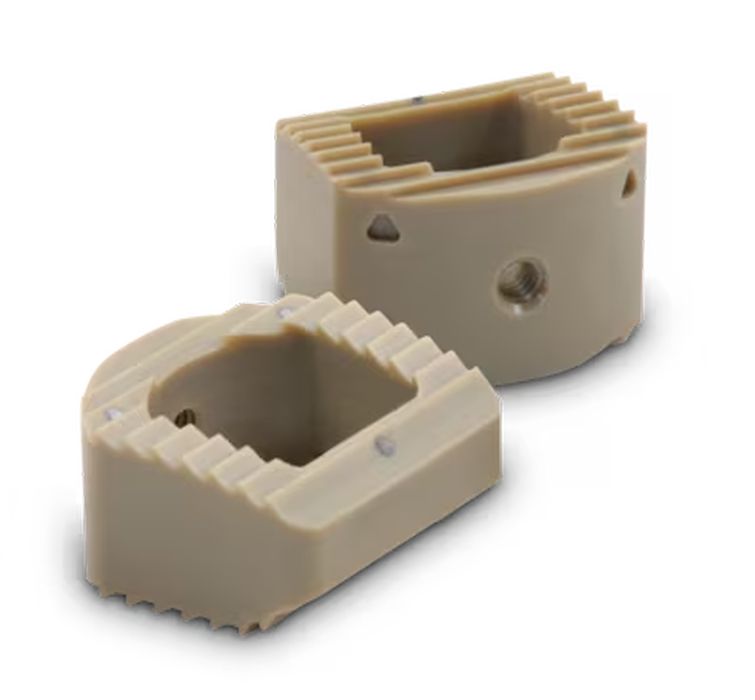
A recent National Geographic feature, “Closing the Loop on Spinal Surgery,” describes how Medtronic’s AiBLE Smart Ecosystem connects planning, navigation, implants and outcomes. The objective is to reduce variability by linking different stages of the surgical process rather than treating planning, surgery and postoperative assessment as isolated activities.
The system incorporates patient imaging and AI-assisted planning before surgery. During the procedure, robotics and navigation can help surgeons execute the plan, while patient-specific rods and real-time tracking can provide information about spinal alignment before the patient leaves the operating room.
That is highly relevant to additive manufacturing.
We previously examined this relationship in “3D Printing Aiding Spinal Surgeries.”, where we looked at how 3D printing can be used to create patient-specific spinal implants and anatomical solutions. The basic attraction is straightforward: a patient’s anatomy can be translated into a digital model and then into a physical object designed around that individual rather than an average patient.
The newer connected-surgery approach adds another layer. If imaging, AI planning, navigation, robotics and implants are part of the same digital workflow, additive manufacturing potentially becomes another link in that chain.
The important development is therefore not simply “3D printing plus surgery.” It is the creation of a continuous digital workflow in which data can move from diagnosis to planning to manufacturing to surgery and eventually back into outcomes data.
AFib treatment and the move toward precision intervention
Medtronic is also advancing technology for atrial fibrillation, including pulsed-field ablation.
Its PulseSelect pulsed-field ablation system uses catheter-based cardiac electrophysiological mapping and is indicated for certain patients with drug-refractory, recurrent, symptomatic atrial fibrillation.
Pulsed-field ablation is part of a broader shift toward increasingly precise, technology-assisted interventions. Rather than thinking of medical devices as isolated pieces of hardware, manufacturers are combining sensing, mapping, software and specialized instruments into integrated systems.
Again, this creates opportunities for advanced manufacturing. Catheters, electrodes, housings, surgical instruments and other medical components often require specialized geometries and materials. As devices become more sophisticated, manufacturers face the challenge of producing smaller, more intricate components while maintaining repeatability and regulatory compliance.
That is precisely the kind of environment in which advanced manufacturing technologies can become strategically useful.
When math becomes a medical technology
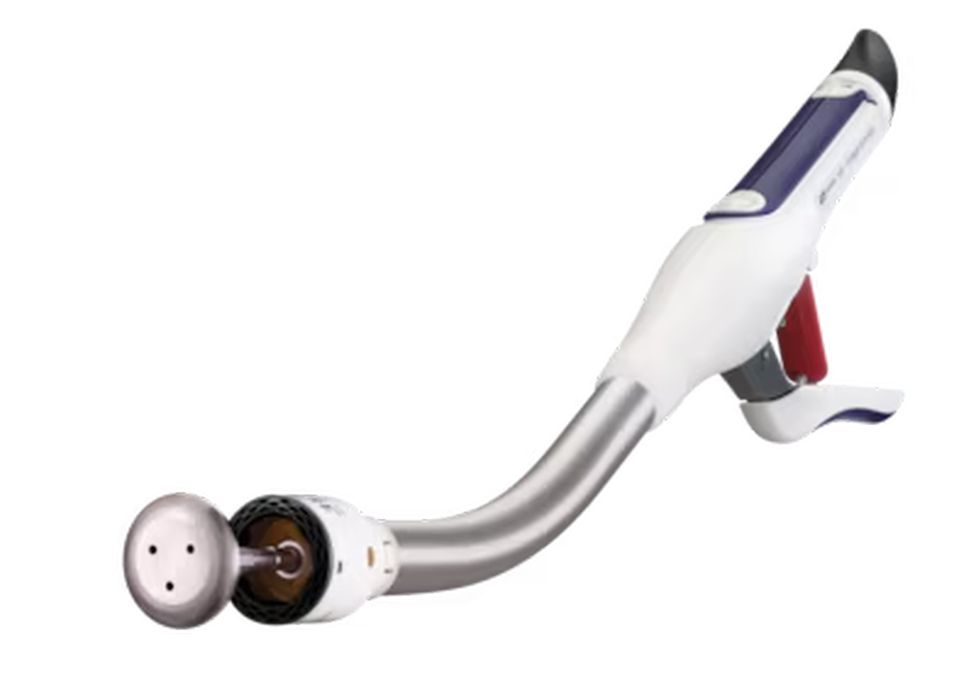
Perhaps the most striking example of Medtronic’s approach is its use of AI and mathematics to improve colonoscopy.
In a 2025 report, Medtronic described how its GI Genius system uses deep-learning algorithms trained on large numbers of images to identify potential colon polyps during a procedure. The system analyzes the live endoscopic image and highlights suspected polyps so the physician can examine them more closely.
Medtronic cites studies reporting that GI Genius can increase adenoma detection rates by up to 14.4%, while previous research has associated increases in adenoma detection with reduced colorectal cancer risk.
The relevance is particularly clear because colorectal cancer is unusually amenable to prevention through screening. Polyps can exist for years without symptoms, and screening can identify and remove them before they become cancerous. The CDC recommends routine colorectal cancer screening for adults ages 45 to 75.
Medtronic’s example illustrates a larger point: sophisticated mathematics doesn’t have to remain inside a computer. It can guide physical actions, improve medical decisions and ultimately influence what happens in the real world.
That idea has an interesting parallel with additive manufacturing.
In our previous Fabbaloo article, “Math, Models, and Mysteries Solved: How Additive Manufacturing Helped Find the Answer to Schrödinger’s Color Theory,” we examined how researchers used mathematical modeling and a 3D-printed physical model to investigate the geometry of color space. The printed object provided a tangible way to inspect relationships that were otherwise represented mathematically.
The healthcare parallel is compelling. In both cases, mathematics, software and physical objects become parts of the same problem-solving process.
The Research and Development (R&D) Tax Credit
Medtronic’s progress highlights how additive manufacturing can support the growing medical robotics ecosystem – not necessarily by 3D printing an entire surgical robot, but by enabling the development of specialized components, fixtures, end-effectors, prototypes, surgical tools, customized parts, anatomical models, and increasingly complex medical devices. These activities may create meaningful opportunities for companies to evaluate federal R&D tax credits.
Under IRC § 41, qualified research generally involves developing or improving a business component—such as a product, process, tool, or device – through technological work aimed at resolving uncertainty. In a 3D printing context, uncertainty may exist when a company does not yet know the best design, material, build orientation, tolerances, sterilization approach, or manufacturing method needed to make a part function properly. For example, a team may need to test multiple lattice structures, geometries, or materials to produce a lighter surgical tool, a more reliable robotic component, or a patient-specific anatomical model.
The R&D credit is often a good fit where companies use rapid prototyping to evaluate alternatives, run simulations, print test iterations, analyze performance data, and refine designs. This type of systematic testing can support the required “process of experimentation” when it is designed to resolve technical uncertainty. Importantly, the project does not have to succeed to qualify, and even evolutionary improvements may be eligible.
For business readers, the key takeaway is practical: 3D printing projects focused on improving function, performance, reliability, or quality – not merely appearance – may generate qualified research activities. Companies should document technical questions, alternatives tested, prototype iterations, results, and employee time associated with these efforts.
R&D Tax Savers has been helping companies navigate the complexities of the R&D credit since it was introduced into law in 1981.
Below is a table that presents the recent investments that Medtronic has made in R&D and human capital.
| Company | Year | R&D Expenses | Number of Employees | R&D Expenses per Employee |
| Medtronic | 2025 | $ 2,700,000,000 | 95,000 | $ 28,421 |
| 2024 | $ 2,700,000,000 | 95,000 | $ 28,421 | |
| 2023 | $ 2,700,000,000 | 95,000 | $ 28,421 | |
| 2022* | $ 40,000,000 | 95,000 | $ 421 | |
| *In 2022, companies were required to amortize certain R&D costs instead of being able to expense them. | ||||
A convergence worth watching
Medtronic’s recent developments reveal a consistent pattern. Robotics is becoming more connected. AI is becoming more deeply embedded in clinical workflows. Medical procedures are becoming increasingly personalized. And manufacturing must keep pace with all of it.
For 3D printing, this represents a substantial opportunity. The technology can provide patient-specific products, rapid prototypes, specialized tooling, robotic components, anatomical models and increasingly complex medical devices. More importantly, additive manufacturing fits naturally into a healthcare environment in which digital information increasingly determines the design of physical products.
Medtronic has been in the industry for decades and is leading the way to a healthier future by continuing to push the boundaries of innovation and technology. From robotic surgery and connected spinal care to AI-assisted diagnosis and advanced cardiac and gastrointestinal interventions, the company is demonstrating how software, data, engineering and medicine can work together.
For the 3D printing industry, we see this as a win-win.